
Last updated October 8, 2026
Free roof inspection with deck photos before we talk money - GAF and Owens Corning certified installation

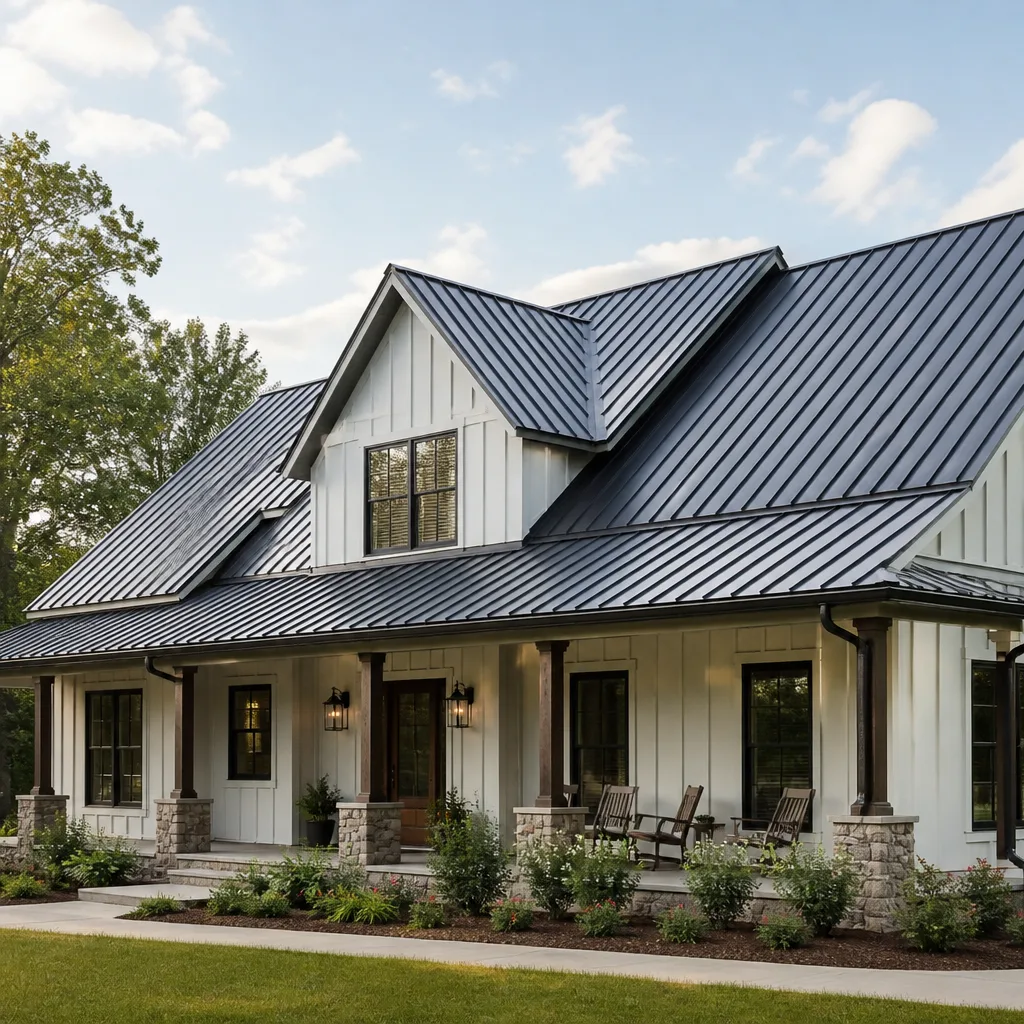


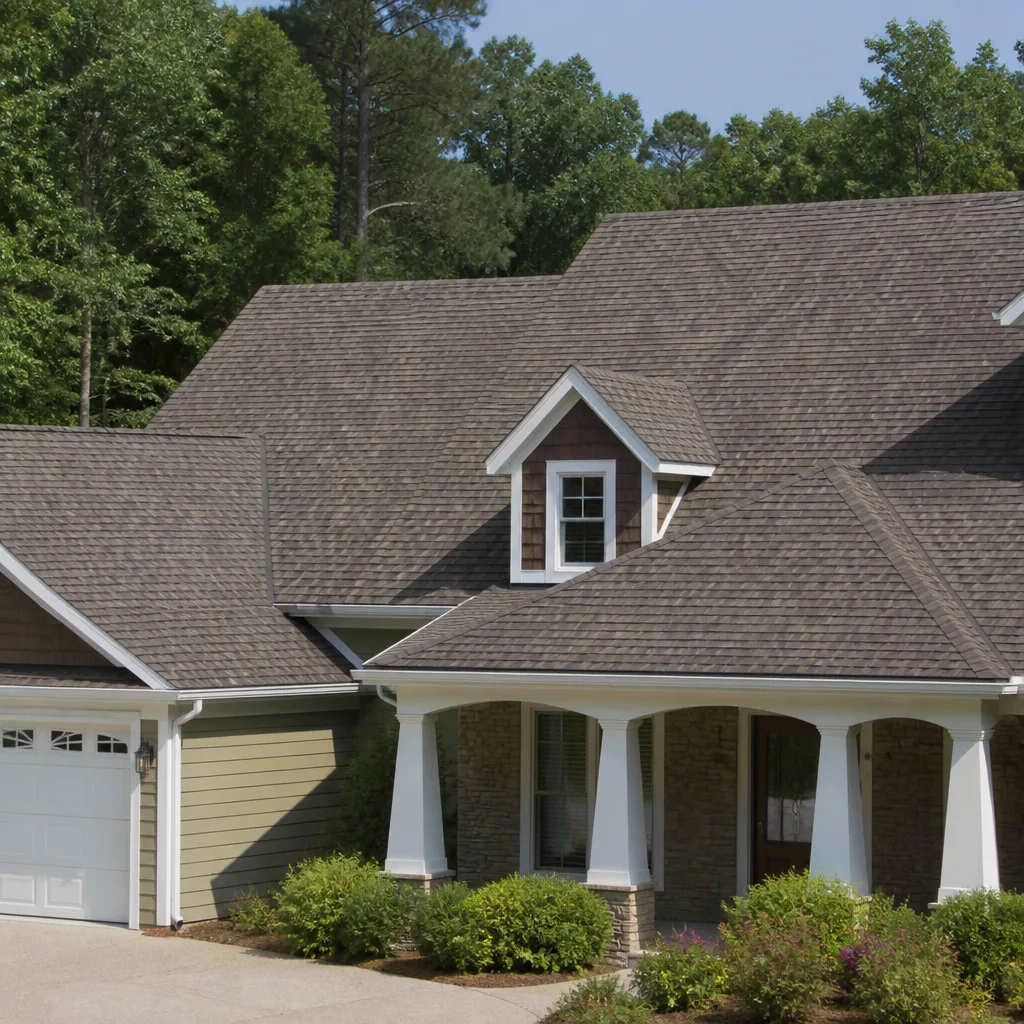
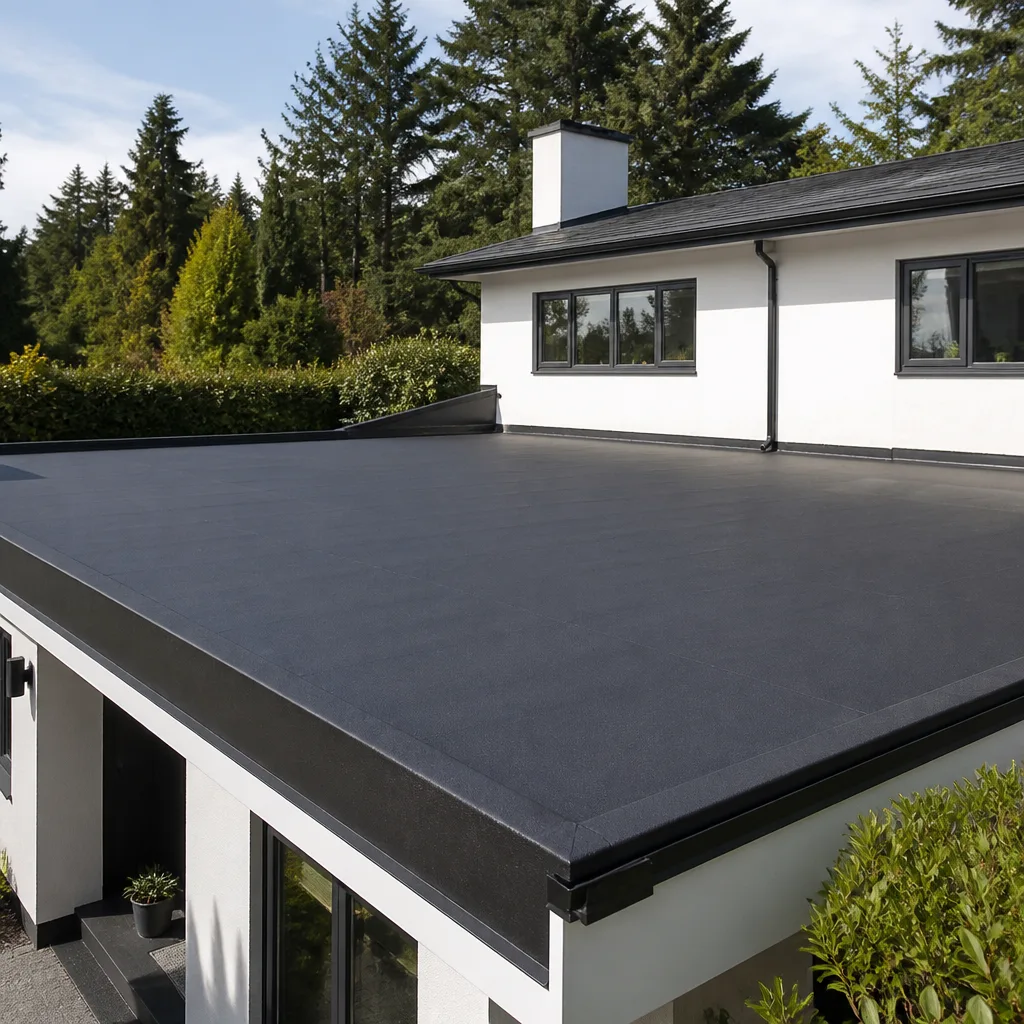
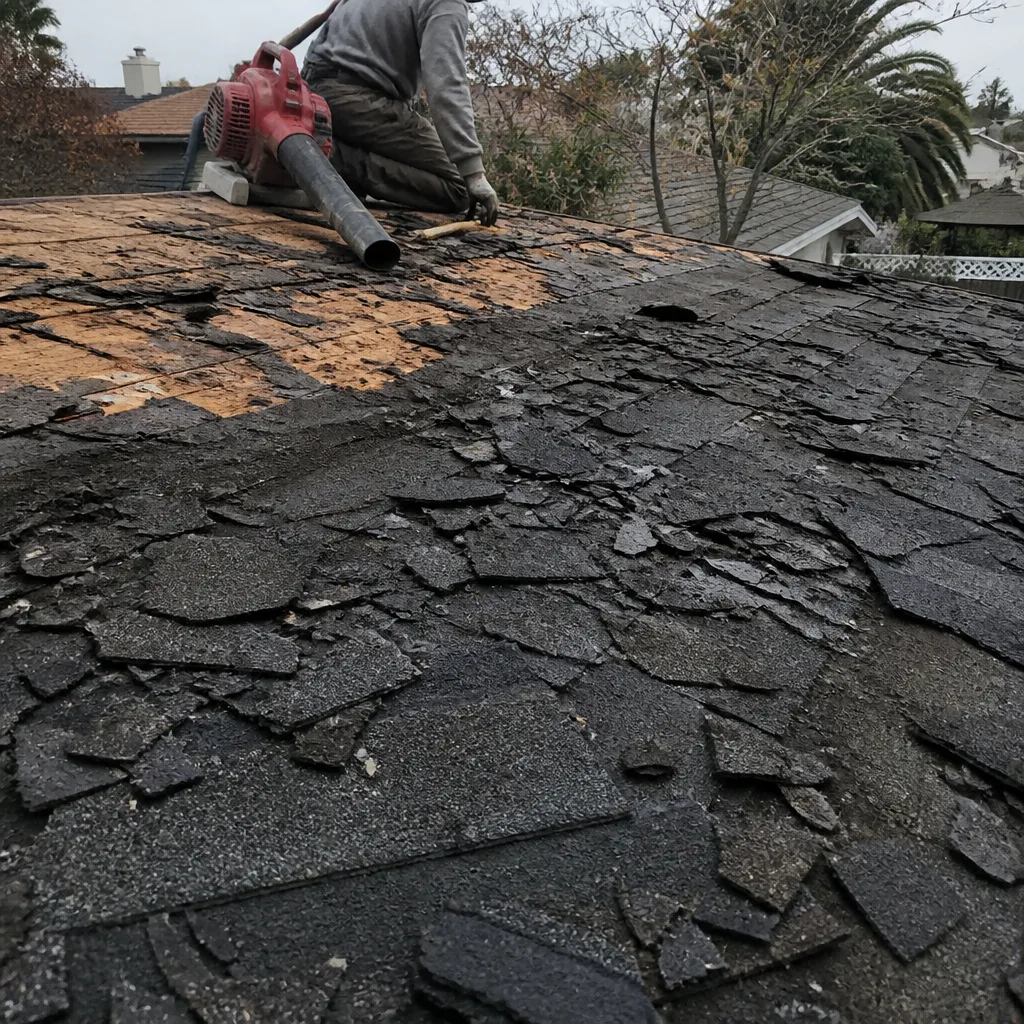 Before
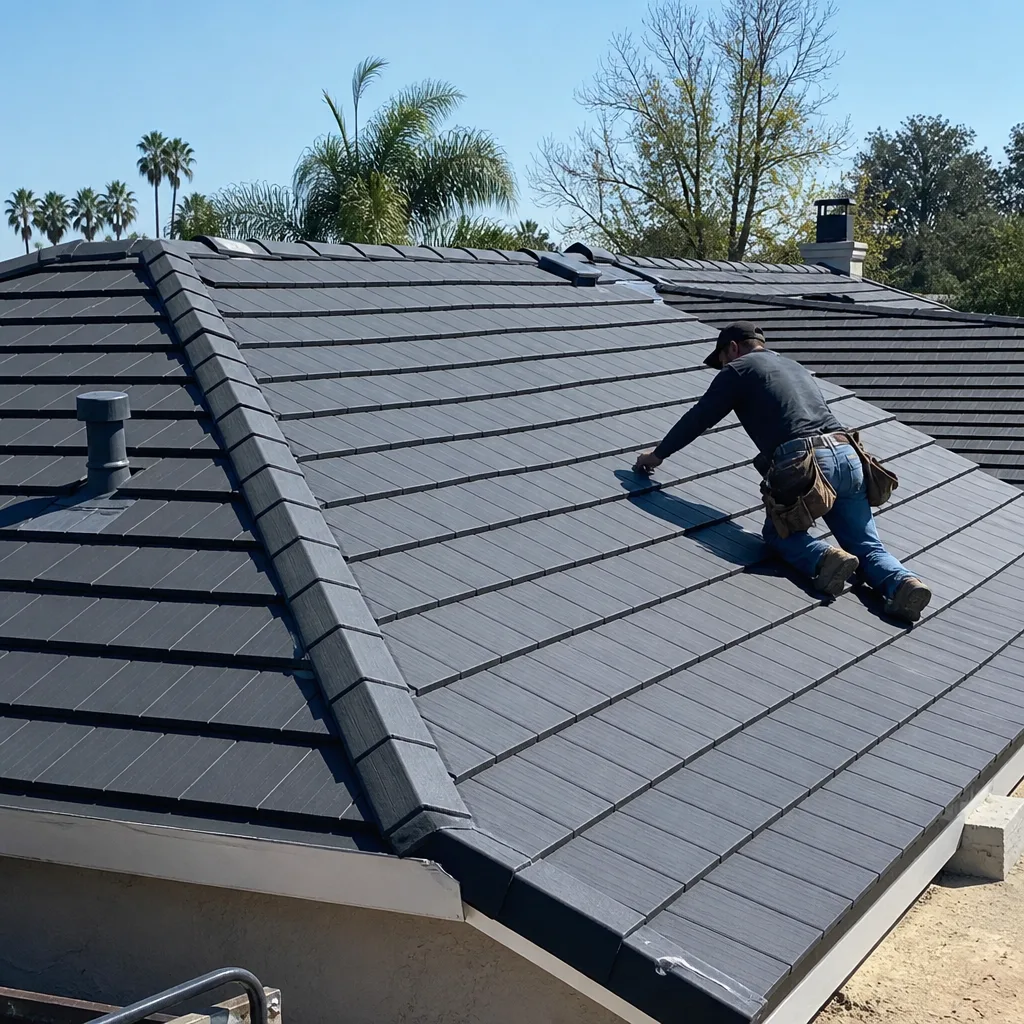 After
After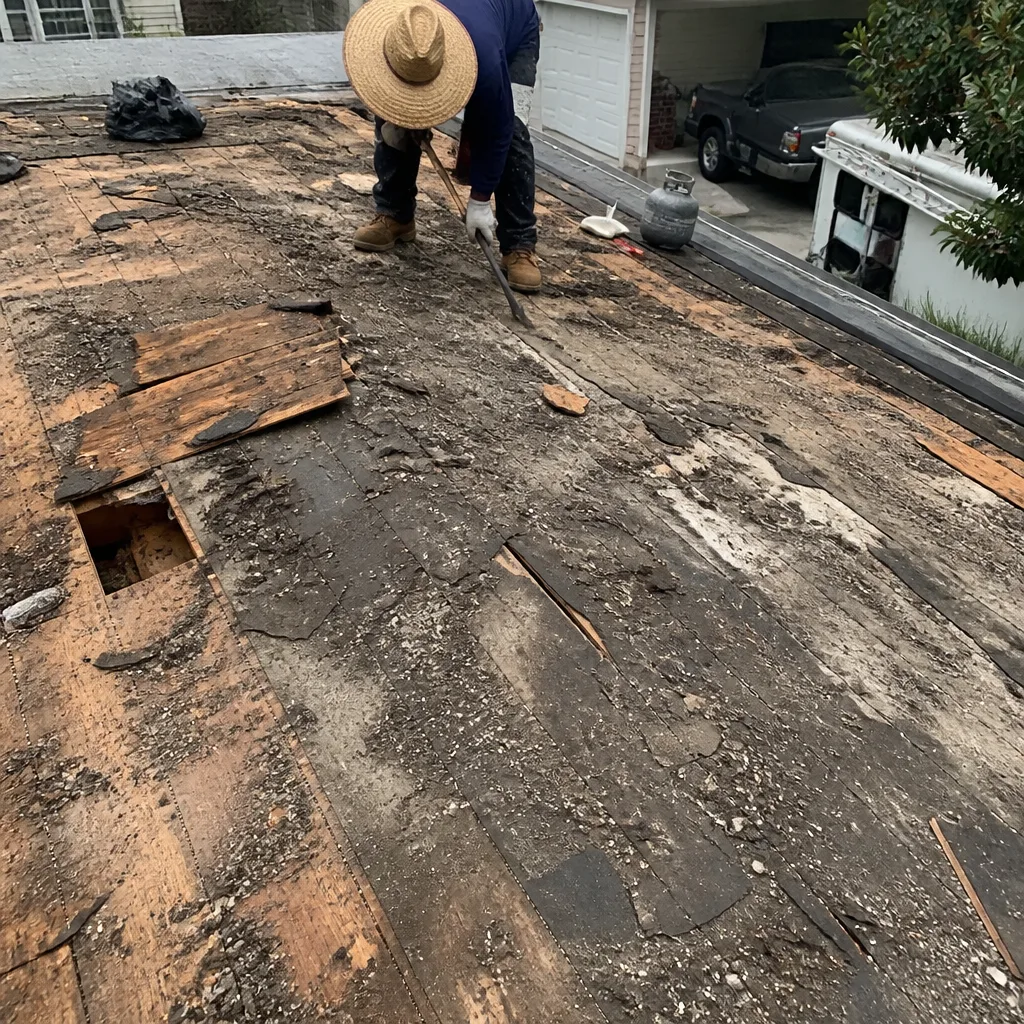 Before
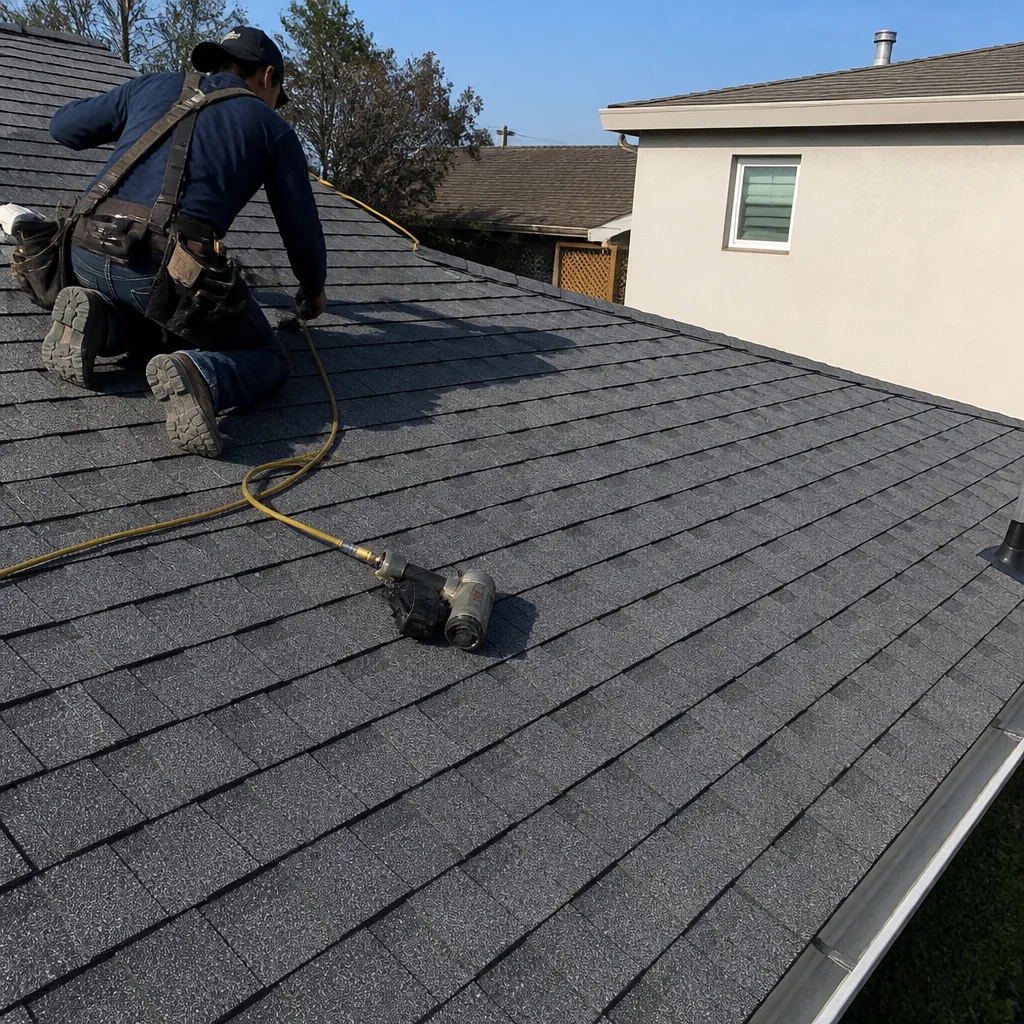 After
After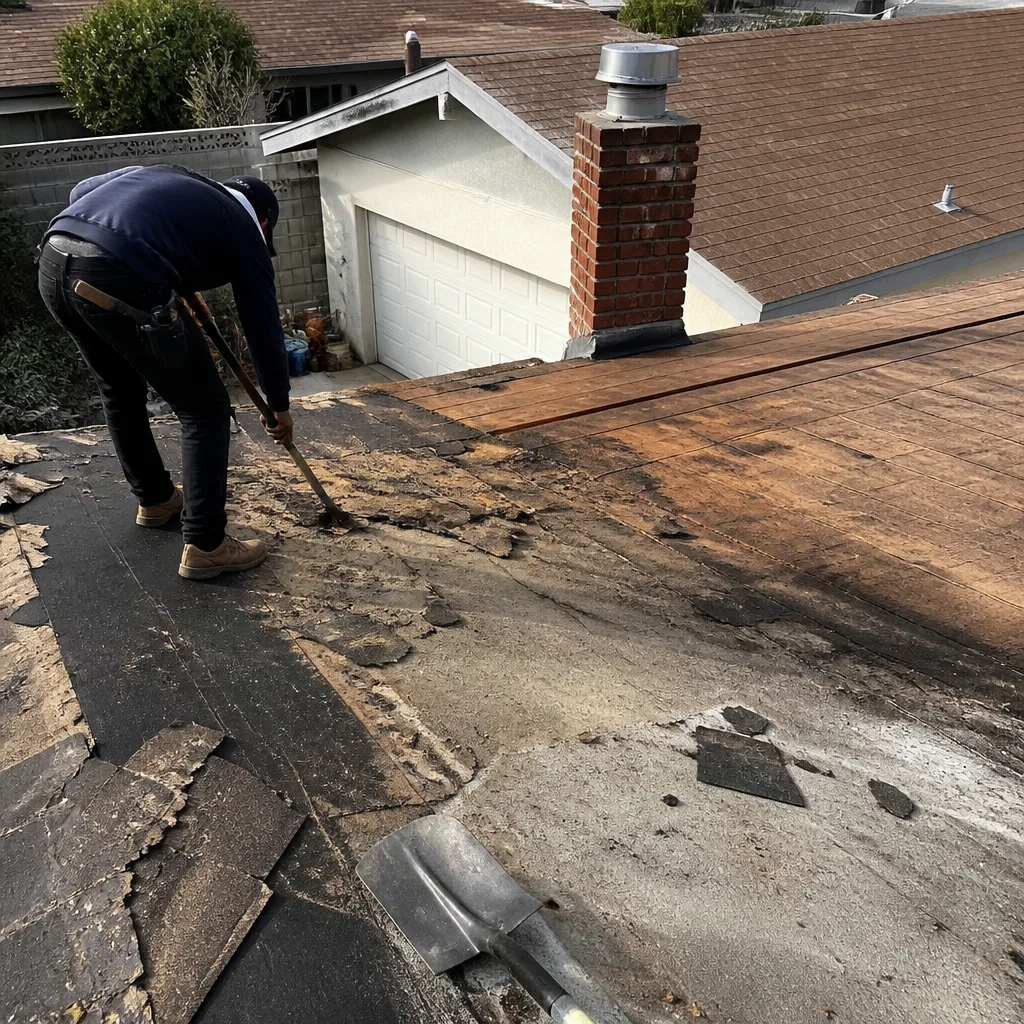 Before
 After
AfterRoofing Warning Signs: A Los Angeles Homeowner’s Reference Guide
Most “roof warning signs” guides start with photos of curling shingles and missing tiles, as if every homeowner in Los Angeles is going to strap on a harness and walk a ridge line. You’re not going to do that, and you shouldn’t. What actually catches roofs before they fail is quieter: the faint gray blossom on a bedroom ceiling you mistake for an old stain, the attic smell that comes and goes, the dark grit in the gutter after a dry Santa Ana wind. This guide, along with our Complete Guide to Roofing in Los Angeles, is organized around what you can see and smell from the ground, the attic, and the ceiling of your own Los Angeles home – because that’s where every roof tells its story first.
Quick Answer
The earliest roof warning signs for most Los Angeles homes show up inside, not outside: water stains on ceilings, a musty attic odor, daylight visible through ridge vents, or wood that looks darkened around skylights and chimneys. Outdoors, watch for granules collecting in gutters, lifted ridge caps after Santa Ana wind events, and cracked flashing around pipes and vents, especially on flat or low-slope roofs common in Mid-City and Silver Lake. If you see one sign, act within 30 to 60 days; if you see two or more, the clock on interior water damage is already running.
Table of Contents
- The Interior Checklist: What Your Ceilings and Walls Tell You
- Attic Signs Most Homeowners Miss
- Ground-Level Exterior Signs Specific to Los Angeles
- Santa Ana Wind Damage and Lifted Ridge Caps
- Tile Cracks: Cosmetic vs. Structural, Without Climbing
- Flat and Low-Slope Roofs: A Different Checklist
- The Timeline from First Warning Sign to Active Leak
- Common Mistakes to Avoid
- When to Call a Professional
- Frequently Asked Questions
- The Bottom Line
The Interior Checklist: What Your Ceilings and Walls Tell You
By the time water drips from a ceiling, the leak has already been active for weeks or months. The water found a path through the roof deck, pooled in insulation, and saturated drywall before it finally broke through the paint. That’s why the first room-by-room inspection we recommend for Los Angeles homeowners starts with looking up, not out. Walk each room in daylight. Turn off the lights. Use a flashlight held flat against the ceiling. What shadows and texture changes show up? Those are your earliest warning signs.
Here is the room-by-room interior checklist we use when we walk through a home before any roof repair in Los Angeles:
- Ceiling stains: A single brown ring usually means a one-time water event that dried. A ring inside a ring – a bullseye pattern – means water has come through repeatedly. A yellow or green tint on a stain means the water sat long enough for mold or mildew to begin. On a ceiling, a stain wider than a dinner plate usually means more than one leak source.
- Paint bubbling or peeling at crown molding: Water that enters at the roof edge travels sideways before it drops. Peeling paint where the wall meets the ceiling, especially in top-floor bedrooms, is an early sign of water wicking along framing.
- Doors and windows that stick in summer: Attic heat from a failing roof radiates down through walls. When a roof loses ventilation or insulation, the extra heat makes framing expand. A bedroom door that scrapes the frame in August can be a roof problem, not just a hinge problem.
- Drywall at interior corners: Hairline cracks that follow ceiling joints are cosmetic. Wrinkled or soft drywall at those same joints is water. Press the area gently with a thumb. If it gives, you already have a leak, even if you cannot see it yet.
- Skylight and chimney surrounds: Stains that hug a skylight or chimney usually originate at the flashing seam, not the roof field. They often appear as a thin brown line tracing the fixture’s shape.
- Closet ceilings in corners: Homeowners skip closet ceilings. Inspectors find stains there. Water follows the lowest point of a ceiling plane, which is often a corner in a closet.
Los Angeles homes built before 1980 frequently have ceilings with multiple paint layers. A fresh stain hides under old paint and only shows up when humidity rises. If you smell something earthy in a bedroom and cannot find a source, that is your clue to look harder at the ceiling.
Attic Signs Most Homeowners Miss
The attic is where your roof tells the truth. The underside of the deck, the rafters, and the insulation hold evidence of every water event that has ever happened, years after the surface dried. In our experience, one serious attic inspection every spring-covered in our Seasonal Roofing Care for Los Angeles guide-catches more problems than any other single maintenance habit for a Los Angeles home.
How to read your attic in five minutes
- Look at the insulation first. Batts that are darker in patches, compressed, or scattered away from edges signal water intrusion. Insulation holds water longer than wood, so dark patches are a reliable reading of recent activity.
- Run a flashlight along the decking, not at it. Aim the beam parallel to the roof deck. Water stains show as dark valleys or elongated rings that disappear when you point the light straight on.
- Sniff for mustiness, then for the absence of it. Most Los Angeles attics have a hot, dry smell during summer. A damp-earth smell means moisture has been trapped. No smell at all in an older attic can mean a ventilation failure, which is its own problem.
- Check rafter tails and collar ties. Dark discoloration at the lower end of rafters, where they sit on the top plate, indicates water running down from the deck above and collecting at the wall line.
- Look at fasteners. Rusty nail heads poking through the deck are an early sign. Nails rust before wood stains. If you see multiple rusted fasteners in a row, water has been running along that rafter.
- Daylight test. On a sunny day, turn off the attic light and stand still for two minutes. Every pinhole of daylight is a roof opening. The biggest offenders are around pipes, vents, and the ridge.
One note on Los Angeles attics: many older homes in neighborhoods like Echo Park and Highland Park have barely accessible attic spaces with low clearance. If you cannot safely stand or crouch in the attic, the ceiling checklist becomes your primary interior diagnostic. And if the crawl is over exposed insulation or old wiring, call someone who does this every day rather than risking a fall through the ceiling.
Ground-Level Exterior Signs Specific to Los Angeles
You do not need a ladder to read a roof. You need to stand at the curb, walk the perimeter, and know which details matter. In Los Angeles, the roof warnings you can see from the ground fall into a few repeatable patterns.
What to look for from the sidewalk
- Granule loss at the gutter line: Asphalt shingle roofs from brands like CertainTeed and Owens Corning shed mineral granules over their life, but accelerated loss shows up as dark streaks or piles of grit collected at downspout elbows, in the seams of gutters, or staining the concrete below the drip edge. After a dry Los Angeles heat wave, granule loss accelerates because the asphalt binder oxidizes. If you see consistent grit on the driveway below one section of gutter but not others, that section is aging faster.
- Dark staining at eave edges, not the field: Stains that follow the outermost 12 to 18 inches of the roof are usually ventilation problems, not water. Soffit vents clog, attic heat rises, and condensation collects at the eave. The roof itself may be sound, but the staining will grow if the ventilation is not corrected.
- Lifted or curled shingle tabs at the rake edges: The rake edge catches wind first. After enough Santa Ana events, shingle tabs at the gable ends begin to lift and crack at the sealant strip. You can often spot this from the ground by watching for shadow lines that should not be there.
- Moss in the shaded areas only: Coastal-adjacent Los Angeles neighborhoods with heavy morning fog – think Mar Vista, Westchester, parts of Culver City – get moss on the north-facing roof slopes. Moss on an asphalt roof is always a sign of trapped moisture. Moss on tile is cosmetic until it lifts the tile overlap, then it becomes structural.
- Pipe flashing with visible gaps or rust: Look at the plumbing vent pipes that poke through the roof. From the ground, you can see the metal or rubber boot around each pipe. A cracked rubber boot or a rusted metal collar is one of the most common leak sources we find, and it is visible without climbing.
Los Angeles roofs also face UV exposure that most national guides never mention. At 340 days of sun per year, a roof on the west-facing slope of a Silver Lake hillside gets a fundamentally different load than the same roof on a shaded street in Santa Monica. If your roof is older than 12 years and faces unshaded south or west sun, granule loss is not a question of if, but when.
Santa Ana Wind Damage and Lifted Ridge Caps
Every fall, the first strong Santa Ana event tells us which ridge caps were not properly bonded. Ridge caps are the hinged tiles or specially cut shingles that cover the peak where two roof planes meet. They take the most direct wind load of any component on the roof. After a night of 40 to 60 mph gusts through the passes and canyons around Los Angeles, ridge caps can lift, crack, or even blow off entirely.
How to spot ridge cap damage from the ground
- Look at the peak against the sky. A uniform, crisp line means the caps are seated. A jagged or uneven line means some caps have lifted.
- Look for missing cap pieces in the garden or driveway. Ridge cap tiles often land intact, then break on impact with concrete. Check the ground along the house perimeter the morning after a wind event.
- Check the chimney area specifically. Wind accelerates over the roof peak and creates turbulence at the chimney chase. Caps near chimneys fail first.
- Scan the valleys, the V-shaped channels where roof planes meet. Debris from Santa Ana winds collects in valleys. When the next rain comes, that debris dams water and forces it under the shingles or tiles.
A lifted ridge cap does not always create an immediate leak. What it does is expose the underlying sealant and fasteners to UV and wind-driven rain. The gap widens over weeks and months. The first rain after a Santa Ana season is when we get the most calls for ridge-related leaks, often from homeowners who noticed the lifted cap in October and waited to see if it would matter. It matters.
Tile Cracks: Cosmetic vs. Structural, Without Climbing
Los Angeles has more concrete and clay tile roofs than almost any major American city. Tile is durable, but it cracks. The key question for every homeowner is whether a crack visible from the ground is a cosmetic surface fracture or a structural break that compromises the water-shedding layer.
The three-part test
- Read the angle of the crack. A single, clean hairline crack running vertically along the tile’s length is usually cosmetic – a surface stress mark from temperature expansion. A crack that runs horizontally across the tile’s width, or that branches into a Y shape, means water can enter. Horizontal cracks break the tile’s water-channeling shape.
- Read the location. A cracked tile at the eave edge, where water exits the roof, is less urgent than a cracked tile mid-field, where water sits and works its way under the tile above. Tiles at valleys and hips are structural by default because they’re the water’s travel path.
- Read the edges. If the crack has a visible gap, even a hairline one, it’s structural. Water does not need a big opening to enter. Capillary action pulls water into gaps less than a millimeter wide.
In our experience, the most commonly misread tile issue is the spalled tile, where the surface has flaked away but the tile body is intact. Spalling looks ugly from the ground but is almost always cosmetic on a Los Angeles roof. The issue homeowners miss is the tile that shifted out of place without cracking. A tile that has slid out of its overlap channel exposes the underlayment and is more urgent than a cracked tile that still sits in place.
If you’re not sure whether what you’re seeing from the ground is a crack or a shadow, take a photo from two angles at different times of day. If the line moves or changes width, it’s a crack. If it disappears when the light shifts, it’s a shadow. For anything that looks like a real crack, call a roofing company in Los Angeles for a free estimate before the next rain season.
Flat and Low-Slope Roofs: A Different Checklist
Flat and low-slope roofs are common across Mid-City, Silver Lake, and a good portion of central Los Angeles, especially on the mid-century homes built between 1945 and 1975. These roofs operate differently from pitched roofs. Water does not shed quickly. It ponds. It sits. It finds seams and gaps over time. The warning signs are different, and they are easier to miss from inside the house because a flat roof leak often travels horizontally before it descends.
Flat roof warning signs you can check from the ground or a window
- Standing water that remains more than 48 hours after rain. Flat roofs are designed to drain, not to hold water. Ponding that persists means the roof’s slope has failed or the drains are clogged. Every additional day of ponding shortens the roof’s life.
- Bubbling or blistering visible at the roof edge. On built-up and modified bitumen roofs, trapped moisture vapor expands under the sun and forms blisters. You can spot these from a second-story window or from across the street.
- Staining on the fascia or parapet walls. Flat roofs drain through scuppers and drains at the edges. Water that misses the drain outlet stains the parapet wall or runs down the fascia. That stain is your early signal that drainage has failed.
- White or chalky patches on the roof surface. UV degradation appears as chalking on some flat roof membranes. It means the protective surface layer is breaking down, even if no leak is present yet.
- Interior stains that appear far from the exterior leak point. On a flat roof, water travels along the deck until it finds a seam, a fastener hole, or a low point inside the structure. The ceiling stain often appears ten or fifteen feet from the actual roof opening. If you see a stain in a hallway ceiling with no plumbing above it, suspect the flat roof first.
Flat roofs in Los Angeles also carry the debris problem. Leaves, dust, and Santa Ana debris accumulate in the center and at parapet corners, trapping moisture. If your flat roof is visible from an upstairs window, look for a leaf line or a dust shadow that forms an outline of the roof. That outline shows where water is being held. If you or a neighbor can see it from a window, the debris has been there long enough to matter.
We work with flat roof membranes from IKO and Atlas, among others, and the single most consistent early-warning pattern across all of them is drainage failure before membrane failure, a topic we explore in our guide to Choosing the Right Roofing Brand. Fix the drainage, and the roof often has years left. Ignore the drainage, and a five-year-old roof can develop a leak in its sixth Santa Ana season.
The Timeline from First Warning Sign to Active Leak
One question we hear more than any other: “How long can I wait?” The honest answer depends on which sign you’re seeing. Here’s our working timeline for Los Angeles homes, based on the patterns we’ve observed across hundreds of inspections.
Sign, typical window, and what to do
- Granule loss in gutters: 6 to 24 months before any leak. This is the longest lead time of any warning sign. If you catch granule loss before the shingles begin to crack, you can often get several more years from the roof with targeted maintenance. Schedule an inspection within 60 days.
- Ceiling stain, first appearance: 0 to 90 days before recurrent leaking. A single stain after one rain means water has found a path. It will find the same path again in the next rain, and the leak will grow with each event. Do not wait for the second stain.
- Lifted ridge cap after Santa Ana winds: 30 to 180 days before wind-driven rain enters the opening. The first big rain after you notice the lift is the dangerous one. Call before the rain, not during it.
- Rusted or cracked pipe flashing boot: 2 weeks to 6 months. The rubber boot around a plumbing vent cracks with age and UV. Once visible from the ground, it’s already leaking in heavy rain. This is one of the smallest repairs we do, usually under $400 in the Los Angeles market.
- Musty attic odor, no visible stain: 1 to 12 months before you see water on a ceiling. The smell is the water. It’s sitting in insulation or on framing. The longer it sits, the more the repair cost climbs.
- Soft drywall at ceiling corners: Hours to days. Soft drywall means the leak has saturated the board. The water is already inside the room. Call immediately.
For a more detailed look at what repair costs look like at each stage, see our guide on roof replacement in Los Angeles and our roof repair in Los Angeles page, where we lay out typical price ranges in writing. The short version: a $400 flashing repair ignored often becomes a $4,000 deck repair, which becomes an $18,000 full replacement if the water reaches the structure.
Common Mistakes to Avoid
- Waiting for a leak to confirm a roof problem. By the time water shows up on a ceiling in Los Angeles, the roof has been failing for months. The leak is the confirmation, not the first warning. Treat the earlier signs as the emergency, not the drip.
- Ignoring a faint ceiling stain because it “dried.” Water stains do not dry. They pause. The path through the roof deck, insulation, and drywall is still there, and the next rain uses it again. A stain that “goes away” between rains is the most reliable leak predictor we know.
- Using a garden hose to “test” for a leak. Roof leaks are not pipe leaks. Water on a roof travels horizontally before it descends. Hosing one spot proves nothing and can force water into places it has never gone before, creating the leak you were trying to find.
- Patching a flat roof seam without addressing drainage. Most flat roof failures in Mid-City and Silver Lake start with ponding water, not membrane failure. A patch over a seam without fixing the ponding is money spent on a temporary fix.
- Walking on a tile roof to inspect it yourself. Concrete and clay tiles are load-bearing, but they crack under point pressure. Every step adds hairline fractures that become future leaks. Inspect from the ground or from a ladder at the eave. If the roof needs a full walk, call a professional who knows where to step and not step.
- Assuming a new roof means no warning signs for 20 years. We replace roofs that were installed five years ago because the flashing was wrong, the underlayment failed, or the ventilation was never corrected. New does not mean safe. Annual ground-level checks and a professional inspection every two years are still the right cadence.
- Choosing a contractor based on the lowest bid without a written price. In Los Angeles, the difference between a written price and a verbal estimate is often the difference between a job that finishes and a job that has a surprise invoice at the end. We’ve built our entire business, Birchbark Roofing, around a written price before any work starts, and we’d encourage you to expect the same from anyone who climbs your roof.
When to Call a Professional
Here’s the straightforward answer. Call a roofer when you see any sign on this list that involves water, structure, or a gap you can see from the ground. That includes a ceiling stain you cannot explain, a lifted ridge cap after wind, a visible crack in tile that runs across the tile’s width, a pipe flashing boot that looks rusted or cracked, or a flat roof ponding for more than two days after rain. If you have a steep roof, a second story, or a roof you cannot walk safely, do not climb it yourself. The risk of a fall is not worth the inspection.
We also recommend a professional inspection after any winter with heavy rain, after a strong Santa Ana season, and whenever you buy or sell a home in Los Angeles. Birchbark Roofing offers free estimates in Los Angeles – call (424) 766-4937. We’ll walk the roof, take photos of what we find, and give you a written price before any work begins. If the job is a repair, it’s covered by our 365-Day Done Right Promise: if it’s not done right, we make it right.
When we arrive at a home, we expect to be held to a standard. Shoe covers at the door. Drop cloths through the hallway. A photo of the completed clean-up before the crew leaves. We tell you this in advance because you should expect it from any roofer in Los Angeles, and you should ask for it in writing.
Frequently Asked Questions
The earliest signs are usually interior: a single ceiling stain that appears after rain and fades between storms, a musty scent in the attic, or dark discoloration on roof decking visible from the attic access. Outdoor, the earliest sign is often granule loss collecting in gutter elbows, which can precede any leak by six to twenty-four months in the Los Angeles climate. Call (424) 766-4937 for a free inspection if you see any of these.
Small flashing and pipe boot repairs in Los Angeles usually run between $300 and $800, while a valley rebuild or a rotted deck section can reach $2,000 to $5,000 depending on the roof type and the extent of water damage. The final number depends on what’s under the surface once we open it. We give you a written price before any work starts, so the number you approve is the number you pay – call (424) 766-4937 for an exact quote.
Yes. The most reliable inspection methods use a flashlight, a ground-level visual sweep, and an attic check if the space is safely accessible. Never walk on a tile roof; the tiles crack under point pressure. If you need a full roof walk, call a roofer. Birchbark Roofing includes a full roof inspection with every free estimate – call (424) 766-4937.
It depends on the sign. Granule loss gives you months or years. A ceiling stain gives you days to weeks. Soft drywall gives you hours. The safest rule is to address any water-related sign within 30 days, especially in Los Angeles, where the rainy season arrives quickly after long dry spells and the first heavy rain seeks out every open path. If you have an active leak or a sign you’re unsure about, call (424) 766-4937.
Yes. Flat roofs need a drainage check: look for ponding water that lasts more than 48 hours after rain, staining at parapet walls, and blistering visible at the roof edge. These roofs are common in Mid-City and Silver Lake, and their leaks often show up far from the actual roof opening because water travels horizontally along the deck. If your flat roof is ponding, call (424) 766-4937 before the membrane fails.
It depends on the cause. Sudden storm damage from a Santa Ana wind event or a falling branch is usually covered, while long-term neglect, wear and tear, or a pre-existing leak is typically not. We recommend documenting every sign you see with dated photos and calling your insurer early. If you need a written assessment of your roof’s condition for an insurance claim, Birchbark Roofing provides that with the free estimate – call (424) 766-4937.
The Bottom Line
A roof in Los Angeles does not fail suddenly. It gives you months of quiet warning, and most of those warnings are visible from the ground, the attic, and the ceiling. The homeowner who catches granule loss in a gutter, a bullseye stain on a bedroom ceiling, or a lifted ridge cap after the first Santa Ana wind is the homeowner who spends $400 instead of $18,000. The homeowner who waits for the drip is paying for the delay. Check your ceilings once a quarter, look at your roof from the curb after wind events, and call a professional when you see something that does not belong, or explore more guides & resources for Los Angeles homeowners. The inspection costs nothing, and the written price tells you exactly what you’re facing.
Written by Erik Lindgren, Owner at Birchbark Roofing, serving Los Angeles since 2000.