
Last updated October 8, 2026
Free roof inspection with deck photos before we talk money - GAF and Owens Corning certified installation
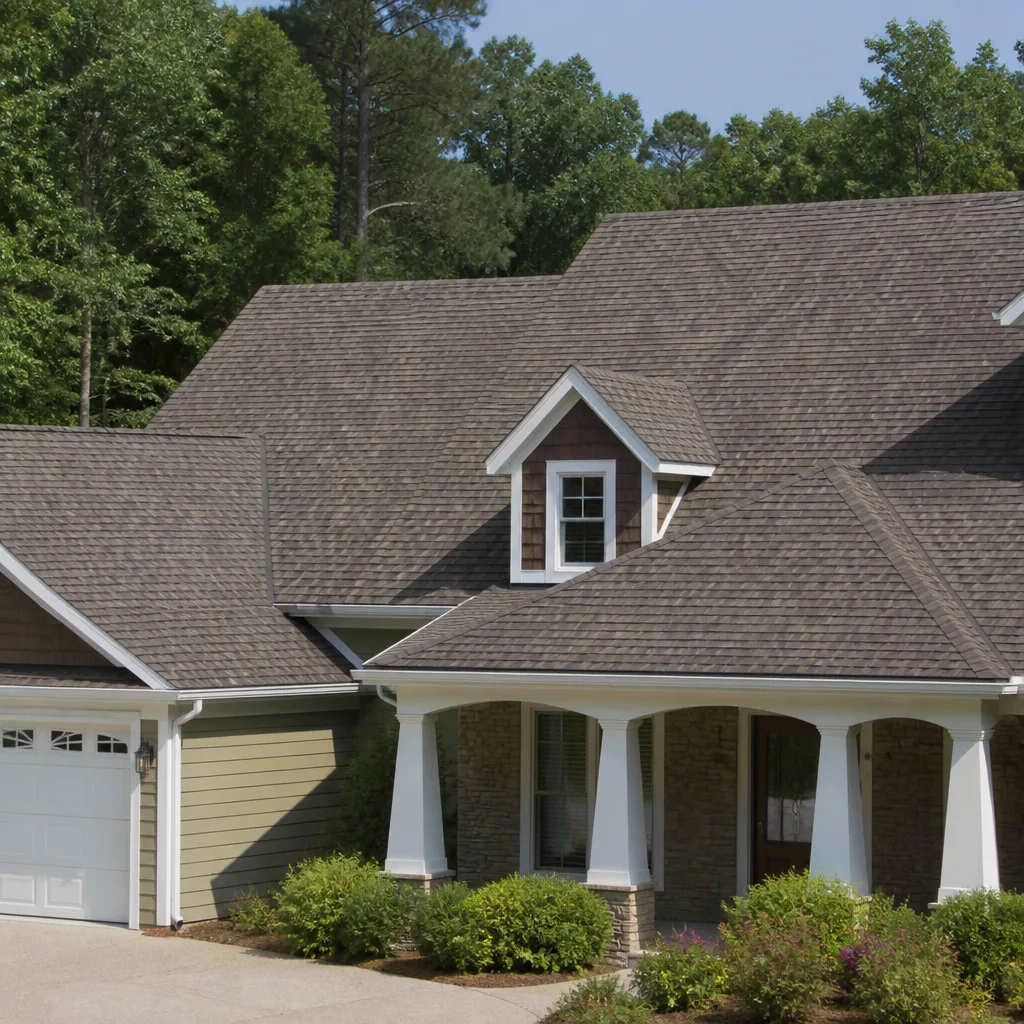
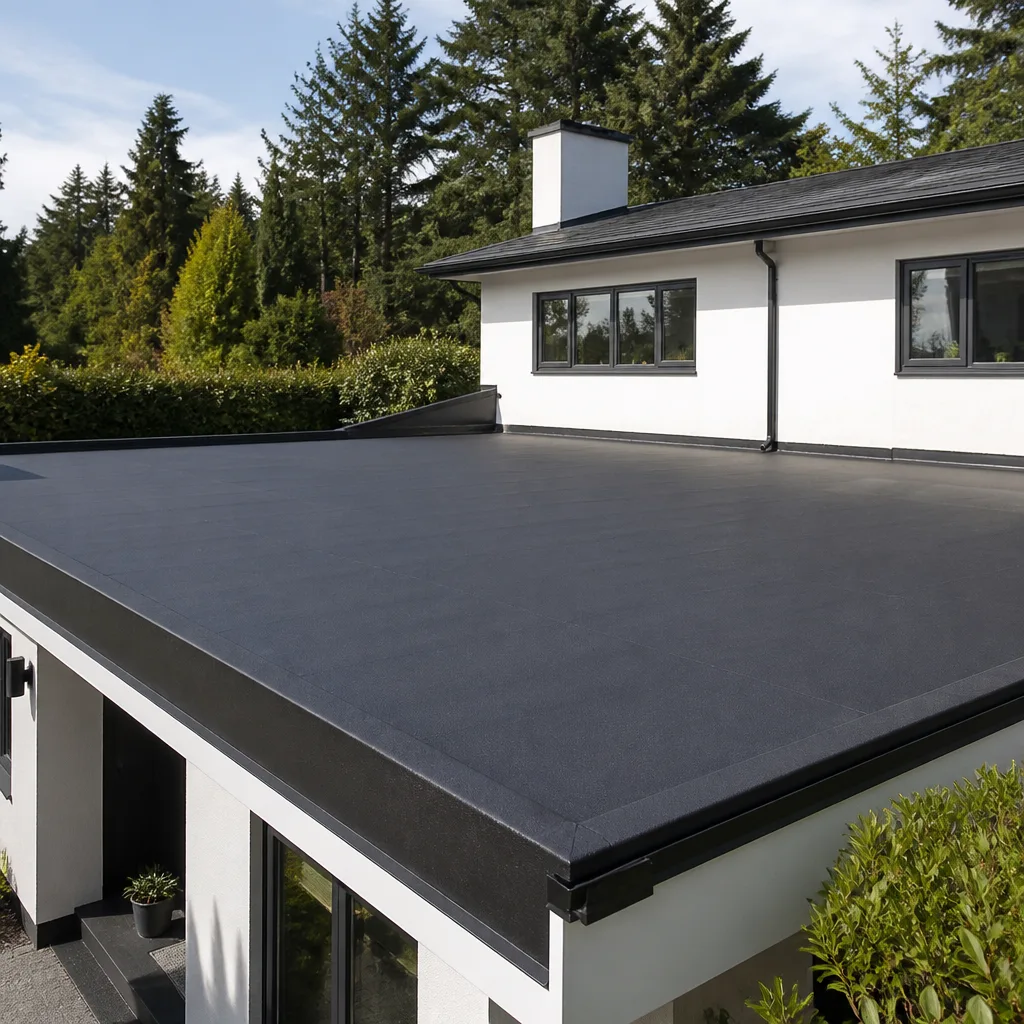
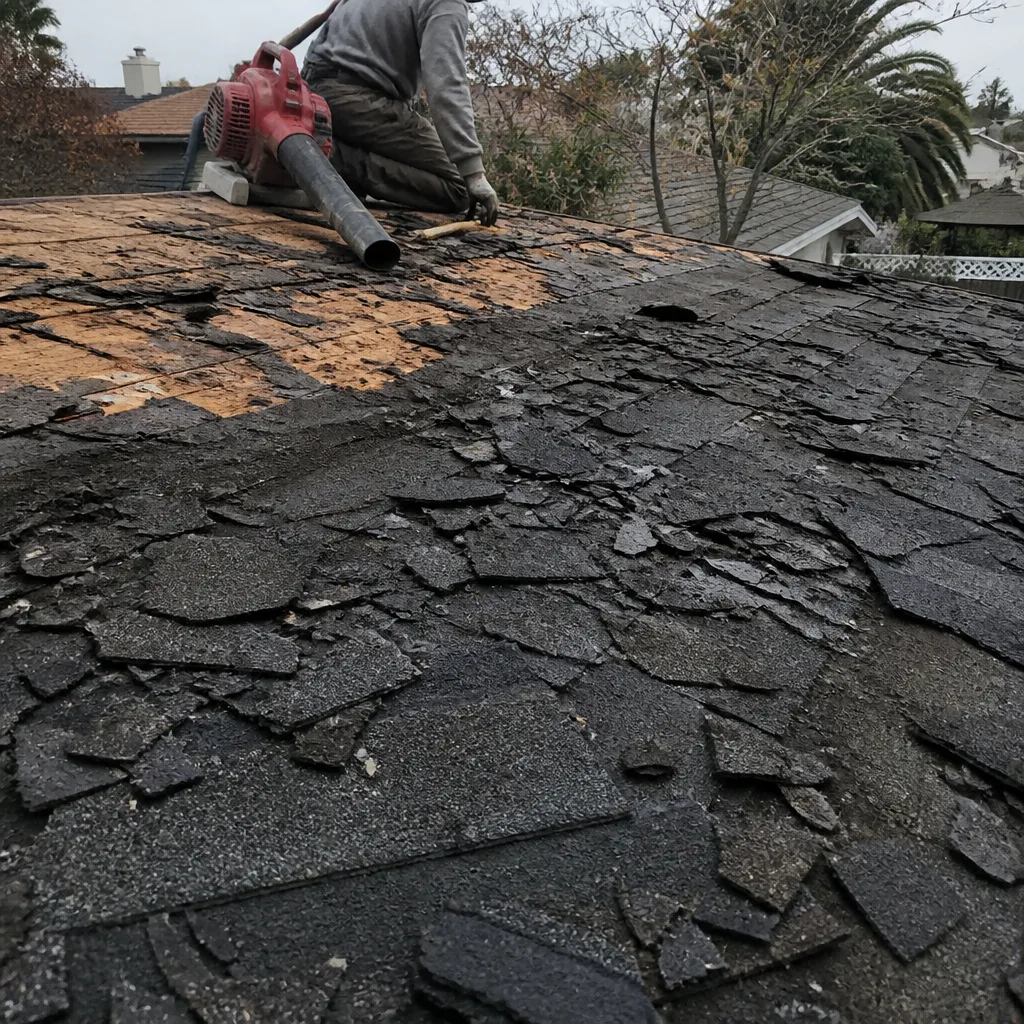 Before
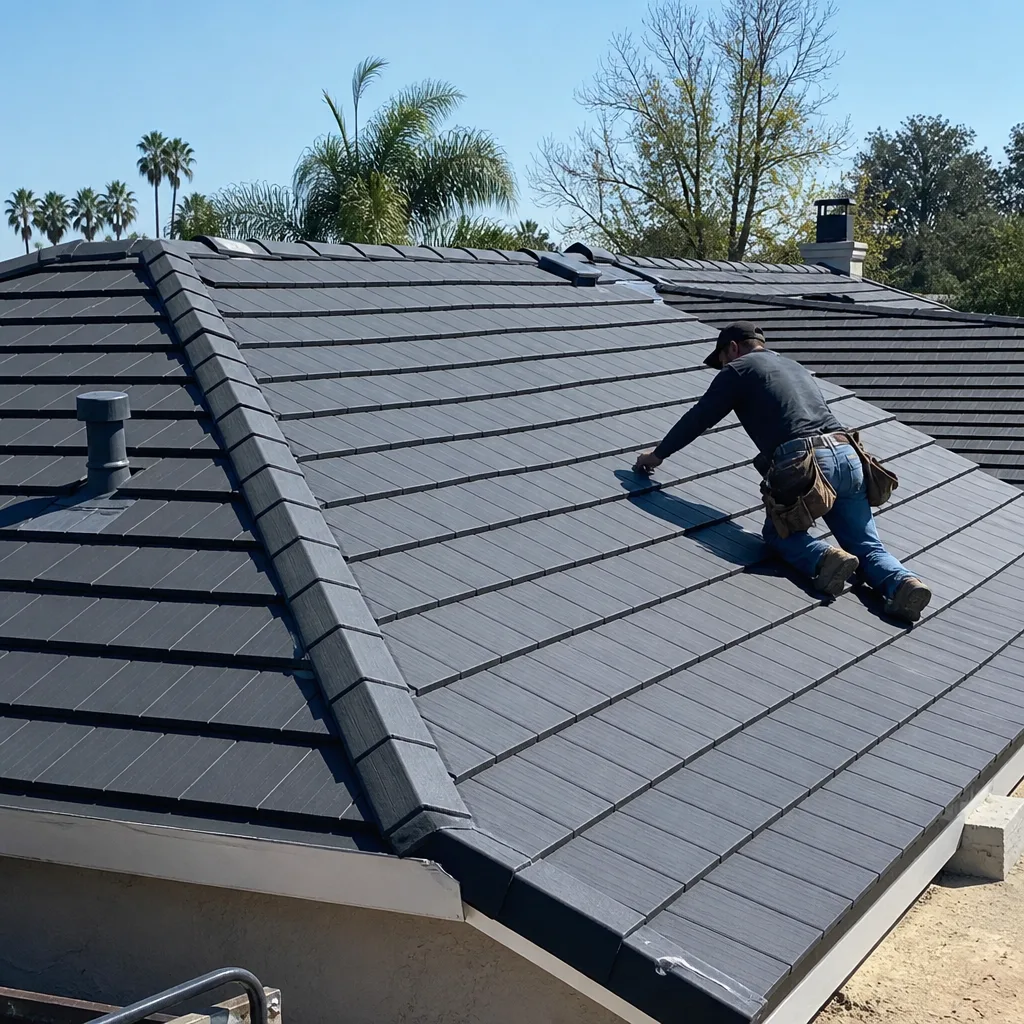 After
After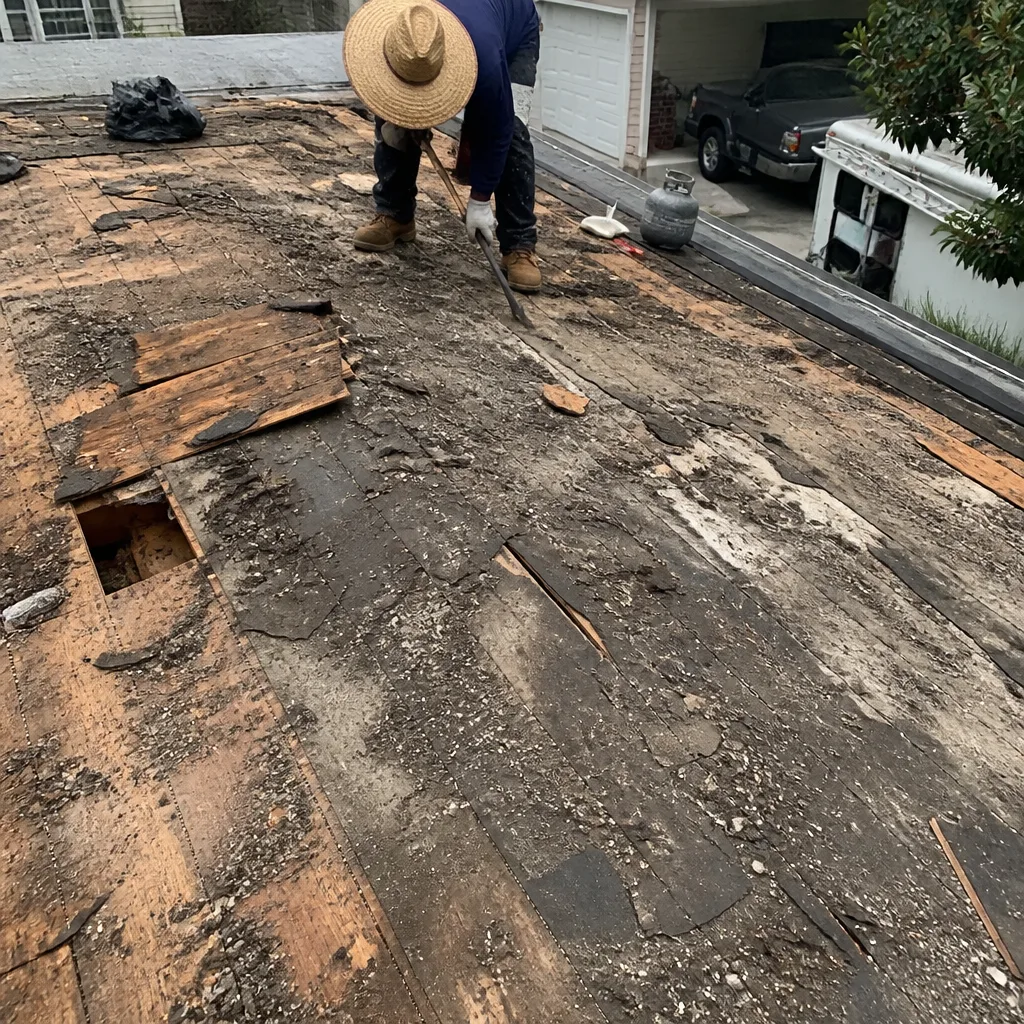 Before
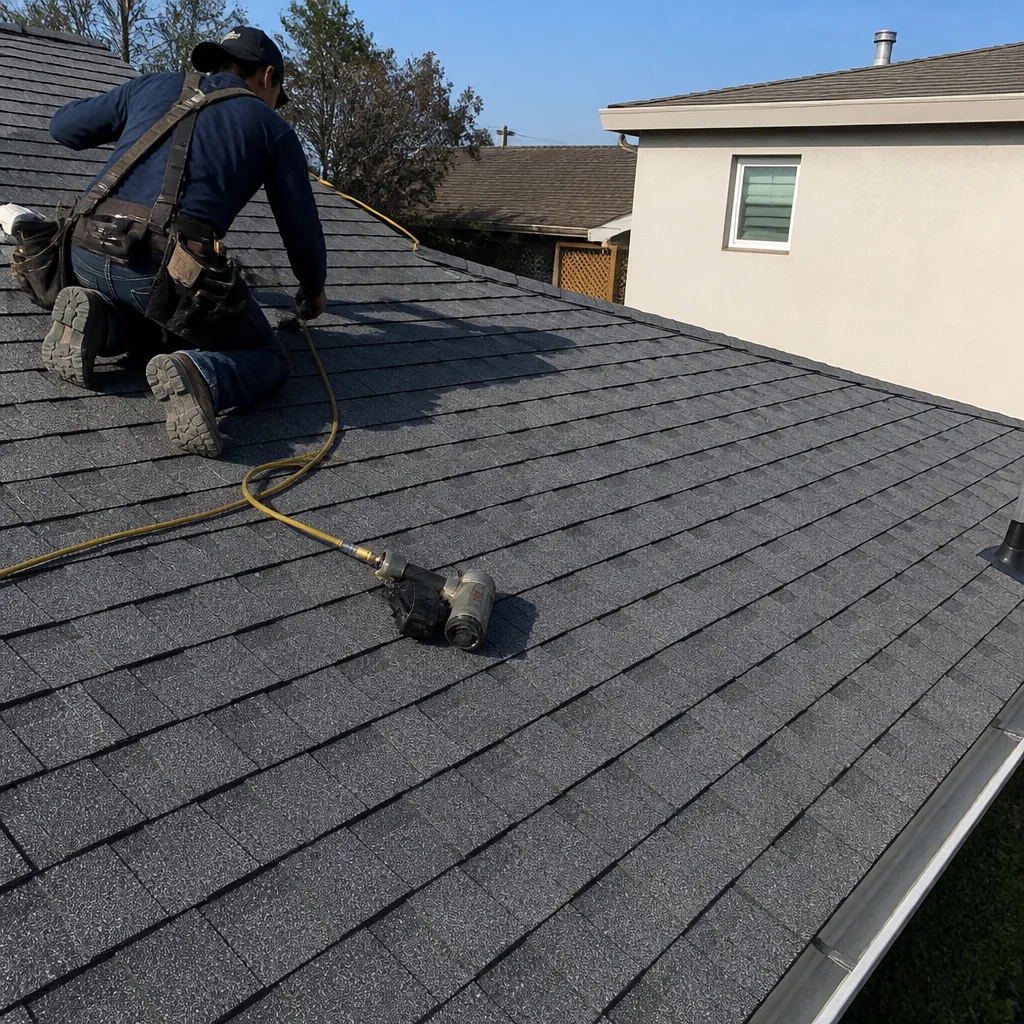 After
After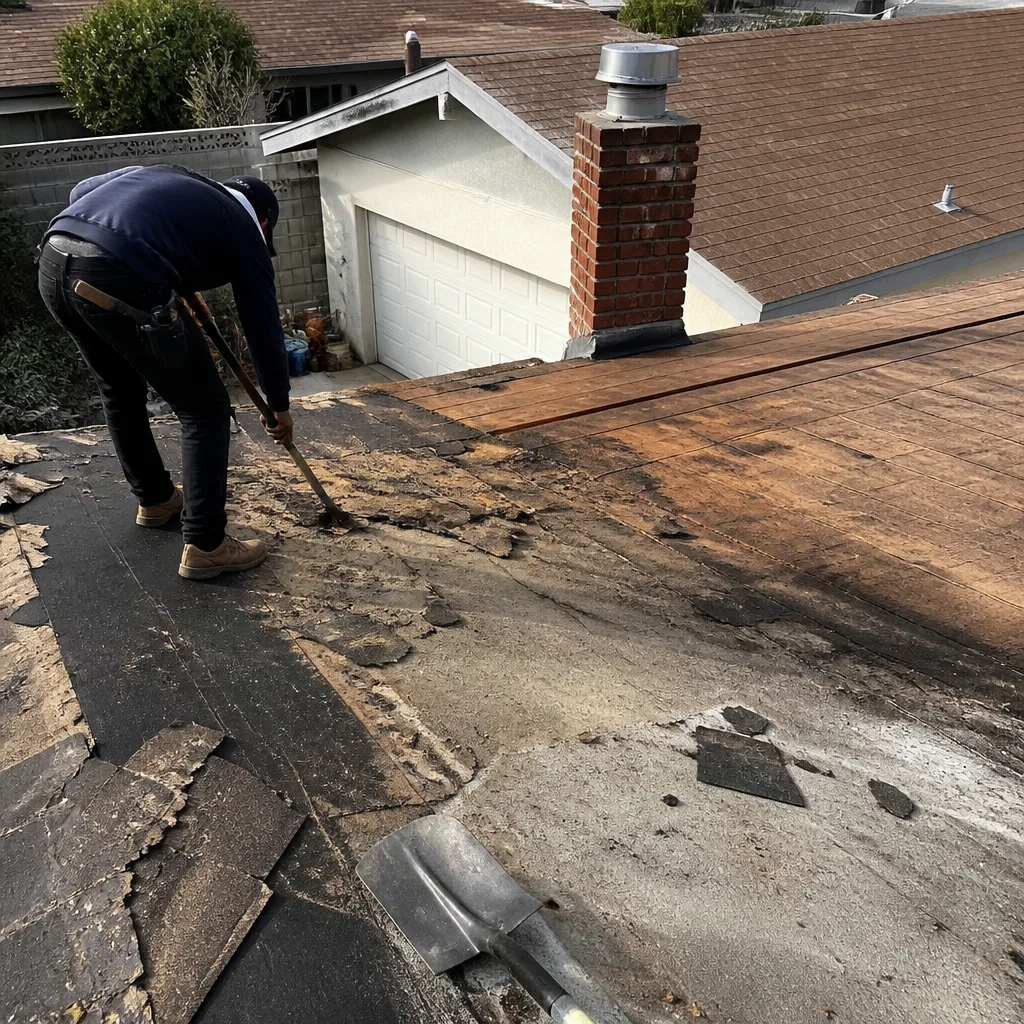 Before
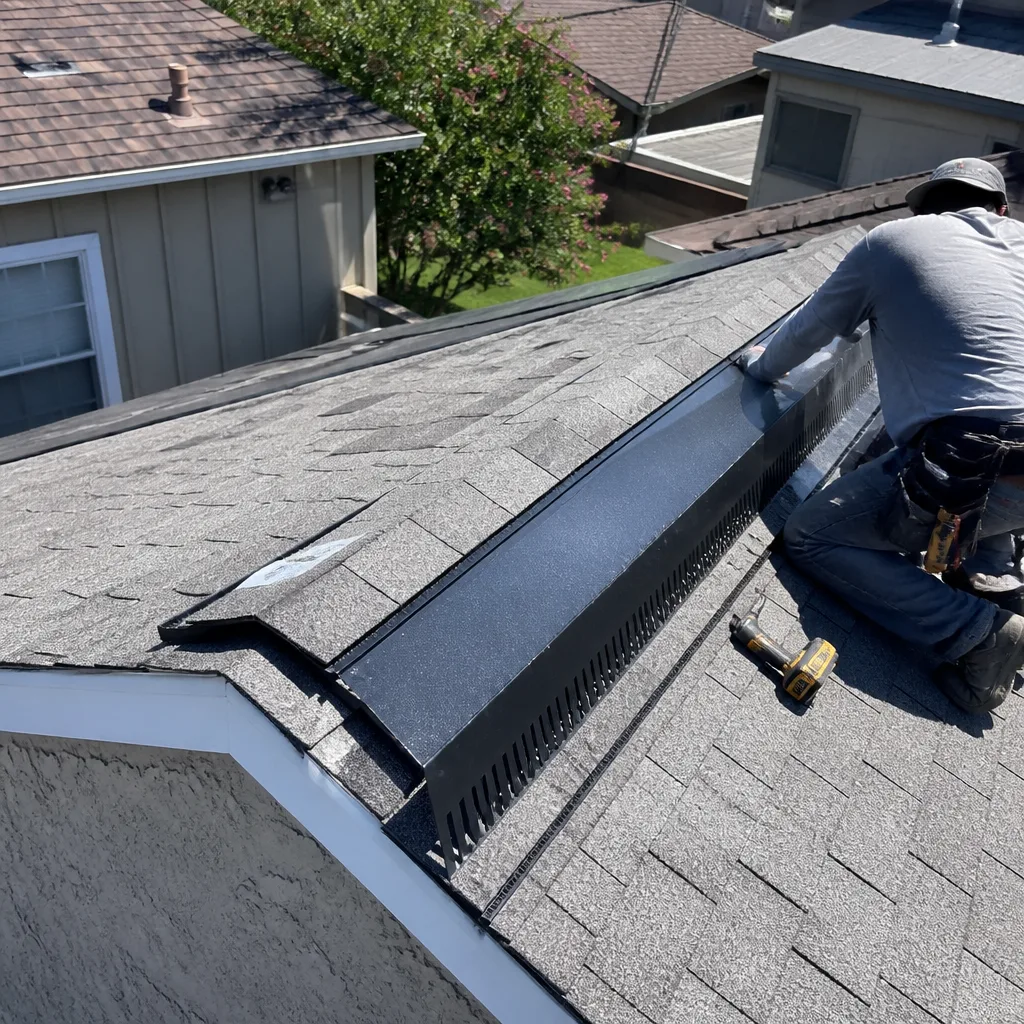 After
AfterDIY vs Professional Roofing: The Los Angeles Homeowner’s Decision Guide
A homeowner in Pasadena patched her own flat roof last spring. The patch held through two rainstorms, and she saved about $400. Then a seam failed near the repair, water got into the ceiling, and her insurance claim was denied because the work was never permitted and the carrier cited a violation of the policy’s maintenance clause. She paid $11,000 out of pocket for the interior damage. This guide explains why the DIY-versus-professional question in Los Angeles is rarely about skill and almost always about laws, insurance, warranties, and the specific ways LA roofs fail. For more guides & resources, visit our blog. By the end, you’ll know exactly which repairs you can legally and safely do yourself, which ones put you at financial risk, and what a fair professional repair actually costs in this market.
Quick Answer
For small, cosmetic, or low-risk fixes on your own primary residence, California law allows homeowners to do certain work without a contractor’s license. But any repair that touches the roof’s waterproofing system, structural framing, or required permitting falls into licensed contractor territory, and doing it wrong can void your homeowners insurance, kill your manufacturer warranty, and create disclosure problems when you sell. Most Los Angeles homeowners should hire a licensed roofer for anything beyond clearing debris, replacing a few exposed screws, or patching a small leak temporarily.
Table of Contents
- What California Law Actually Allows a Homeowner to Do
- Insurance and Permits: The Hidden DIY Cost
- How DIY Affects Manufacturing and Workmanship Warranties
- Three LA Roof Conditions Where DIY Risk Is Categorically Higher
- The Honest Cost Comparison: DIY Valley Repair vs Hiring It Out
- How to Document DIY Work So It Does Not Become a Liability
- Common Mistakes to Avoid
- When to Call a Professional
What California Law Actually Allows a Homeowner to Do
California Business and Professions Code Section 7048 contains the key distinction most guides skip. An owner of a single-family residence may personally perform work on that property without a contractor’s license, provided the work is done by the owner or members of the owner’s immediate family, and the home is not being prepared for sale or lease. That last clause matters more than Angelenos realize. If you list your house within a year of a DIY repair, the legal protection of Section 7048 can evaporate, and you may be expected to show the work was done to code.
Here is what that looks like in practice for roofing work in Los Angeles:
- Clearing leaves, pine needles, and debris from valleys and gutters: Legal, expected, and necessary maintenance. No permit required.
- Tightening or replacing a few exposed fasteners or pipe boot screws: Generally fine on your own residence, as long as you are not disturbing the roofing system’s sealed layers.
- Applying a small temporary patch to stop active leaking during rain: Permissible as emergency stabilization, but Los Angeles permits require a licensed contractor for any permanent repair that alters the roof covering.
- Recaulking a skylight curb or vent flashing seam: Borderline. Caulking is cosmetic; removing and replacing flashing is not.
- Replacing a damaged section of shingles, tile, or membrane, nailing new underlayment, or altering drainage: This crosses into licensed contractor territory and triggers LADBS permit requirements for roof coverings on buildings over a certain area.
The City of Los Angeles Department of Building and Safety requires roofing permits for most re-roofing and structural repair work. A homeowner pulling an owner-builder permit must sign a declaration stating they will do the work themselves and understand the liability. If a contractor does the work under an owner-builder permit, that arrangement is illegal in California and exposes both parties to fines and stop-work orders.
Insurance and Permits: The Hidden DIY Cost
Most standard California homeowners policies contain a clause requiring the policyholder to maintain the property and perform repairs in keeping with local codes and manufacturer specifications. When a DIY repair fails and causes interior water damage, an adjuster looks for two things: whether the repair was permitted, and whether it deviated from the roof covering manufacturer’s installation instructions. If either answer is yes, the carrier can deny the claim under the policy’s negligence or maintenance exclusion.
We have seen this happen enough times across Los Angeles that the pattern is clear: a leak comes from a spot the homeowner fixed six months earlier, the insurance inspection finds an unpermitted patch, and the interior damage claim is denied. The homeowner is then on the hook for the roof repair, the drywall, the flooring, and sometimes mold remediation. That is not a worst-case hypothetical. It is the normal sequence when unpermitted work fails.
HOA properties add another layer. Many Los Angeles condos, townhomes, and planned developments include roof maintenance in the association’s responsibility, and CC&Rs often prohibit owners from performing structural work without board approval and a licensed contractor. A well-executed DIY repair on an HOA roof can still be a covenant violation with fines attached.
How DIY Affects Manufacturing and Workmanship Warranties
Roofing material warranties are not unconditional promises. They are conditional contracts. Every major manufacturer, including GAF, CertainTeed, and Tamko, states in its warranty language that installation must be performed by a licensed contractor following the manufacturer’s published specifications. A homeowner who replaces shingles themselves has no standing to file a warranty claim later, even if the shingles themselves were defective. The manufacturer’s position is that it cannot verify the installation quality, so the warranty does not apply.
The same principle applies to workmanship warranties from a prior contractor. If Birchbark Roofing replaced your roof in 2021 and you patch a section yourself in 2025, our workmanship coverage on that area becomes void. We cannot warrant work we did not perform, and in our experience, most Los Angeles roofing companies take the same position. This means a $60 DIY patch can quietly cancel hundreds or thousands of dollars of remaining warranty value.
There is also a practical issue: if a manufacturer representative inspects a future warranty claim and sees homeowner repairs adjacent to the failed area, the entire claim can be complicated, even if the failure is unrelated. The presence of non-spec work invites scrutiny.
Three LA Roof Conditions Where DIY Risk Is Categorically Higher
Los Angeles roofing is not one kind of roofing. The city spans coastal marine layers, valley heat, canyon winds, and hillside microclimates, and the roof system that works in Mar Vista is wrong for Sunland. That variation creates three conditions where a DIY repair is not just risky but structurally dangerous to attempt without professional training.
1. Steep-Pitch Roofs on Hillside Homes
Homes in Silver Lake, Echo Park, Highland Park, and the Hollywood Hills frequently sit on slopes with roof pitches exceeding 6:12, and many exceed 8:12. Walking a steep roof requires safety harnesses, rope anchors, and fall arrest gear. A slip on a 2:12 flat roof is embarrassing; a slip on an 8:12 hill home roof is a hospital visit. In our experience across Los Angeles, steep-pitch DIY attempts produce more injuries than any other roofing task, and the risk climbs further when homeowners work alone in afternoon heat.
2. Tile Roofs Requiring Mortar and Batten Work
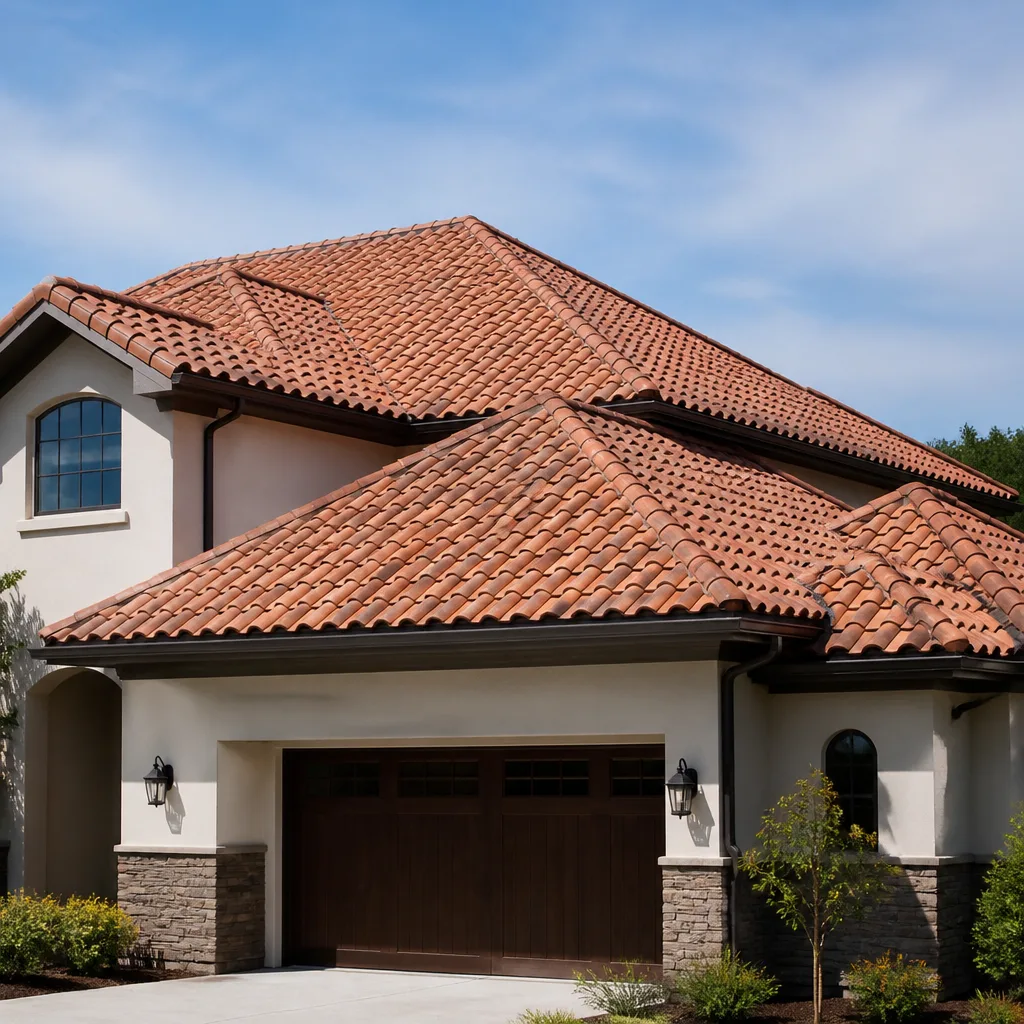
Spanish tile and terra cotta roofs cover large portions of older Los Angeles neighborhoods from West Adams to San Pedro. Replacing a broken tile sounds simple until you learn that the tile is held by a lug, batten, or mortar, and that walking on the wrong tile line cracks three more tiles for every one you replace. Matching tile color, profile, and weather-worn patina is also harder than it looks. A mismatched replacement tile on a Mission style roof is obvious from the street and can become an HOA complaint while also leaving gaps that invite water under the tile field.
3. Flat Roofs with Membrane Seams
Flat roofs dominate commercial and mid-century residential Los Angeles, particularly in the Valley, Mid-Wilshire, and the Westside’s post-war tracts. The waterproofing on these roofs is a continuous membrane, often APP or SBS modified bitumen, sometimes PVC or TPO, and the failure points are nearly always the seams, flashings, and penetrations. A homeowner patching a flat roof with roof cement from a hardware store is applying a temporary fix to a system that requires seam welding, proper lap spacing, and compatible adhesives. We regularly see DIY patches on flat roofs fail within one to two rainy seasons, and the water damage by then has spread under the membrane where no one can see it.
The Honest Cost Comparison: DIY Valley Repair vs Hiring It Out
A valley repair is one of the most common roof fixes in Los Angeles because valleys concentrate water flow and fail before the surrounding field. Here is what the job actually costs in this market, both ways.
DIY Valley Repair: The Real Numbers
- Materials: A roll of valley metal or a replacement membrane section, fasteners, sealant, and safety supplies run $90 to $180 at a Los Angeles roofing supply house or hardware store.
- Tools you may not already own: A roofing nailer rents for about $40 per day. A fall protection kit costs $120 to $250 to buy, or rents for $30 to $50 per day.
- Time: A first-time DIY valley repair on a 6:12 roof typically takes a full weekend, including roof access setup, tear-out, fitting, and clean-up. That is 12 to 16 hours of your time.
- Disposal: Old valley material, torn underlayment, and packaging may require a trip to a Los Angeles waste facility, since roof debris is not collected in standard city bins.
Professional Valley Repair: What You Are Paying For
Most residential valley repairs in Los Angeles run between $450 and $1,100 depending on roof pitch, accessibility, and the roofing material. A smaller repair or exposed-nail fix may start around $300. A full valley replacement with new underlayment on a steep tile roof can reach $1,500 or more.
The professional price includes the crew’s labor, the material warranty on the components used, the workmanship guarantee on the repair, waste removal, and liability insurance if a worker or the home is damaged. In our experience, the most expensive professional quote for a valley repair is still cheaper than the average denied insurance claim from a failed DIY patch.
What a Mistake Costs
A DIY valley repair that leaks produces a predictable list of costs in Los Angeles: interior drywall and paint at $800 to $2,500, possible insulation replacement at $500 to $1,200, and mold testing or remediation at $1,500 or more if the leak went unnoticed for weeks. Add in the original DIY materials and the professional repair you will now hire anyway, and a “saved” $500 often becomes a $5,000 to $8,000 event. That is the math most blog posts leave out.
How to Document DIY Work So It Does Not Become a Liability
If you do complete a legal, owner-builder repair on your Los Angeles home, documentation is your protection. California home sellers must disclose known defects and material repairs, and unpermitted work can trigger buyer demands, reduced offers, or escrow delays. Good records turn a vague memory into a defensible history.
Here is a documentation checklist for any DIY roofing work you complete legally:
- Take dated before photos of the damaged area from multiple angles, including the roof deck and any visible water staining.
- Photograph every step: the torn-out area, the new materials before installation, the installed repair, and the final cleanup.
- Save receipts for every material, including the specific product name and SKU. Write the date of purchase on the receipt.
- Record the date and weather conditions for the repair day and the following week, noting any rain in Los Angeles during that window.
- Write a one-page summary of what was done, why, and what materials were used. Sign and date it.
- If the work required a permit, keep the permit number, inspection notes, and final sign-off. Los Angeles permits have an inspection record that verifies code compliance.
- Add the documentation to your home records file so it transfers with the property when you sell.
The single most common mistake we see in Los Angeles real estate transactions is a homeowner who did a small roof repair years ago, threw away the receipts, and now has to explain an unpermitted patch to a buyer with no documentation. The repair may be fine. The missing paper trail is the problem.
Common Mistakes to Avoid
- Using roof cement as a permanent fix on a flat roof. Roof cement is a temporary measure. On a flat roof in Los Angeles, it dries, cracks, and separates from the membrane within one to two seasons, leaving a false sense of security while water travels under the surface.
- Walking a tile roof without knowing the load path. The correct walking line on a tile roof is the lower third of each tile overlap. Stepping in the middle of the tile cracks it. Most DIY tile repairs in Los Angeles cause more damage than they fix because homeowners step incorrectly before they ever touch the repaired area.
- Pulling an owner-builder permit and then hiring an unlicensed worker. This is illegal in California and transfers liability to the homeowner for any injury on the job. If the worker falls, the homeowner’s insurance may not cover the claim because the arrangement violated state law.
- Ignoring the roof’s slope when choosing materials. Valley metal, underlayment, and fasteners are all specified for specific pitch ranges. Materials rated for a 3:12 roof may fail rapidly on a 7:12 Los Angeles hill home.
- Failing to photograph the repair. Without a visual record, you have no way to prove the repair was done correctly if a future leak occurs in the same area, and no way to show a buyer or insurer what work was performed.
- Assuming homeowners insurance will cover a DIY failure. It often will not, especially in Los Angeles where adjusters are experienced with canyon, hillside, and coastal roofing claims and know exactly what an unpermitted patch looks like.
- Selling the home within a year of a DIY repair without disclosure. California disclosure law is strict, and the penalty for hiding a known roof repair can include rescission of the sale or damages after closing.
When to Call a Professional
Call a licensed roofer the moment you see water staining on a ceiling, loose flashing around a chimney or skylight, missing tiles after a Santa Ana wind event, or any sagging in the roof plane. Those are not cosmetic issues, and delaying them does not make the repair smaller. If you are unsure whether a repair crosses the legal line, a licensed contractor can assess it quickly and tell you what is required. Roof repair in Los Angeles is our core work, and our team at Birchbark Roofing walks every roof before recommending anything. For homeowners comparing options, our guide to choosing a roofing company in Los Angeles explains what to look for, and our roof replacement guide for Los Angeles covers full re-roof scenarios when repair no longer makes sense. Birchbark Roofing offers free estimates across Los Angeles, with a written price before any work starts. Call (424) 766-4937 to schedule yours.
Frequently Asked Questions
California law allows a homeowner to perform maintenance and minor repairs on their own primary residence without a contractor’s license, but any repair that changes the roof covering, underlayment, or flashing crosses into licensed contractor territory and may require an LADBS permit. The moment you sell the home, the work also faces disclosure requirements. Call (424) 766-4937 if you want a licensed opinion on whether your repair qualifies.
Most residential roof repairs in Los Angeles run between $300 and $1,500 depending on the roof type, pitch, and scope of the damage. Small exposed-nail fixes and minor flashing reseals start lower; valley replacements, flat roof membrane patches, and tile work run higher. You will see your exact number in writing before any work starts.
It can. If an unpermitted or improperly installed DIY repair fails and causes interior damage, your carrier can deny the claim under the policy’s maintenance or negligence provisions. This is especially true in Los Angeles, where adjusters regularly inspect for permit records on roofing claims. The safest path is a licensed repair with a written scope of work.
Yes. Manufacturers like GAF, CertainTeed, and Tamko condition their warranties on installation by licensed contractors using specified methods. Homeowner repairs void warranty coverage on the affected area and can complicate claims elsewhere on the roof. A workmanship warranty from your previous roofer is also void in any area you modify yourself.
Generally not. Flat roofs common across Los Angeles rely on continuous membrane systems, and hardware store patching compounds are temporary at best. A failed flat roof patch can allow water to travel unseen under the membrane and into your ceiling. In our experience, flat roof repairs are best left to professionals with membrane experience.
Photograph the repair from start to finish, save every receipt with the purchase date written on it, record the repair date and weather, and write a one-page summary of the work. Keep the file with your home records and disclose the repair when you sell. This documentation protects you in escrow and with insurers. For a professional assessment before you list, call (424) 766-4937.
The Bottom Line
The DIY-versus-professional decision for Los Angeles roofs comes down to a simple question: can you afford the mistake, and will your insurance and warranty still cover you if the repair fails? For debris clearing, exposed screw replacement, and emergency patching during rain, homeowner work is reasonable and often necessary. For anything touching the waterproofing system, flashing, tile field, or roof structure, the legal and financial exposure outstrips the savings. Los Angeles has steep hillside roofs, tile roofs with mortar and batten work, and flat roofs with membrane seams, and all three punish amateurs. When in doubt, get a written price from a licensed roofer before you climb the ladder. If it is not done right, the Done Right Promise means we make it right.
Written by Erik Lindgren, Owner at Birchbark Roofing, serving Los Angeles since 2000.