
Last updated October 8, 2026
Free roof inspection with deck photos before we talk money - GAF and Owens Corning certified installation
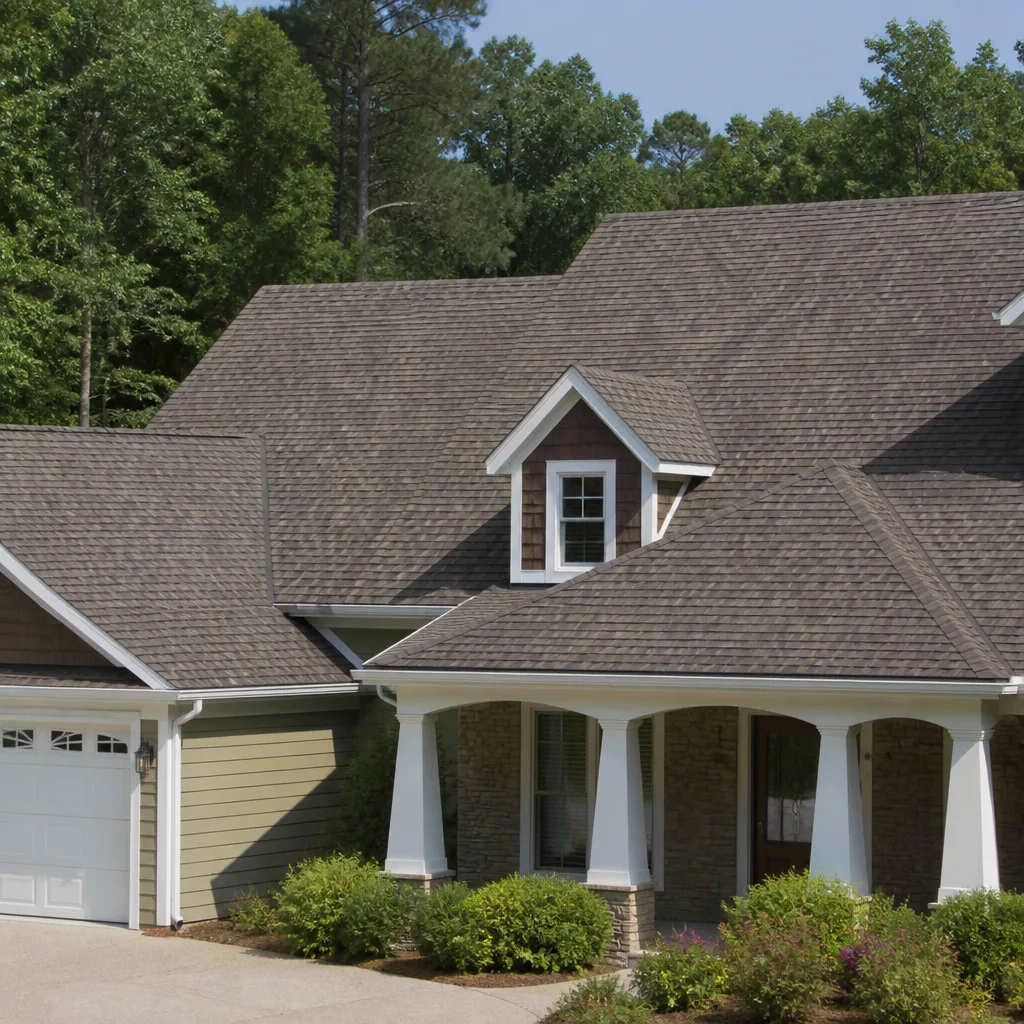
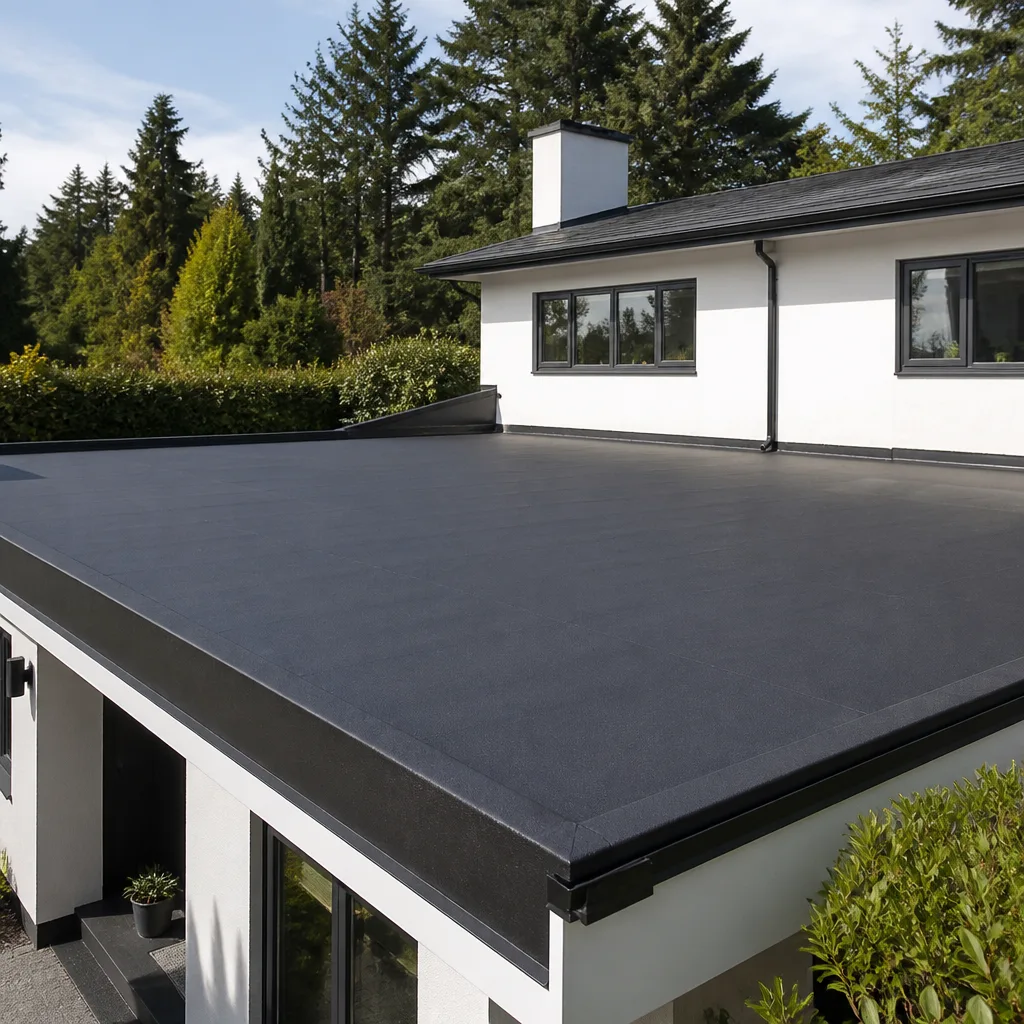
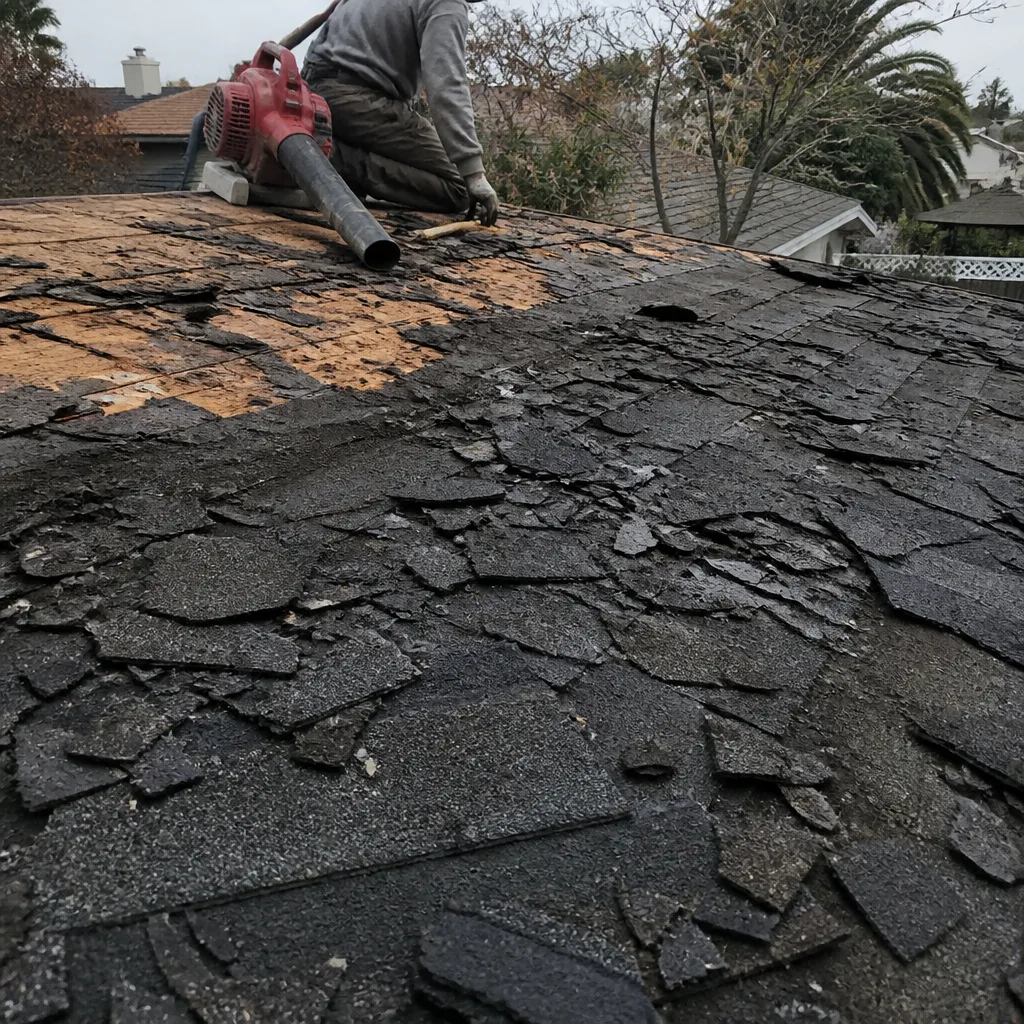 Before
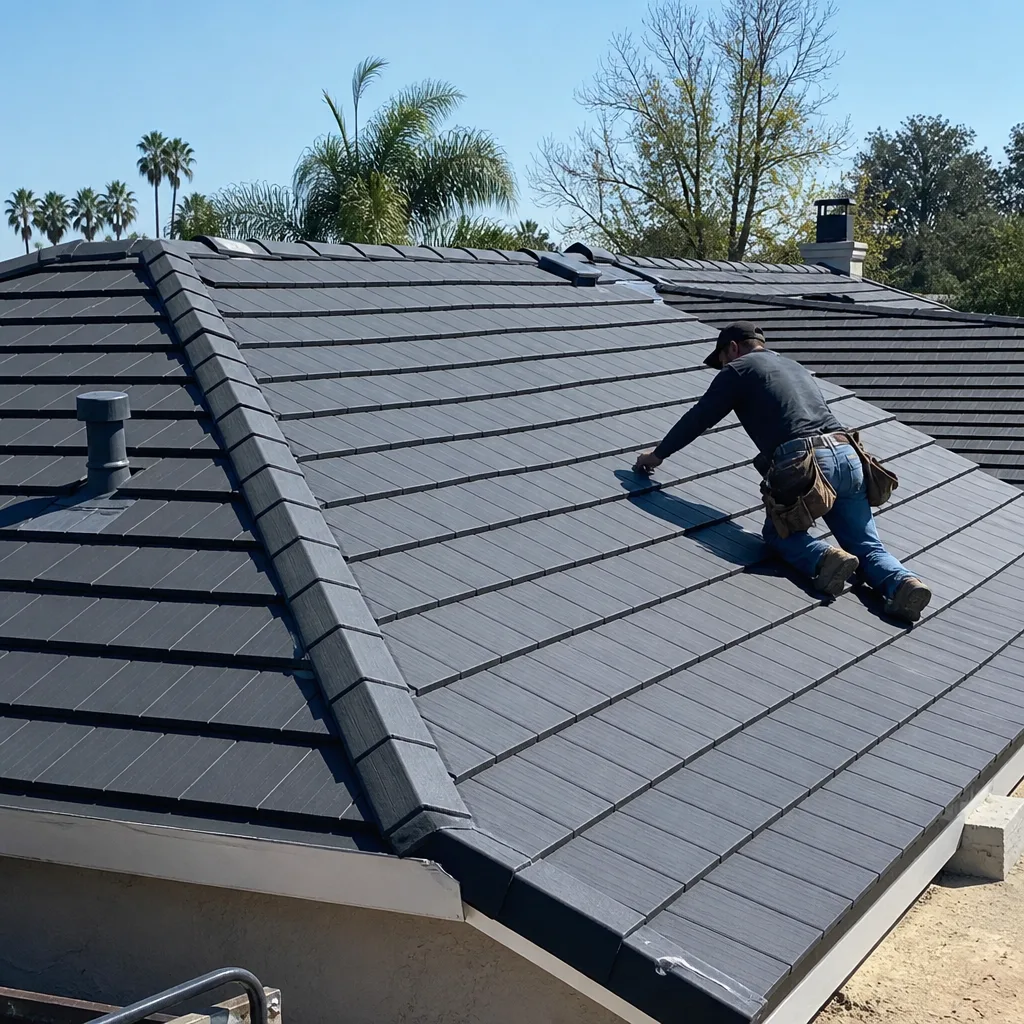 After
After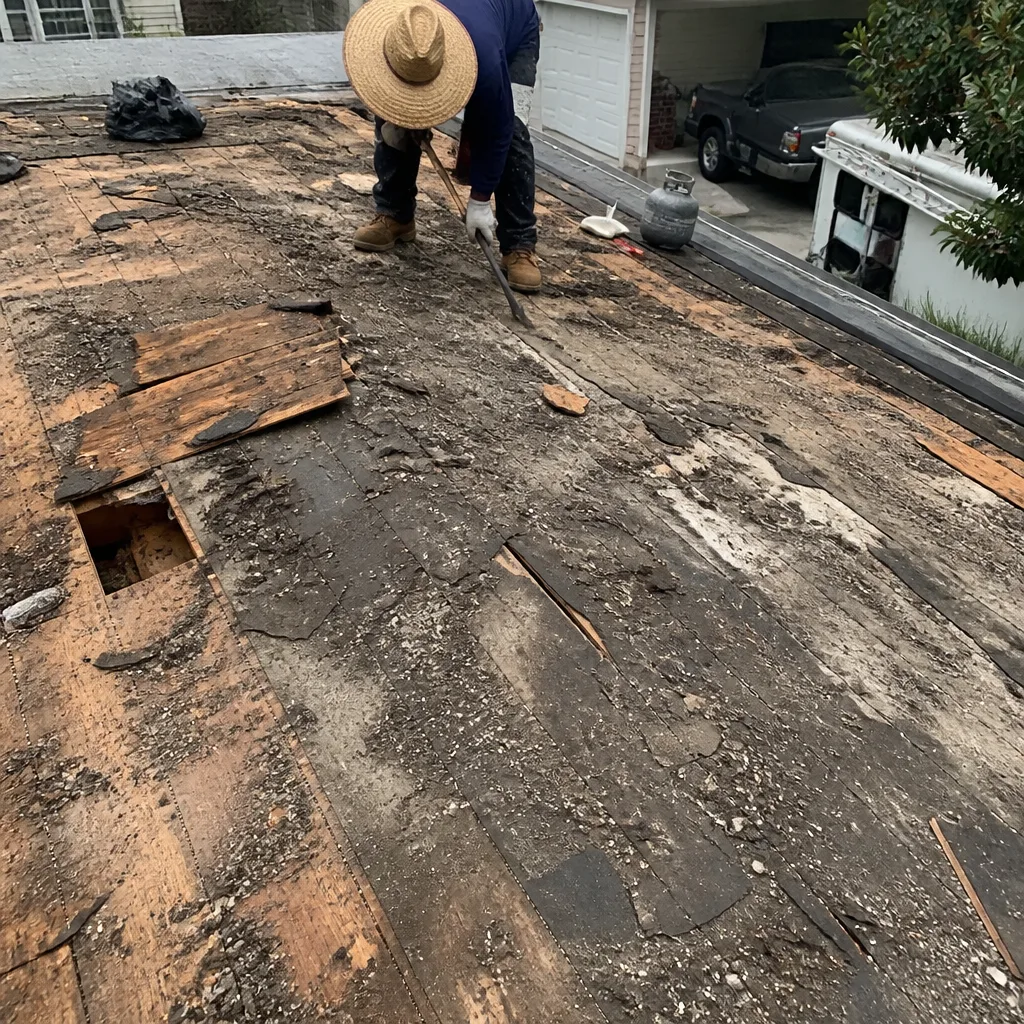 Before
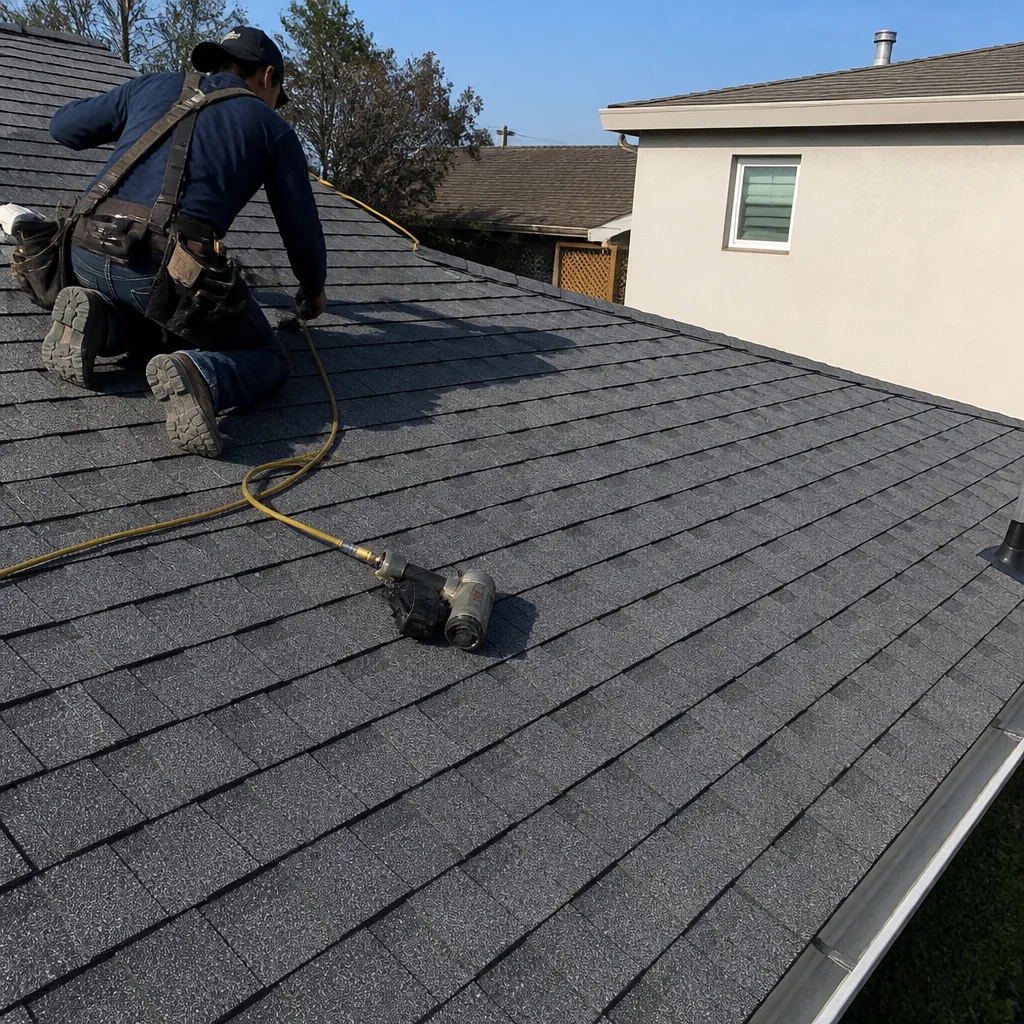 After
After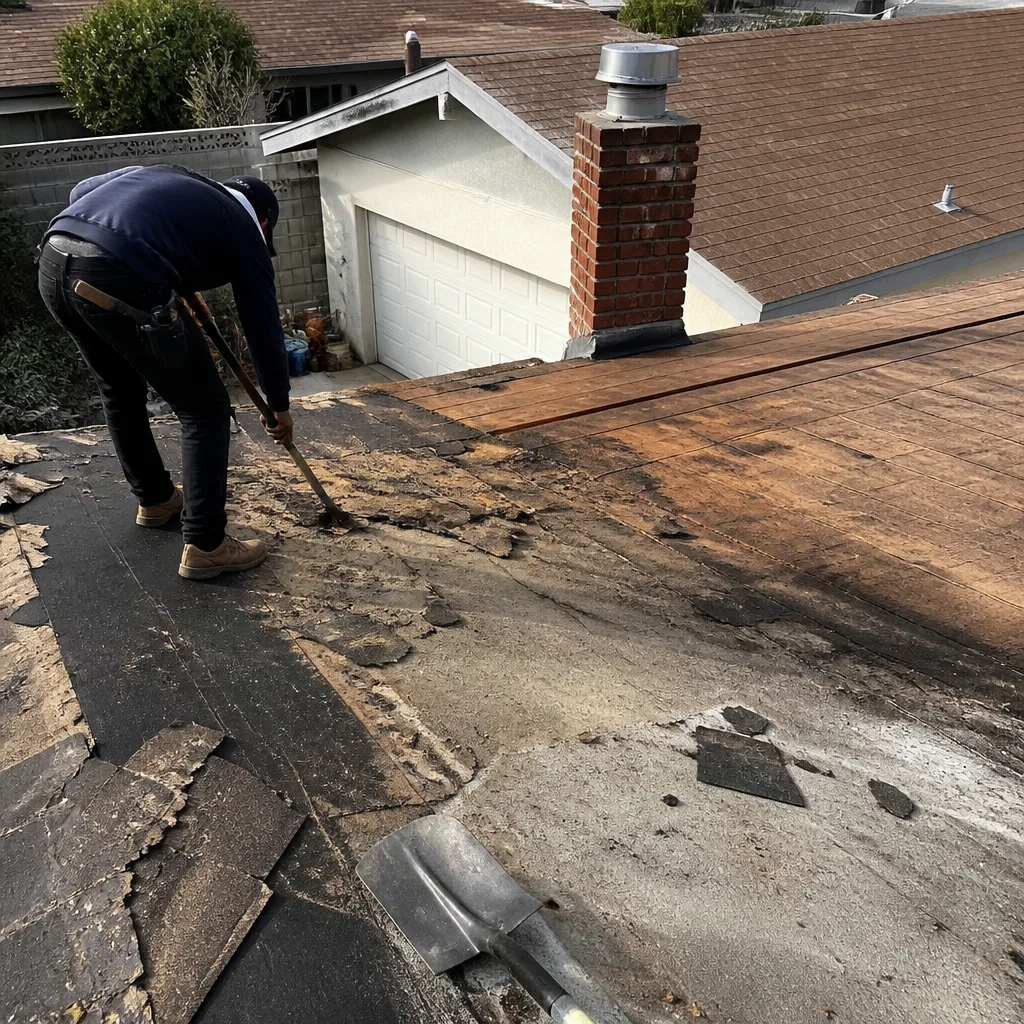 Before
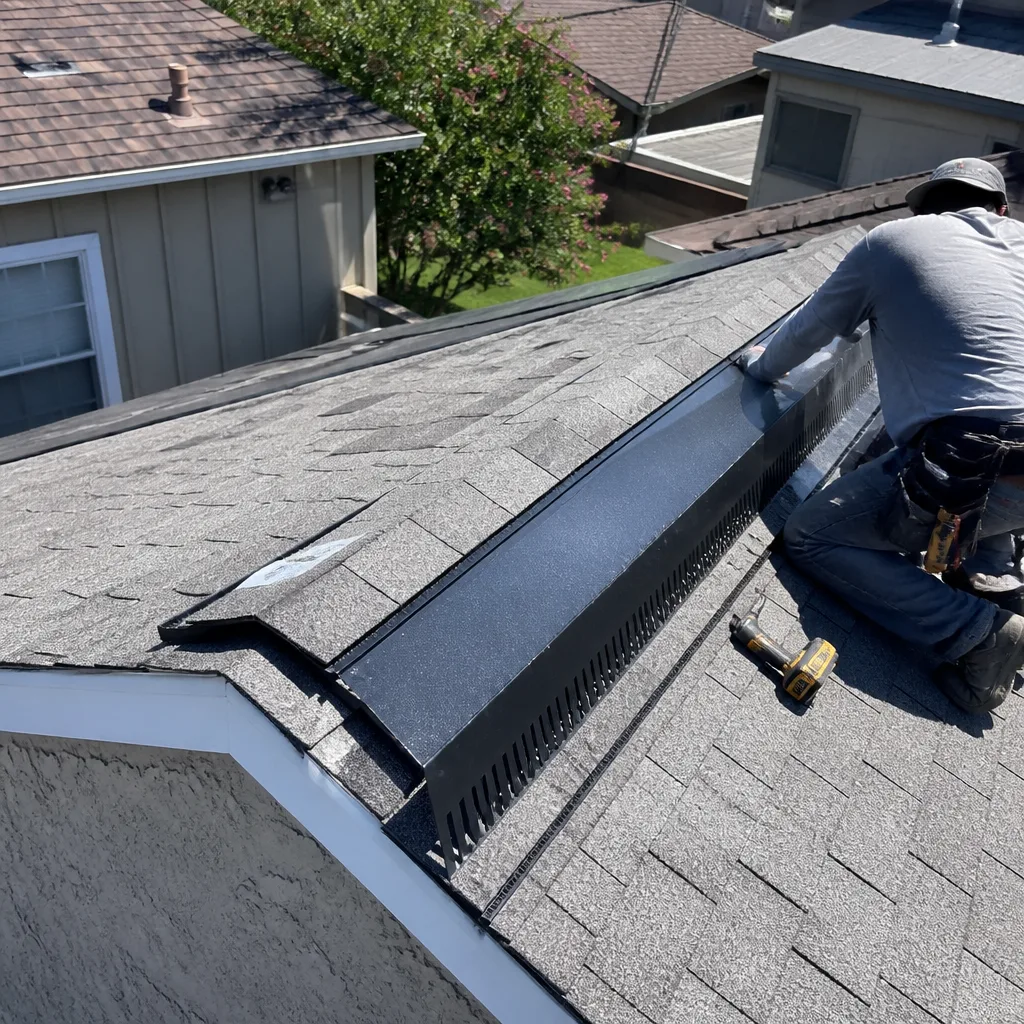 After
AfterDIY vs Professional Roofing Company: What’s Safe to Do Yourself
A $40 tube of roofing sealant from a hardware store can cause a five-figure insurance claim denial if it was applied as a DIY fix to a problem that required a permitted repair. We’ve watched this exact scenario unfold in Los Angeles more times than we’d like to count. The conversation about DIY roofing almost always hinges on skill: can you swing a hammer, climb a ladder, follow a YouTube tutorial? But for Los Angeles homeowners, the real question is liability. This guide walks through what California law actually allows you to do on your own roof, what it quietly penalizes you for, and where the smart money draws the line between a tube of caulk and a call to a Roofing Company.
Quick Answer
Los Angeles homeowners can safely handle three roofing tasks themselves: clearing gutters, replacing a cracked vent cap, and applying temporary waterproof membrane over storm damage while waiting for a roofer. Everything else, especially any repair touching the roof’s waterproofing layers or structure, requires a California C-39 licensed contractor and a permit from the Los Angeles Department of Building and Safety, because unpermitted roofing work can void your homeowner’s insurance and surface as a defect when you sell the house.
Table of Contents
- What California Law Actually Allows Homeowners to Do
- The Three Safe DIY Roofing Jobs in Los Angeles
- The Liability Problem: Insurance, Permits, and Resale
- Warranty Math: How DIY Work Voids Manufacturer and Workmanship Guarantees
- Owner-Builder Permits and Their Hidden Catch
- How to Get a Written Scope So You Can Decide What’s Worth Doing Yourself
- Step-by-Step: What to Check Before Touching Anything
- Common Mistakes to Avoid
- When to Call a Professional
- Frequently Asked Questions
- The Bottom Line
What California Law Actually Allows Homeowners to Do
California’s Contractors State License Board draws a clear line, though few Los Angeles homeowners know where it sits. State law says a homeowner who lives in the house may perform work without a contractor’s license, but only if the work is exempt from permit requirements. The moment a repair touches structural roofing components, the waterproofing underlayment, or any system that requires a permit from the Los Angeles Department of Building and Safety, the homeowner has crossed into licensed-contractor territory.
Here’s what that means in practical terms for a Los Angeles homeowner:
- Gutter clearing and downspout flushing require no permit, no license, and no inspection. These are maintenance tasks, not construction.
- Replacing a cracked vent cap or pipe collar sits in a gray zone. If you’re swapping a visible exterior cap without disturbing the underlayment, it’s maintenance. If you’re pulling shingles or flashing, it’s a repair and the permit question opens up.
- Applying temporary waterproof membrane over storm damage, such as an emergency tarp or peel-and-stick patch, is an emergency protective measure, not a permanent repair. Los Angeles code allows temporary protection while you arrange for a licensed roofer.
- Anything involving shingles, tiles, underlayment, flashing replacement, roof decking, or structural repairs requires a permit and a C-39 roofing contractor. No exceptions for homeowner labor on permitted repairs.
We mention this not to protect our business, but because Los Angeles code enforcement and homeowners’ insurance adjusters both look at the same question: was the work permitted and performed by a licensed contractor? If the answer is no, the consequences land squarely on the homeowner.
The Three Safe DIY Roofing Jobs in Los Angeles
We’ll give you a straight list, because a lot of guides won’t. These three tasks are genuinely safe for a homeowner to handle in Los Angeles, assuming you’re comfortable on a ladder and follow basic fall-safety common sense. Anything beyond these three belongs in the professional column.
1. Clearing Gutters and Downspouts
Los Angeles gets most of its rain between November and March, and the weeks before that season are when gutters fill with dead leaves from the sycamores and oaks that line so many local neighborhoods. Cleaning them is a maintenance task, not a roofing repair. Use a ladder stabilizer, never lean the ladder against the gutter itself, and flush the downspouts with a garden hose. In neighborhoods like Los Feliz and Silver Lake, where mature trees overhang roofs, we recommend checking gutters twice a year. This ten-minute job prevents water from backing up under the roof edge, which is one of the most common sources of Los Angeles roof leaks.
2. Replacing a Cracked Vent Cap or Pipe Collar
The plastic or metal caps covering plumbing vents and exhaust pipes crack under UV exposure, and Los Angeles sun is unforgiving. A $12 replacement cap from any hardware store can be swapped with four screws or a few turns of a storm collar. The key is that you’re replacing the cap itself, not the flashing or the pipe boot underneath it. If the flashing around the pipe is rusted, lifted, or separated from the roof surface, stop and call a roofer. That’s a leak point, and patching it yourself creates the exact scenario that starts this guide.
3. Applying Temporary Waterproof Membrane Over Storm Damage
When an atmospheric river rolls through Los Angeles and a leak opens up in the middle of the night, you don’t wait for daylight to do something. Peel-and-stick waterproof membrane, sold in rolls at any building supply store, can be pressed over the damaged area from inside the attic or below the roof deck to stop active water intrusion. This is temporary protection, not a repair. It buys you hours or days while you arrange for a licensed roofer to inspect and quote the actual fix-see How Long Does Roof Repair Take? Timelines and What to Expect for typical timelines. Los Angeles building officials treat this as an emergency measure, not as unpermitted work.
These three tasks share a defining trait: they don’t alter the roof’s water-shedding layers. The moment a job involves lifting shingles, cutting into underlayment, replacing flashing, or touching decking, it’s no longer safe DIY territory.
The Liability Problem: Insurance, Permits, and Resale
The DIY roofing conversation almost always focuses on skill, but the real question for Los Angeles homeowners is liability. Here’s the part most guides skip: unpermitted roofing work can void a homeowner’s insurance claim and surface as a defect during a home sale. Let’s walk through both scenarios.
Insurance claims. Homeowners’ insurance policies in California contain clauses requiring that repairs be performed by qualified professionals and, where required, permitted. When you file a water-damage claim, the adjuster’s first job is to find a reason to limit or deny the payout. If the adjuster finds that a prior leak was patched by the homeowner using sealant rather than the proper permitted repair, the insurer can argue the water damage resulted from improper maintenance or unpermitted work. The claim gets denied. The $40 tube of sealant becomes the reason a $14,000 interior restoration isn’t covered.
Home sales. California’s residential disclosure laws force sellers to reveal all known defects and unpermitted work. When a buyer’s inspector finds sealant smeared across flashing or shingles replaced by someone who clearly wasn’t a roofer, the buyer’s lender can refuse to fund the loan until the work is corrected by a licensed contractor with a permit. You’ll be paying for it then, and you’ll be paying more than you would have if the original repair had been done right.
The Los Angeles Department of Building and Safety maintains permit records for every address, and those records are checkable online. If a buyer or their agent looks up your home and finds no permit for a roof repair that the inspection reveals, the sale hits a wall. It’s not a hypothetical; we’ve spoken to homeowners in Echo Park and West Adams who discovered this during escrow.
Warranty Math: How DIY Work Voids Manufacturer and Workmanship Guarantees
Roofing manufacturers like GAF, CertainTeed, and Owens Corning attach specific installation requirements to their shingle, tile, and underlayment warranties. Most Los Angeles homes with a newer roof carry one of these manufacturer warranties, plus a separate workmanship guarantee from the installing roofer. Both of them contain language that voids coverage when unqualified persons modify the roof surface.
Here’s how it plays out:
- Manufacturer warranty: If you lift shingles, add sealant, or patch flashing and the roof later fails in that area, the manufacturer’s warranty excludes the failure. Their inspectors can tell the difference between factory installation and homeowner work, and they document it.
- Workmanship warranty: The roofer who installed the roof is off the hook for any area you modified, even if the modification was unrelated to the eventual failure. The warranty language assigns responsibility for alterations to the person who performed them.
- Tamko and Boral warranties have similar clauses. A homeowner’s sealant patch over a valley or ridge line voids the warranty for that entire roof section, not just the patched spot.
Before any DIY fix, homeowners in Los Angeles should pull out the original roofing paperwork and read the warranty exclusions. We’ve had homeowners tell us they didn’t know they were voiding a 30-year CertainTeed warranty by adding a $9 tube of caulk to a ridge line. The warranty doesn’t care that the fix was cheap; it cares that the fix was made by someone who wasn’t the licensed installer.
Roof repair in Los Angeles that keeps your warranty intact starts with a licensed contractor who can document the work against the manufacturer’s installation standards.
Owner-Builder Permits and Their Hidden Catch
California law has an owner-builder provision that lets homeowners pull permits and act as their own general contractor on their own home. Some Los Angeles homeowners hear about this and assume it’s a workaround for doing their own roof replacement. It isn’t, and the fine print contains a trap.
Under the owner-builder provision, a homeowner can apply for a permit, hire subcontractors, and oversee the work without a general contractor’s license. For roofing specifically, the homeowner must still hire a licensed C-39 contractor for the actual roofing work unless the homeowner performs the work themselves, in which case they assume full contractor liability for the project.
The hidden catch: an owner-builder who performs permitted work on their own home must, under California law, disclose the fact that they were the owner-builder for three years if they sell the home during that window. This disclosure appears in the seller’s transfer disclosure statement, and it alerts the buyer and the buyer’s lender that the roofing work was not performed by a licensed contractor. That single disclosure can complicate financing, reduce offers, and invite additional inspections.
There’s also the structural liability question. A California licensed roofer carries workers’ compensation, general liability insurance, and a contractor’s bond. An owner-builder assumes those liabilities personally. If a worker is injured on the site, the worker files against the homeowner’s insurance, and most Los Angeles homeowners’ policies exclude work-related claims on construction projects. The lawsuit risk lands on the homeowner’s personal assets.
For most Los Angeles homeowners, the owner-builder route exists on paper but carries no practical advantage. A licensed roofer like Birchbark Roofing home handles permits, insurance, and labor on every job, and the 365-Day Done Right Promise means if the work isn’t right, we make it right, stamped on every repair and replacement.
How to Get a Written Scope So You Can Decide What’s Worth Doing Yourself
If you’re considering a DIY approach because you want to understand the job better or control costs, the smartest first step is getting a written scope of work from a licensed Los Angeles roofer. This is not a commitment; it’s a diagnostic document that tells you exactly what the job involves, which parts require permits, and what each component costs.
Here’s a step-by-step approach:
- Request a written scope from a licensed roofer. A scope lists every step: what gets removed, what gets replaced, what materials are specified, and what permit work is required. It’s yours to keep whether you hire that roofer or not.
- Identify the permit-required components. In Los Angeles, any work touching underlayment, flashing, decking, or replacement of a roof assembly requires a permit. Those components are automatically professional-territory.
- Isolate the safe DIY items. If the scope includes gutter clearing, vent cap replacement, or temporary protection, those are the pieces you can handle yourself without voiding anything.
- Compare the full scope to your DIY plan. Most Los Angeles homeowners discover that the affordable parts are maintenance, and the expensive parts are precisely the ones that require permits and licensed labor. The scope makes that visible in writing.
Birchbark Roofing gives every Los Angeles homeowner a written price in dollars before any work starts. You’ll see the exact number on paper, with each line item spelled out. No handshake estimates, no change orders hiding in the fine print. Erik Lindgren and the team at Birchbark believe a written price is the only kind that counts, and you’ll have that number before you decide anything.
Step-by-Step: What to Check Before Touching Anything
If you’re standing in the hardware store aisle with a tube of sealant in your hand, run through this checklist before you buy it. Each step takes a minute and saves a claim, a warranty, or a sale.
- 1
Check the permit requirement. Search the Los Angeles Department of Building and Safety for your address and look at what permits exist. If the repair touches anything beyond the three safe DIY jobs listed above, it needs a permit and a licensed contractor.
- 2
Find your original roofing paperwork. Manufacturer warranty, workmanship guarantee, installation date. Read the exclusion section. If a DIY fix voids coverage, that changes the math instantly.
- 3
Locate the source of the leak. Before patching anything, know where the water is entering. A leak can travel across the roof deck and emerge far from the actual penetration. Tracking it correctly requires experience we’re happy to share, but guessing wrong means your patch misses the real problem.
- 4
Check your insurance policy language. Look for the section about maintenance and repairs. You’re checking whether an unpermitted repair affects coverage for water damage claims.
- 5
Document everything. If you do perform a safe DIY task, photograph it before and after. Those photos become evidence if a future claim or sale raises questions about the roof’s condition.
- 6
Commit to a written scope. Even if you plan to do the safe parts yourself, get a professional scope for the whole job. It tells you which parts are genuinely yours to do, and it gives you a benchmark for pricing the rest.
In Los Angeles, most residential roof repairs in the scope of a leak or flashing failure run between $450 and $1,800 depending on the roof type and the extent of the water damage beneath the surface. You’ll see your exact number in writing before any work begins.
Common Mistakes to Avoid
- Smearing sealant over flashing without knowing why it failed. Flashing fails for a reason: rust, improper slope, freeze-thaw movement, or installation error. Sealing over it hides the cause and traps moisture beneath the sealant, which accelerates rot. Then the insurance adjuster finds the patch and the claim gets denied.
- Assuming a small leak means a small repair. Water travels across the roof deck before it drips into the living space. A dime-sized drip in a bedroom ceiling often traces back to a penetration fifteen feet away on the opposite slope. DIY patches at the visible spot miss the source.
- Climbing onto a Los Angeles tile roof in the wrong shoes. Concrete and clay tile crack under foot pressure. Once cracked, the tile must be replaced, and walking across it repeatedly causes damage that makes the repair more expensive than the original problem.
- Ignoring the permit question until escrow. Los Angeles buyers and their lenders pull permit history. Unpermitted roof work is one of the most common reasons escrow stalls or collapses. The cost of fixing it then includes the licensed repair plus the urgency of a sale at risk.
- Voiding a manufacturer warranty over a $12 part. We’ve covered this above, but it bears repeating: a $40 repair that voids a 30-year warranty is the most expensive $40 you’ll ever spend on your Los Angeles home.
- Using the wrong sealant for the roof type. Flat Los Angeles roofs need different materials than sloped shingle roofs. Sealants designed for one fail quickly on the other, and the failure looks like negligence to an adjuster or inspector.
When to Call a Professional
Call a licensed roofer when the work touches flashing, underlayment, shingles, tiles, decking, or anything that requires a permit from the Los Angeles Department of Building and Safety. Call when water is entering the house, when the roof is older than fifteen years, when a previous patch has failed, or when you’re preparing to sell and need the roof’s history clean. Call when the neighbor’s tree limb has punctured the roof surface, when the gutters have pulled away from the fascia, or when you see daylight through the attic sheathing. Birchbark Roofing offers free estimates in Los Angeles: call (424) 766-4937. We’ll come out, evaluate the roof, and give you a written price before any work starts. Shoes covers at the door, drop cloths through the hallway, all debris cleared and photographed before we leave.
For homeowners weighing repair versus replacement, our roof replacement in Los Angeles page walks through what a full re-roof involves and what it costs.
And if you’re looking for a roofing company in Los Angeles that writes down the price and stands behind the work, we’d like to show you the Birchbark difference.
Frequently Asked Questions
You can perform maintenance tasks like gutter clearing, vent cap replacement, and temporary storm protection without a license, but any repair touching roofing underlayment, flashing, shingles, decking, or structural components requires a California C-39 licensed contractor and a permit from the Los Angeles Department of Building and Safety. Call (424) 766-4937 for a free estimate and we’ll tell you in writing which category your repair falls into.
Yes, in most cases. Manufacturer warranties from GAF, CertainTeed, Owens Corning, Tamko, and Boral contain exclusions for work performed by unqualified persons, and a homeowner’s sealant patch typically voids the warranty for the affected roof section. Your workmanship warranty from the original installer is also voided for any area you modify. Call (424) 766-4937 to ask about your specific warranty before you touch the roof.
Yes. Los Angeles permit records are public and searchable by address, and California disclosure laws require sellers to disclose unpermitted work and known defects. Lenders frequently refuse to fund purchases on homes with unpermitted roofing work discovered during inspection, which forces the seller to pay for a licensed, permitted repair at the worst possible time. Call (424) 766-4937 to get your roof in sale-ready condition before you list.
An owner-builder permit allows a homeowner to act as their own general contractor on their own home, but it requires the homeowner to assume full contractor liability, including workers’ compensation and injury risk, and it must be disclosed if the home is sold within three years. The disclosure can complicate financing and discourage buyers. Call (424) 766-4937 for a straight answer about whether an owner-builder route makes sense for your roof.
Three tasks are genuinely safe: clearing gutters and flushing downspouts, replacing a cracked vent cap or pipe collar without disturbing flashing, and applying temporary peel-and-stick waterproof membrane over storm damage while you arrange for a licensed roofer. Anything beyond those three tasks involves the roof’s waterproofing layers and falls into professional territory. Call (424) 766-4937 if you’re unsure where your job falls.
Most residential roof repairs in the leak-and-flashing scope run between $450 and $1,800 depending on the roof type, the penetration point, and the extent of water damage beneath the surface. The exact number depends on the scope of work, which a licensed roofer can put in writing before any work starts. Call (424) 766-4937 for a free estimate and a written price.
The Bottom Line
DIY roofing in Los Angeles has a low ceiling: three safe tasks, all of them maintenance, none of them repairs. The moment a job touches the roof’s waterproofing or structural layers, it requires a licensed contractor, a permit, and professional liability coverage. Unpermitted work voids manufacturer warranties, cancels workmanship guarantees, gives insurers a reason to deny claims, and surfaces as a defect during home sales. The smartest DIY decision is knowing where your part ends. A written scope from a licensed Los Angeles roofer makes that line visible in dollars and in language you can keep. Birchbark Roofing provides that written scope and a written price, every time, before any work starts.
Written by Erik Lindgren, Owner at Birchbark Roofing, serving Los Angeles since 2000.