
Last updated October 8, 2026
Free roof inspection with deck photos before we talk money - GAF and Owens Corning certified installation
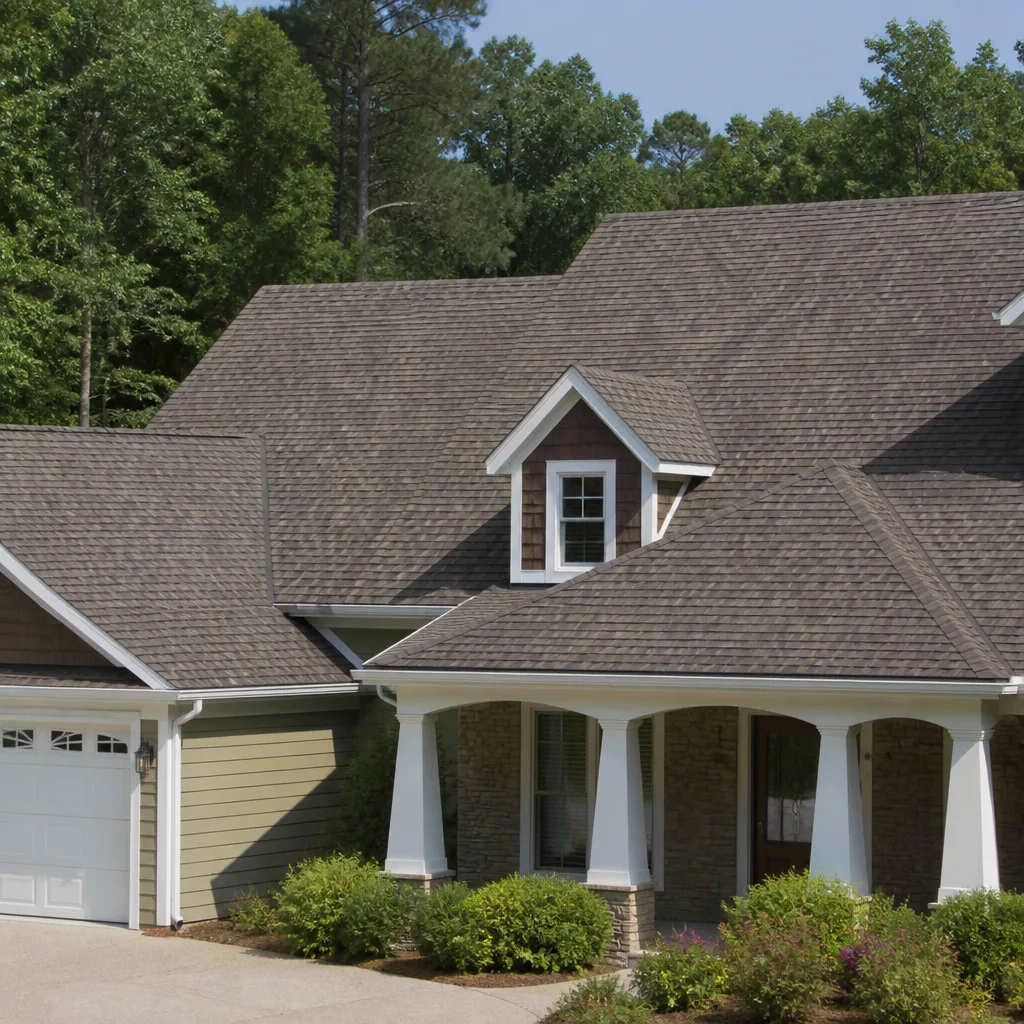
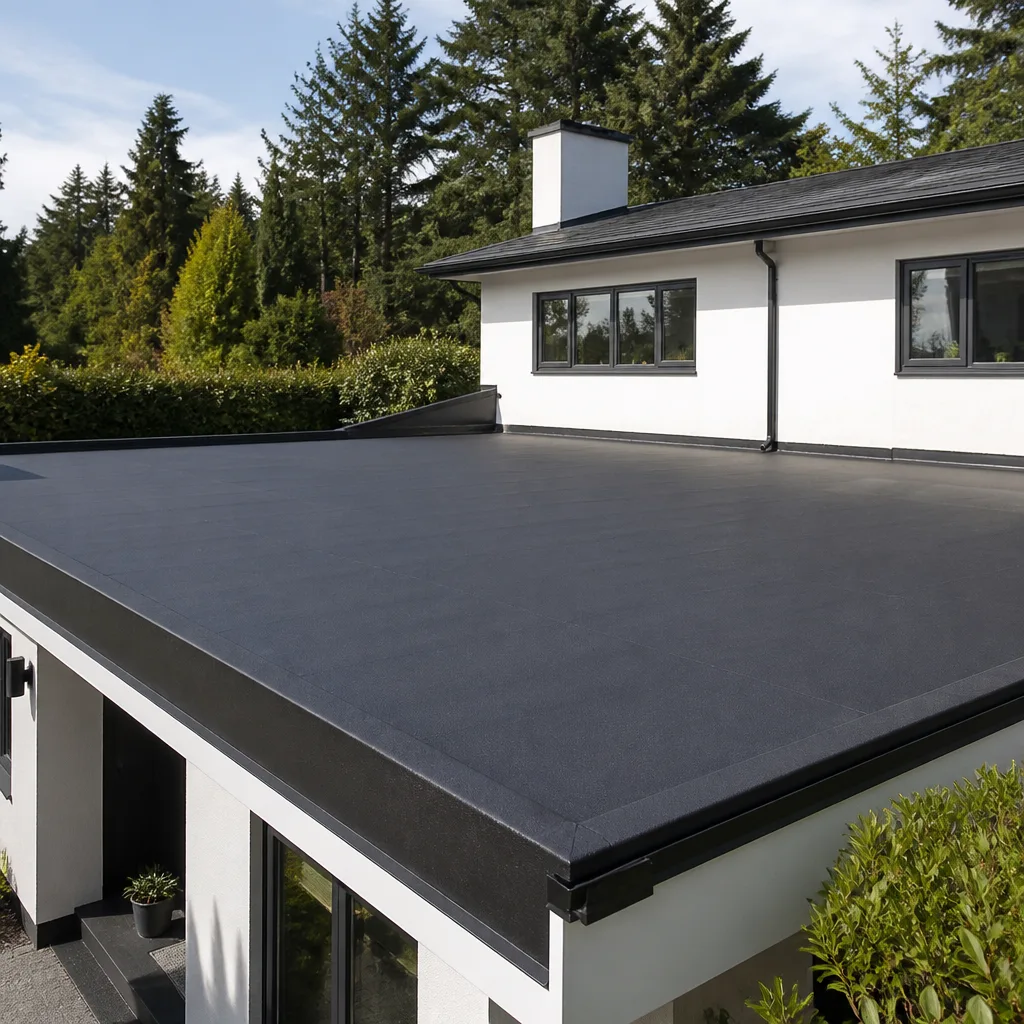
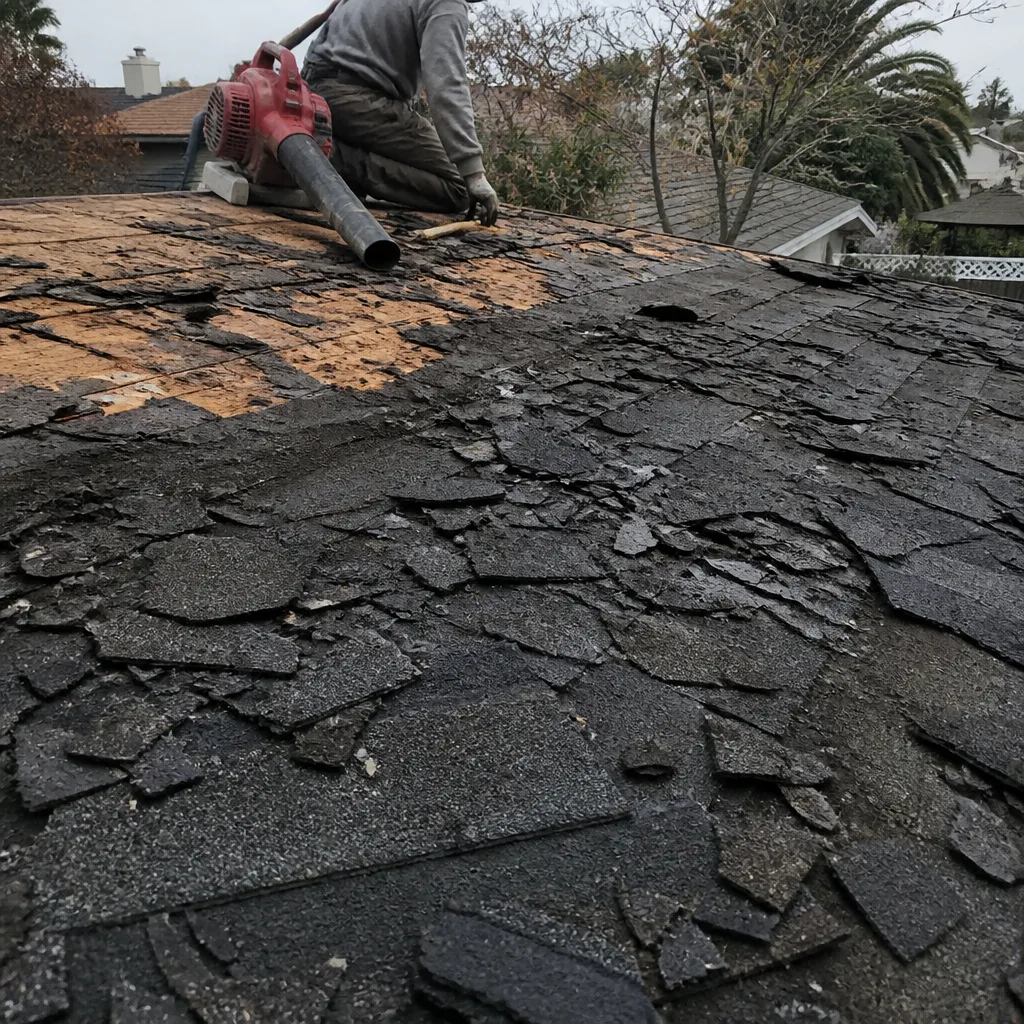 Before
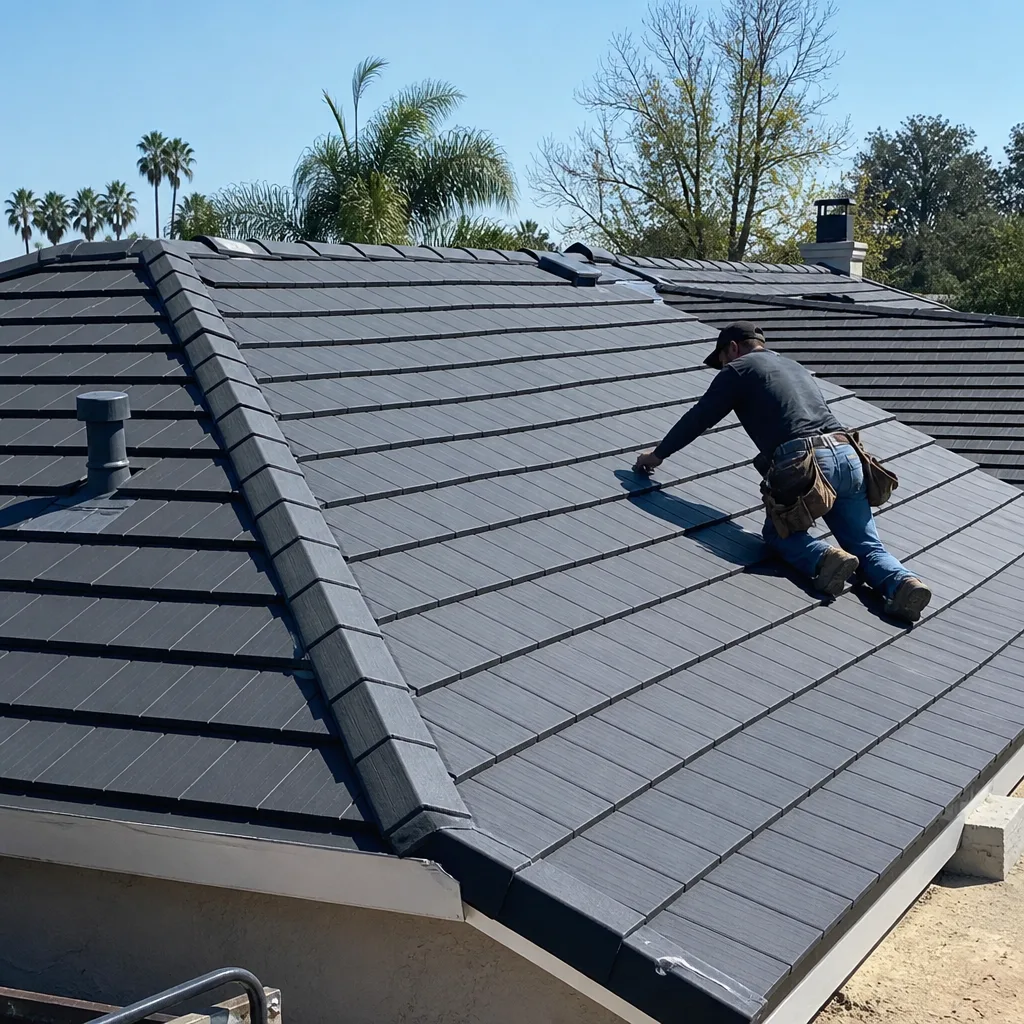 After
After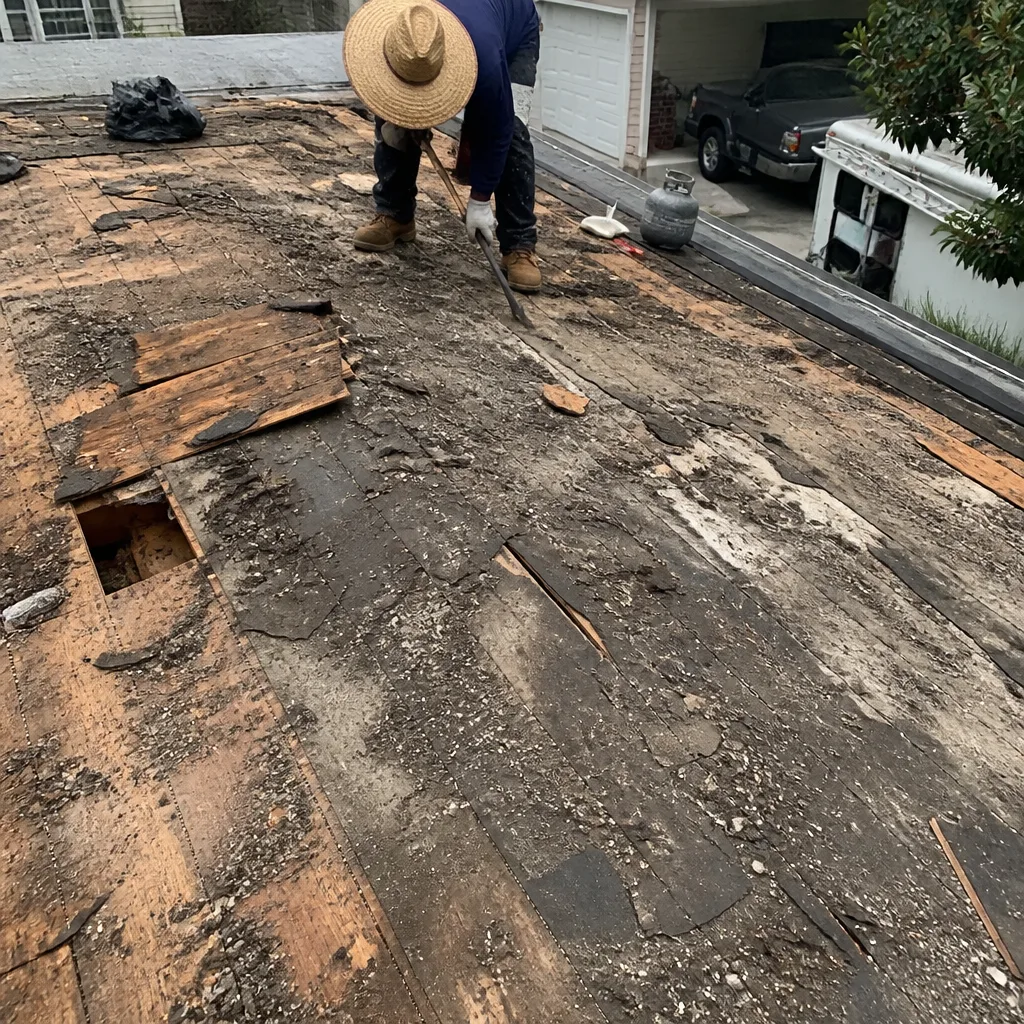 Before
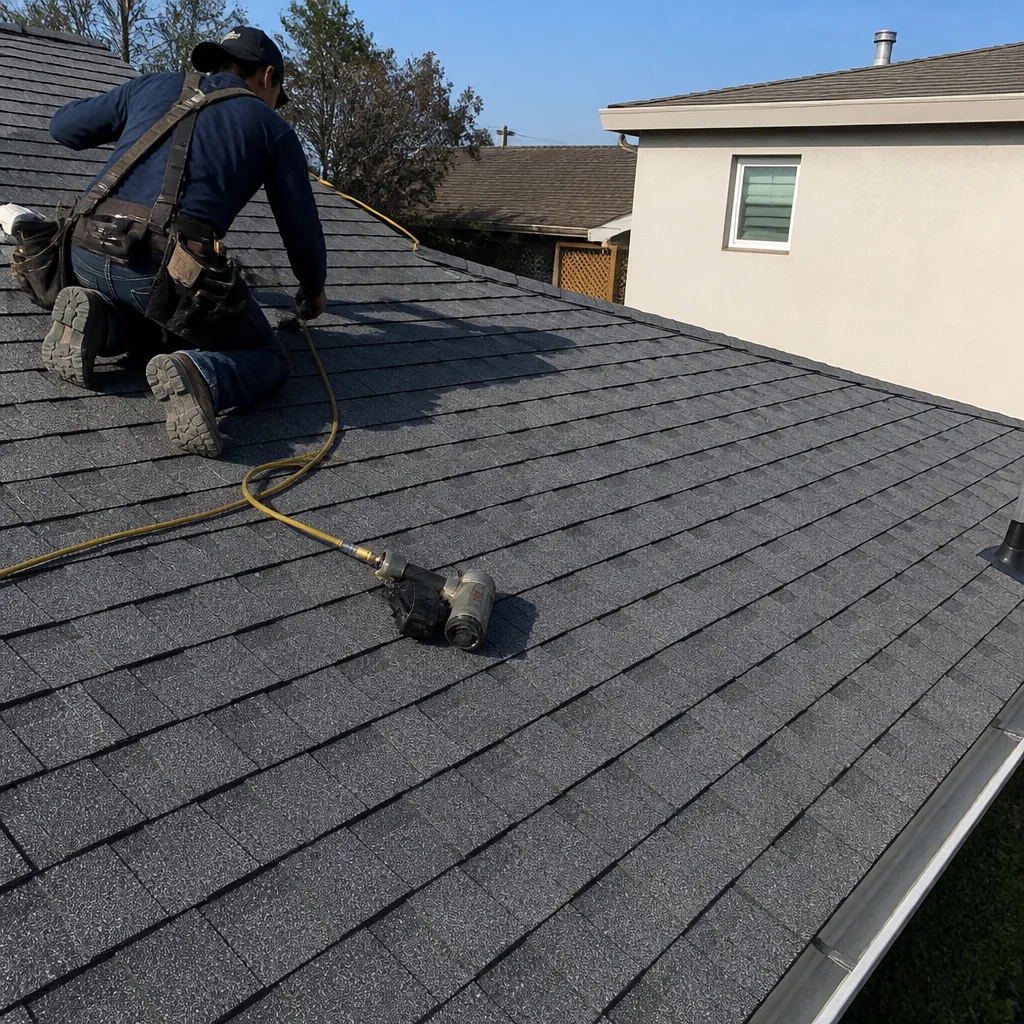 After
After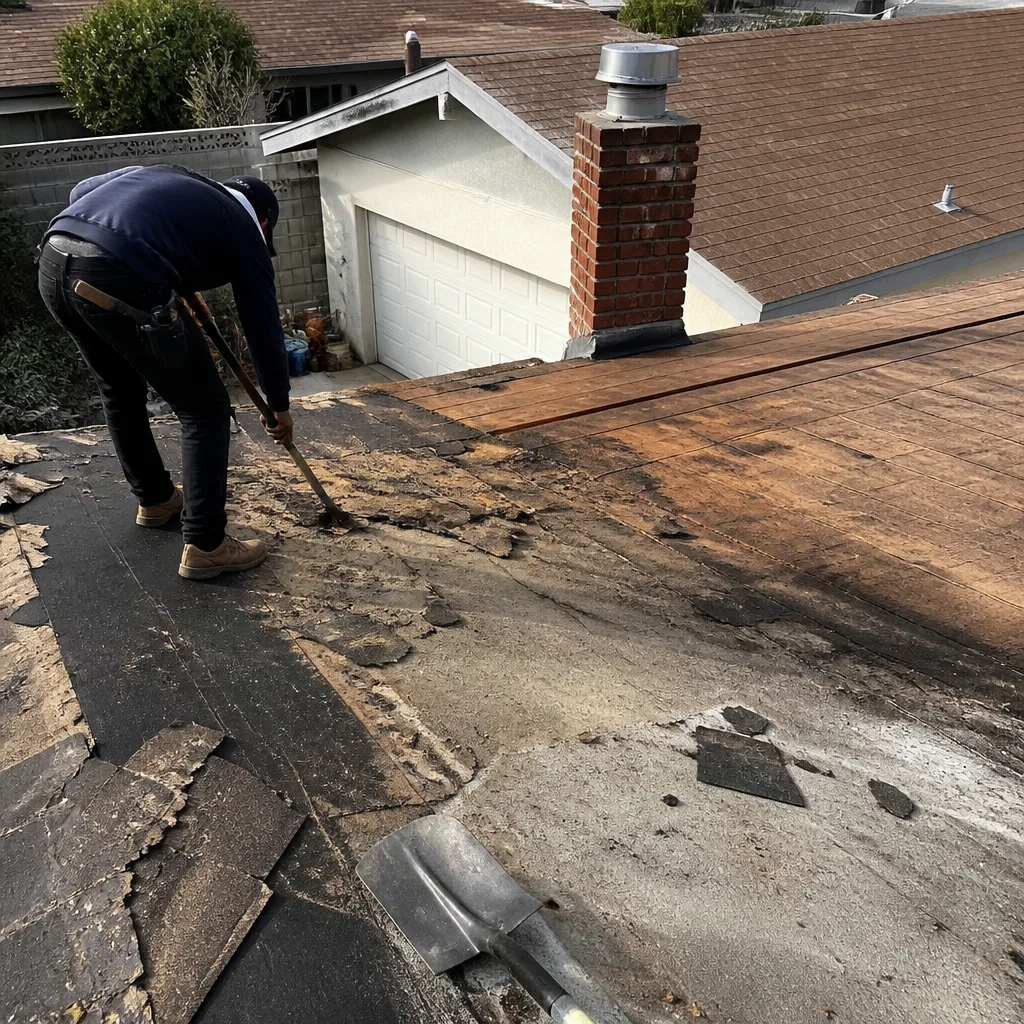 Before
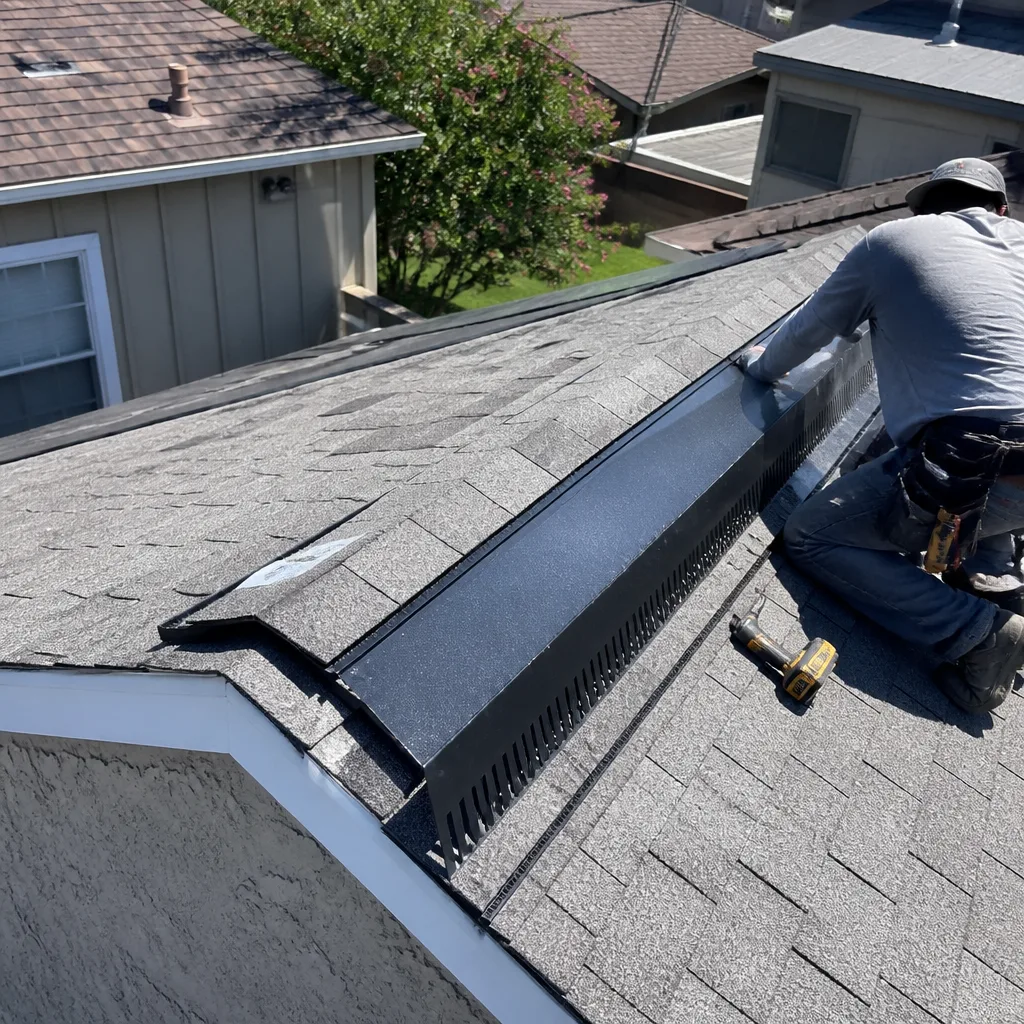 After
AfterRoofing Company Maintenance Checklist for Los Angeles Homeowners
Here’s something most roofing guides won’t tell you: the single most dangerous day for a Los Angeles roof is not during a January downpour. It’s the first rain after a seven-month dry season, when brittle sealants, sun-baked shingles, and months of accumulated debris meet water for the first time. In our experience replacing and repairing roofs across Los Angeles, that first storm of the wet season causes more leaks than any other single event all year. This guide gives you a maintenance calendar built specifically for LA’s two-season reality: a long dry stretch that bakes your roof from May through October, and a brief wet window from November through April that tests every weakness we’ve been ignoring. You’ll learn what to check, when to check it, what to document, and when to pick up the phone.
Quick Answer
A Los Angeles roof maintenance checklist should have two inspection windows, not four seasons: a pre-rain season check in October (gutters, valley flashing, sealants) and a post-Santa Ana check after major wind events (lifted shingles, debris in valleys, ridge vent damage). Homeowners can safely inspect five high-wear spots from the ground or a ladder, while a roofing company should document everything in photos and writing so warranty claims stay valid. Most residential roof repairs in Los Angeles run between $250 and $650 when caught early; full replacements start around $9,000 to $14,000 depending on material and roof complexity.
Table of Contents
- Why the Los Angeles Climate Demands a Different Maintenance Calendar
- Pre-Rain Season Checklist: The October Window
- Post-Santa Ana Checklist: What Wind Does to an LA Roof
- What You Can Safely Check From the Ground (And What to Leave Alone)
- How to Log Maintenance Visits So Warranty Claims Stay Valid
- The Five Spots on an LA Roof That Deteriorate Fastest
- What Roof Maintenance Costs in Los Angeles
- Your Los Angeles Roof Maintenance Calendar at a Glance
Why the Los Angeles Climate Demands a Different Maintenance Calendar
Most roof maintenance checklists are written for places with four seasons: a spring tune-up after ice and snow, a fall prep before freezing temperatures. Los Angeles does not work that way. We have two seasons that matter for a roof: a dry fire season from roughly May through November, and a wet season from December through April. Each creates its own problems, and they compound each other.
The dry season is harder on a roof than most LA homeowners realize. Daytime temperatures in the San Fernando Valley regularly top 95 degrees from June through September, and roof surfaces get much hotter than that, often 140 to 160 degrees on a July afternoon. That heat does three things at once. It accelerates UV breakdown of asphalt shingle granules, the tiny ceramic-coated stones that protect the asphalt underneath. It dries out caulking and sealant around flashings, vents, and skylights until the material cracks and pulls away. And it causes the roof deck and framing to expand and contract daily, loosening nails, splitting ridge caps, and opening hairline gaps around penetrations.
Then the wet season arrives, and the problems are already in place. Rain in Los Angeles typically comes in bursts: a few days of heavy rain, then weeks of dry weather. That pattern means leaks often appear not during the storm itself, but days later, as water that pooled on a flat section or saturated underlayment slowly finds its way into the ceiling. This is why generic “check your roof every spring” advice fails here. The inspection that matters in Los Angeles is the one you do in late September or early October, before the first real rain arrives with seven months of accumulated damage waiting to be exposed.
Pre-Rain Season Checklist: The October Window
October is the most important month on the Los Angeles roof maintenance calendar. It is the last reliable dry stretch before the first Pacific storm systems roll in from the northwest, usually by early to mid-November. This is the window to find problems before water does. If you only do one thorough roof check per year, do it in October.
Here is the pre-rain checklist we walk through with homeowners across Los Angeles, from Silver Lake to Woodland Hills to Long Beach:
- Clear every gutter and downspout. After seven months of dry wind, eucalyptus leaves, jacaranda petals, and palm fronds have built up in LA gutters. A clogged gutter during a winter storm sends water over the back edge, down the fascia, and into soffits and walls, not just off the roof. If you notice standing water in a gutter after the rain stops, the slope needs adjustment.
- Check valley flashing for debris and exposed fasteners. Valleys are where two roof planes meet, and they channel more water than any other part of the roof. In Los Angeles, dry-season debris accumulates in valleys and holds moisture against the flashing, accelerating rust and corrosion. Look for lifted metal edges, missing screws, and heavy debris buildup.
- Inspect every sealant joint around pipes, vents, and skylights. Summer heat is brutal on caulking. By October, many LA roofs show cracked, brittle, or shrinking sealant around plumbing boots, furnace vents, and skylight curbs. A ten-dollar tube of quality sealant applied in October can prevent a two-thousand-dollar interior repair in January.
- Look for dried-out or curling shingles. On composition shingle roofs, particular attention should go to the south- and west-facing slopes, which take the heaviest afternoon sun in Los Angeles. Curled or lifting shingle edges are where wind and rain will find their entry point.
- Check flashings where roof meets wall or chimney. Step flashing and chimney cap flashing take constant expansion and contraction during LA’s hot summers. Look for cracked mortar, pulled-back kickout flashing at roof-wall junctions, and gaps where the chimney passes through the roof plane.
- Test flat roof areas and scuppers. Many LA homes from the 1940s through 1960s have flat or low-slope sections, especially in Mid-City and Baldwin Hills. Clear scuppers and drain openings, and look for pooling areas. If water stands for more than 48 hours after rain, that patch of roof membrane is aging out and should be assessed.
Most residential roof repairs in scope run between $250 and $650 when these issues are caught in October. An ignored gutter or a cracked pipe boot can turn into a drywall repair, a paint job, and a mold remediation that runs into the thousands before spring. You’ll see your exact number in writing before we start, whether it’s a small repair or a full replacement.
Post-Santa Ana Checklist: What Wind Does to an LA Roof
Santa Ana winds are Los Angeles’s most destructive weather event, and they arrive almost every year between September and December. These are hot, dry winds that blow from the northeast, sometimes sustaining 40 to 60 miles per hour with gusts above 80 in the canyons and passes: Topanga, Malibu, the 210 corridor through Pasadena, and the hills above Glendale and Burbank. For a roof, they create three specific problems that a homeowner should check after every significant Santa Ana event.
First, lifted shingles. Santa Ana winds do not just blow across a roof; they create uplift pressure that pulls shingles from underneath. A shingle that is still attached but slightly lifted may look fine from the ground, but it has already broken the adhesive seal strip and will flap in the next strong wind. During a winter storm, that same lifted shingle becomes an open channel for water. After a windy stretch, look for shingles that seem to sit slightly higher than their neighbors, especially along eaves, rakes, and ridge lines.
Second, debris in valleys and behind chimneys. Santa Anas carry everything: palm fronds, bougainvillea branches, oak leaves, paper, and whatever the neighbors left out. This debris accumulates where roof geometry creates natural traps: valleys, behind chimneys, around skylight curbs, and in any low-slope area. Left in place through a wet season, that debris acts like a sponge, holding moisture against the roof for weeks. In high-fire areas, it also becomes a fuel source that can catch an ember during the next fire season.
Third, ember damage to ridge vents, attic vents, and plastic caps. This is one point most maintenance checklists miss entirely. Even a small brush fire miles away puts embers into the air over Los Angeles during Santa Ana season. Ridge vents made of plastic can melt or crack when an ember lands on them. Soffit vents, gable vents, and even the plastic caps on plumbing boots are vulnerable. After a Santa Ana event near any fire activity, check these penetrations for warping, cracks, or missing caps. Metal ridge vents are a worthwhile upgrade for homes in high fire hazard severity zones, and many LA homeowners in the hills above Studio City, Sherman Oaks, and the San Gabriel foothills choose metal for exactly this reason. Materials from CertainTeed and GAF both include metal vent options that resist ember damage effectively.
If a Santa Ana event brought in water, do not wait for the next storm to confirm the damage. Call us, and we’ll document the full condition in writing, with photos, so you have exactly what insurance companies and future buyers need to see.
What You Can Safely Check From the Ground (And What to Leave Alone)
Nothing in this guide encourages a homeowner to walk a roof. Even a low-slope roof in Rancho Park or Culver City is dangerous without fall protection. In Los Angeles, many houses sit on hillsides with compound roof pitches, tile surfaces that are brittle underfoot, and older decking that looks solid but is not. When we send a technician to inspect a roof, they wear proper footwear, they use fall protection where needed, and they know which tile surfaces can support a person and which cannot.
That said, here is what you can check safely from the ground, a ladder, or a second-story window, and what to leave to a professional:
Safe to check from the ground or a stable ladder:
- Gutter and downspout condition: you can see sagging, separation, and visible debris from the ground.
- Ridge lines: stand across the street and sight along the ridge. A sagging or wavy ridge line indicates decking problems underneath.
- Missing or shifted shingles or tiles: obvious gaps, flaps, or color changes are visible from the ground or an upper window.
- Chimney condition from the exterior: cracked cap mortar, missing chimney flashing, or a leaning chimney crown can often be seen from below.
- Water stains on ceilings and walls inside the house: you may notice these before any roof problem is visible from outside.
- Moss, algae, or heavy debris accumulation: visible from the ground, especially on north-facing slopes that get less California sun.
Leave to a professional:
- Walking on any roof surface, including flat roofs.
- Inspecting valleys, flashings, or sealant joints up close: these require being on the roof or looking from above.
- Lifting shingles to check decking or underlayment.
- Checking attic ventilation and insulation from inside the attic, which requires a different safety protocol.
- Touching any electrical, solar panel, or skylight components.
If a storm has already caused visible damage and you’re worried about an active leak, cover valuables inside, place a bucket under the drip, and call Roof Repair in Los Angeles services for an inspection. A roofing company should be able to mark the affected area with tarps as a temporary measure, so water is stopped while a proper repair is scheduled. Our crews carry shoe covers and drop cloths on every visit, even emergency calls. If the dog needs to stay inside, we coordinate the door schedule with you. If the kids are home, we keep the noise to reasonable hours and we clean up before we leave, every time.
How to Log Maintenance Visits So Warranty Claims Stay Valid
Most homeowners with roof warranties do not know what the manufacturer requires for a claim to be honored. Then a leak happens, the claim gets filed, and the manufacturer asks for maintenance records. That is not the time to discover the requirements. This is one area where a little documentation during the good years pays off enormously later.
Here is what to log, in writing, for every maintenance or repair visit, and what to ask your roofer to provide:
- Date and scope of each inspection. Write down the date, who performed the inspection, what was checked, and what was found. Keep it simple: “October 14, 2026, Birchbark Roofing inspection, cleared gutters, resealed two pipe boots, no other issues found.”
- Photos, always. Every inspection should generate photos of the roof before and after, especially of flat areas, valleys, flashings, and any area that has been repaired before. Date-stamped photos are the single strongest piece of evidence in a warranty claim. If your roofer does not offer photos, ask for them. We take a photo of the completed clean-up before the crew leaves, and we share it with the homeowner as standard practice.
- Repair invoices with part detail. If a repair was done, save the invoice. The manufacturer will want to see what materials were used, where the repair was made, and who did the work. Invoices from a licensed contractor carry more weight than a homeowner’s own notes, so keep every one.
- Manufacturer warranty registration. Many shingle manufacturers require registration within a set window after installation for the full warranty to apply. If a roofer installed your roof, confirm in writing that the warranty was registered, and keep a copy of the confirmation. CertainTeed, GAF, Owens Corning, and Tamko each have their own registration process, and missed deadlines are a common reason claims are denied.
- Documentation of any changes to the roof. Solar panel installation, satellite dish removal, skylight replacement, HVAC work on the roof: log the contractor, date, and scope. Any work that penetrates the roof can affect warranty coverage if done improperly, so the manufacturer will ask.
What to ask your roofer for: a written inspection report, not a verbal summary. A real report lists what was inspected, what was found, what was done, and what remains outstanding. It includes photos. It includes a written price for any recommended work, before you agree to anything. If your roofer will not put the findings in writing, that is a signal. Every Birchbark Roofing job includes a written price in dollars before work begins, no exceptions. The C.A.R.E. values are not a marketing slogan; they are the standard we write into every job: Clean up like it is our own home; Ask before we move or touch anything; Respect the family’s time and quiet hours; Explain the price before the work.
The Five Spots on an LA Roof That Deteriorate Fastest
Every roof has its wear points, but Los Angeles has a specific pattern worth knowing. After years of inspecting and working on roofs across this city, from the salt air of Venice to the heavy sun of Sherman Oaks to the wind exposure of the Hollywood Hills, here are the five spots that fail first and should be inspected every visit without exception.
1. Pipe boot flashings. The rubber or synthetic boot that seals around plumbing vent pipes cracks after a few seasons of intense UV exposure. In LA, south-facing pipe boots can fail in as little as five to seven years. This is the single most common source of small, slow leaks that show up as a ceiling stain with no other obvious cause. Check every pipe boot every October.
2. Valley metal. Roof valleys in Los Angeles tend to be narrower and steeper than in flatter, rainier climates, because roofers design them for quick drainage and LA gets relatively little annual rainfall. But when a storm does hit, valleys in the foothills carry a huge volume of water quickly. Valley metal that is lifting, rusting, or missing fasteners channels that water under the shingles instead of down to the gutter. In our experience, valley metal is the most commonly neglected part of an LA roof, simply because homeowners cannot see it from the ground.
3. Chimney step flashing and cap mortar. Chimney caps and flashings are exposed to the full force of Los Angeles sun, rain, and Santa Ana wind. Cracks in chimney cap mortar let water into the masonry itself, which then freezes and expands, rarely in LA, but expands enough with thermal cycling to worsen the crack every year. Step flashing that pulls away from the chimney is a direct leak path. Standing water on a chimney crown after rain is a sign the crown slope is not adequate.
4. Drip edge and fascia at the eaves. The drip edge is the metal strip along the roof perimeter that directs water into the gutter and away from the fascia board. Missing or bent drip edge sections are common after Santa Ana wind events, and when they fail, water wicks back against the fascia and starts rotting the wood. Fascia boards on older Los Angeles homes, especially those built with original wood trim, are a prime target for dry rot that spreads into the eaves.
5. Ridge vents and ridge caps. Ridge caps take more direct sun than any other part of a composition roof, because the ridge line is hit by Los Angeles sun at a perpendicular angle all day. Ridge cap shingles crack and separate first. Ridge vents, which are essential for attic ventilation and moisture control, degrade under UV and become brittle. A broken ridge vent is not just a leak risk; it also reduces attic ventilation, which raises cooling costs and shortens the life of the entire roof system. Materials from CertainTeed and Tamko include ridge vent products engineered for high-UV climates, which many LA roofers recommend for the south-facing ridge line.
What Roof Maintenance Costs in Los Angeles
Maintenance is always cheaper than replacement. The question is how much cheaper. Here is a working price guide based on projects we see across Los Angeles, from the Westside to the Eastside to the Valley. These are not quotes, but they bracket the realistic range. Your exact number comes in writing before any work starts.
- Gutter cleaning, standard single-story home: $150 to $300 depending on linear feet and debris volume.
- Resealing pipe boots and minor flashing touch-up: $200 to $450 including labor and materials, two to four boots resealed.
- Valley flashing repair or replacement, one valley: $350 to $800 depending on metal type, valley length, and whether shingles need to be lifted.
- Replacing a few damaged shingles or tiles: $250 to $550 for accessible areas, higher for steep-pitch or two-story work.
- Chimney cap re-mortaring and flashing reseal: $400 to $900 depending on chimney size and access.
- Full roof tune-up, standard 1,500 to 2,000-square-foot home: $500 to $1,200 including gutter clearing, sealant refresh, minor fastener tightening, and photo documentation of all high-wear areas.
- Full roof replacement, standard composition shingle: $9,000 to $14,000 for a typical LA home; higher for tile, wood shake, steep multi-story, or homes with multiple roof planes.
The brands we work with most, including GAF, CertainTeed, Owens Corning, and Tamko, all publish maintenance guidance for their shingle systems. Their warranties assume reasonable maintenance is being performed, and the costs above are what “reasonable maintenance” looks like in Los Angeles dollars. If you have a tile roof, which is common in Spanish Mediterranean homes from Pasadena to San Pedro, your maintenance costs run somewhat higher per visit because tile is heavier, slower to work with, and often requires more care around brittle tiles. Boral tile systems, for example, are long-lasting but need periodic underlayment checks, since the underlayment beneath the tile does the real waterproofing and wears out in LA’s heat long before the tile itself.
Call Roofing Company in Los Angeles for an exact quote. Estimates are free, written, and itemized.
Your Los Angeles Roof Maintenance Calendar at a Glance
Here is the entire checklist compressed into a calendar you can set and forget, with links to more guides & resources throughout. Set a reminder for each window. Los Angeles roofing is a game of catching issues before the first rain, not chasing leaks after it.
September to early October (the most important window): clear all gutters and downspouts; inspect valleys, flashings, and pipe boots; look for curling shingles on south and west slopes; test flat roof drains and scuppers; schedule a professional inspection if you have not had one in the past two years.
After every significant Santa Ana event, September through December: check for lifted shingles along eaves and ridges; clear new debris from valleys and behind chimneys; inspect ridge vents, plastic caps, and attic vents for ember or impact damage; look for missing drip edge sections.
December through April (wet season): after each heavy rain, check ceilings and walls for new water stains, especially under valleys, around skylights, and around chimneys; watch for gutter overflow, which indicates clogging or poor slope; check flat roof areas for standing water.
May through August (dry season): inspect the attic for signs of heat damage: curled plywood edges, excessive heat, or insulation separating from the roof deck; note any cracked sealant you can see from windows; plan the October maintenance visit and line up a roofer before the busy fall season; see our Roofing Company Maintenance Schedule: What to Do and When. As part of the Cedarwell family of roofing companies since 2000, we schedule our LA maintenance work in the dry season so the October window is protected before the first rain arrives.
Use Roof Replacement in Los Angeles as your reference if inspection findings suggest patching is no longer viable and you need to understand the replacement process and timeline.
Common Mistakes to Avoid
- Waiting until it rains to think about the roof. By the time the first storm of the wet season hits a roof with cracked sealant, the damage is already done. October is the month; after that, you are reacting, not preventing.
- Cleaning gutters without checking the downspout opening. A clear gutter that drains into a clogged downspout is the same as a clogged gutter. Water backs up and overflows the same way. Check the drain opening at the top of the downspout every time.
- Ignoring the south-facing slope. In Los Angeles, the south slope of a roof ages significantly faster than the north slope due to direct UV exposure. Most homeowners look at the side of the roof they can see from the street, which is often the north or east side. The real wear is on the side they cannot see.
- Assuming a tile roof needs no maintenance. Tile lasts a long time, but the underlayment beneath it does not. Underlayment in LA’s heat tends to dry out and crack within 20 to 30 years, and the tile above it can look flawless while the waterproof layer is gone.
- Caulking over old sealant instead of removing it. New caulk over brittle old caulk lasts a season at most. The correct method is removing the old bead and applying fresh sealant to clean, dry surfaces. We see this shortcut all the time on Los Angeles roofs.
- Not documenting a maintenance visit. A roofer who says the roof “looks fine” without writing it down has not actually given you anything. Written reports and dated photos are what warranty claims and insurance adjusters respond to.
- Walking the roof to get a better look. Falling from a roof is one of the most common serious home accidents. A steep-pitch Hollywood Hills roof or a brittle-tile Spanish home in El Sereno is not a safe place for an untrained person. The inspection is free; the hospital visit is not.
When to Call a Professional
Some roof issues can wait for the October check. Others cannot. Call a professional immediately if you see water staining on an interior ceiling or wall, particularly under a valley, around a chimney, or below a skylight. Call if a shingle or tile is missing entirely, not just lifted: the exposed area is an open entry point for the next rain. Call if a tree branch has fallen on the roof, even if no damage is visible from the ground, because the decking underneath may be compromised. Call if you notice a persistent musty smell in the attic, which often points to trapped moisture you cannot see. And call if your roof is 20 years old or older and has never had a professional inspection: in the LA climate, that is borrowed time. For help identifying issues yourself first, see our Roofing Company Troubleshooting: Common Problems and How to Fix Them. Birchbark Roofing offers free estimates in Los Angeles. Call (424) 766-4937 and a live person will answer, 24 hours a day. We come to you with shoe covers, drop cloths, and a written price before any work starts.
Frequently Asked Questions
Twice per year is the standard we recommend for Los Angeles homes: once in October before the wet season, and once after any major Santa Ana wind event between September and December. If your roof is over 15 years old, add a third inspection in spring. Call (424) 766-4937 to schedule a free estimate, and we’ll work around your schedule.
After a Santa Ana wind event in Los Angeles, look for shingles sitting higher than their neighbors, debris piled in valleys or behind chimneys, missing drip edge sections, and cracked or shifted ridge caps. Inside, watch for new ceiling stains after the next rain. If you spot any of these, call (424) 766-4937 and we’ll document the condition in writing with photos.
A full roof tune-up on a standard Los Angeles home typically runs $500 to $1,200, including gutter clearing, sealant refresh, fastener checks, and photo documentation. Smaller fixes like resealing pipe boots run $200 to $450. You’ll get an exact written price before we start any work, and estimates are free.
You can inspect your roof safely from the ground or a stable ladder, checking gutters, ridge lines, visible shingle or tile condition, and chimney caps. Do not walk on any roof surface, especially steep or brittle-tile roofs common in Los Angeles. For anything that requires being on the roof, call a professional. We’ll photograph every finding and share the report with you.
Yes. Most shingle manufacturers, including GAF, CertainTeed, Owens Corning, and Tamko, require reasonable maintenance and may ask for written records if you file a claim. Keep inspection reports, invoices, and dated photos. Ask your roofer for written documentation every visit, and register the warranty with the manufacturer within the required window after installation.
Pipe boot flashing failure is the most common cause of small, slow leaks in Los Angeles roofs, because the rubber boots crack under sustained UV exposure, especially on south-facing slopes. If you have a ceiling stain with no other explanation, look up. Call (424) 766-4937 for a free estimate, and we’ll confirm the source in writing before any work begins.
The Bottom Line
Los Angeles does not follow the four-season roof maintenance playbook, and neither should your calendar. The most important work happens in October, before the first rain meets seven months of sun-damaged sealant and accumulated debris. After Santa Ana winds, check for lifted shingles, valley debris, and ember damage to vents. Document everything in writing with photos, keep your warranty registration current, and never walk the roof yourself. Catch small problems in the dry season and the wet season stays uneventful. The single best habit is simple: set an October reminder, every year, without fail.
If you’d rather have a professional take it from here, Birchbark Roofing home is one call away at (424) 766-4937. We’ll inspect, we’ll document, and you’ll see your written price before any work begins.
Written by Erik Lindgren, Owner at Birchbark Roofing, serving Los Angeles since 2000.