
Free roof inspection with deck photos before we talk money - GAF and Owens Corning certified installation
 Before
 After
After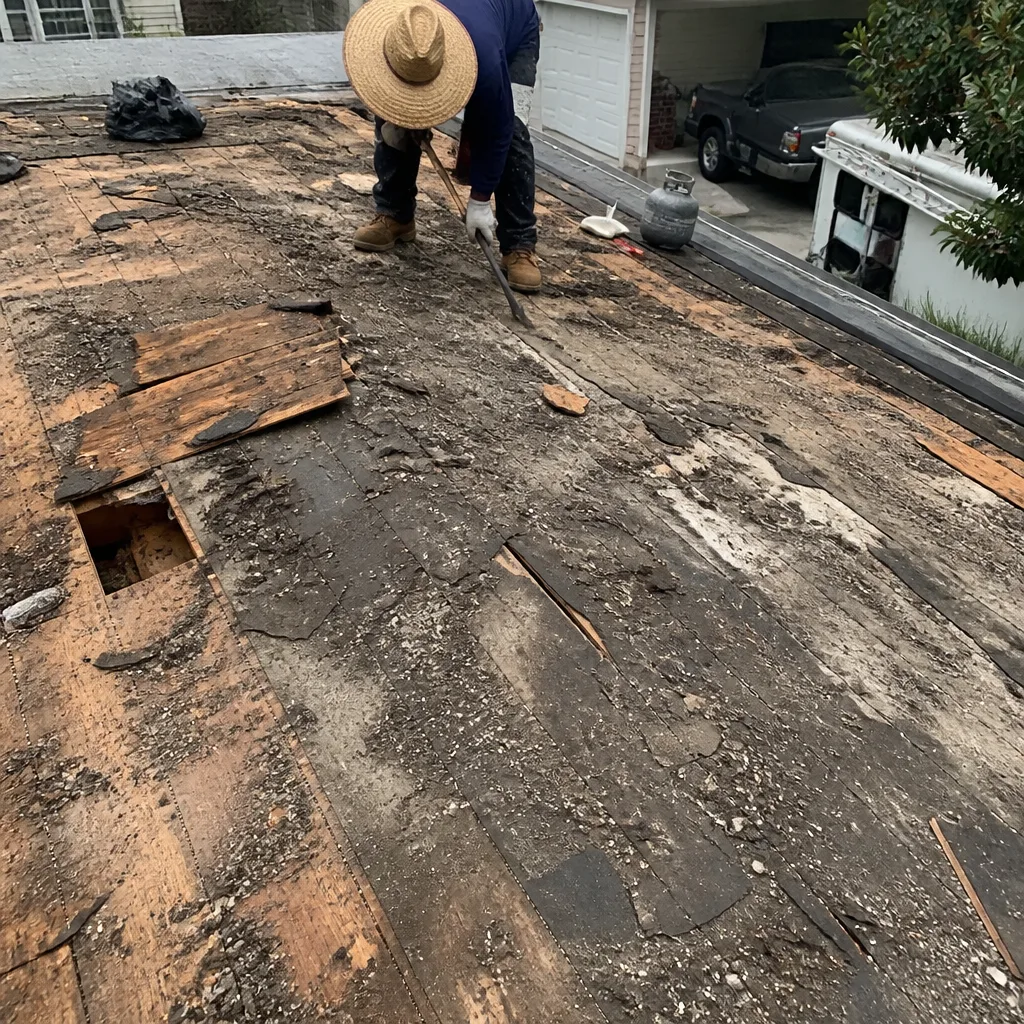 Before
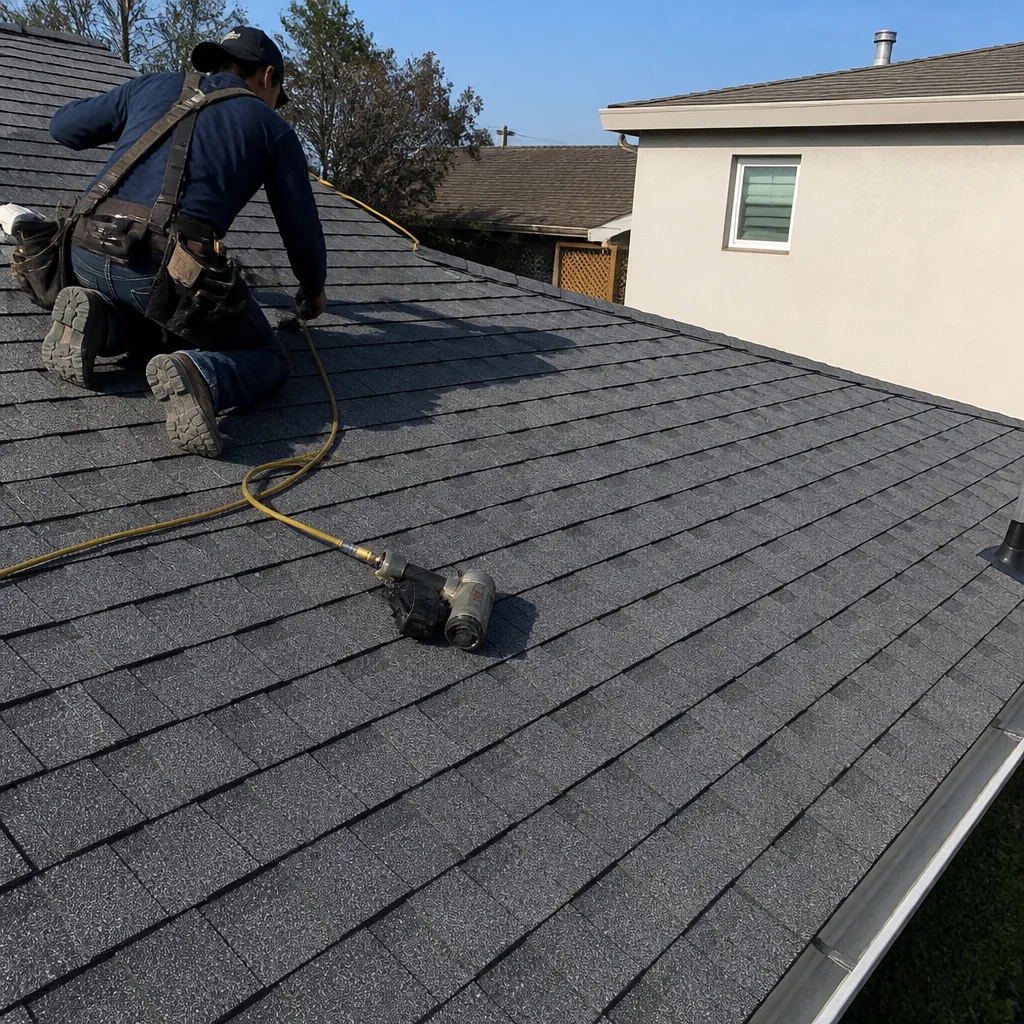 After
After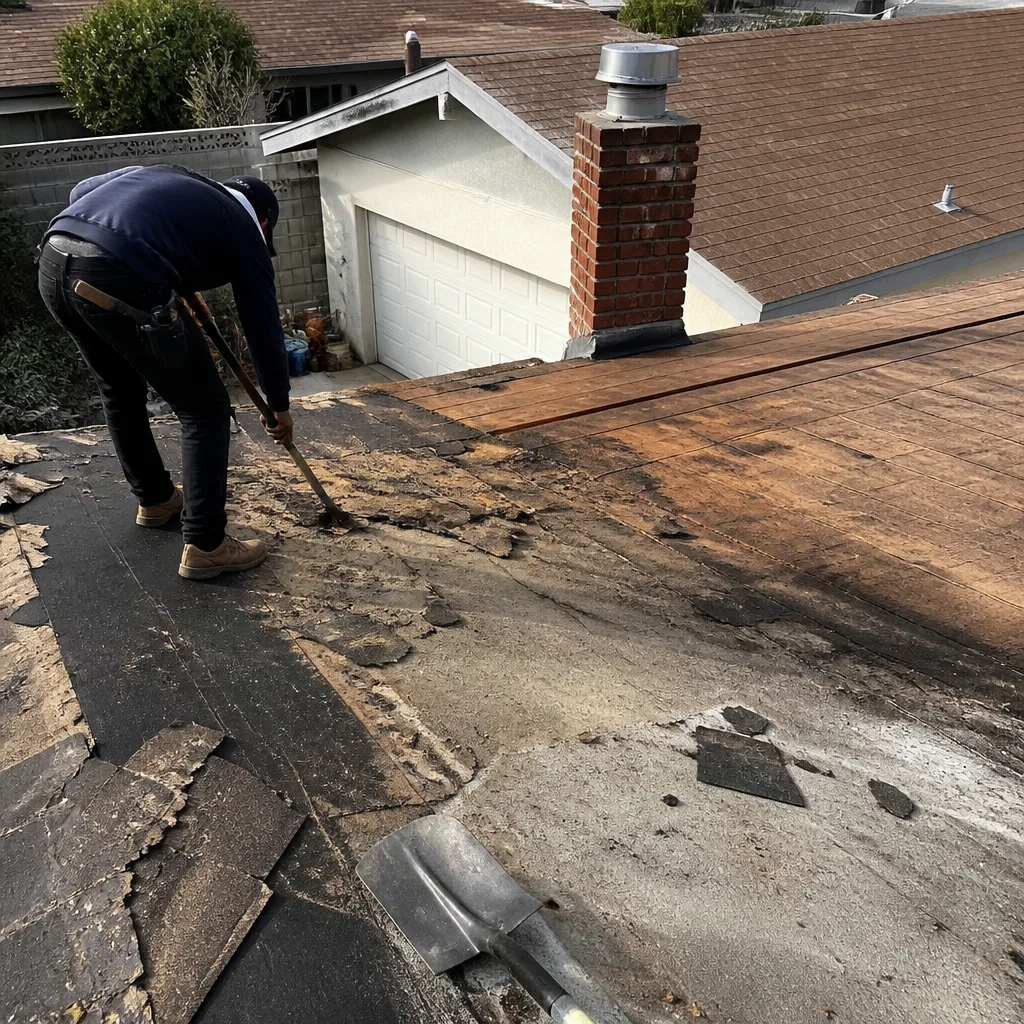 Before
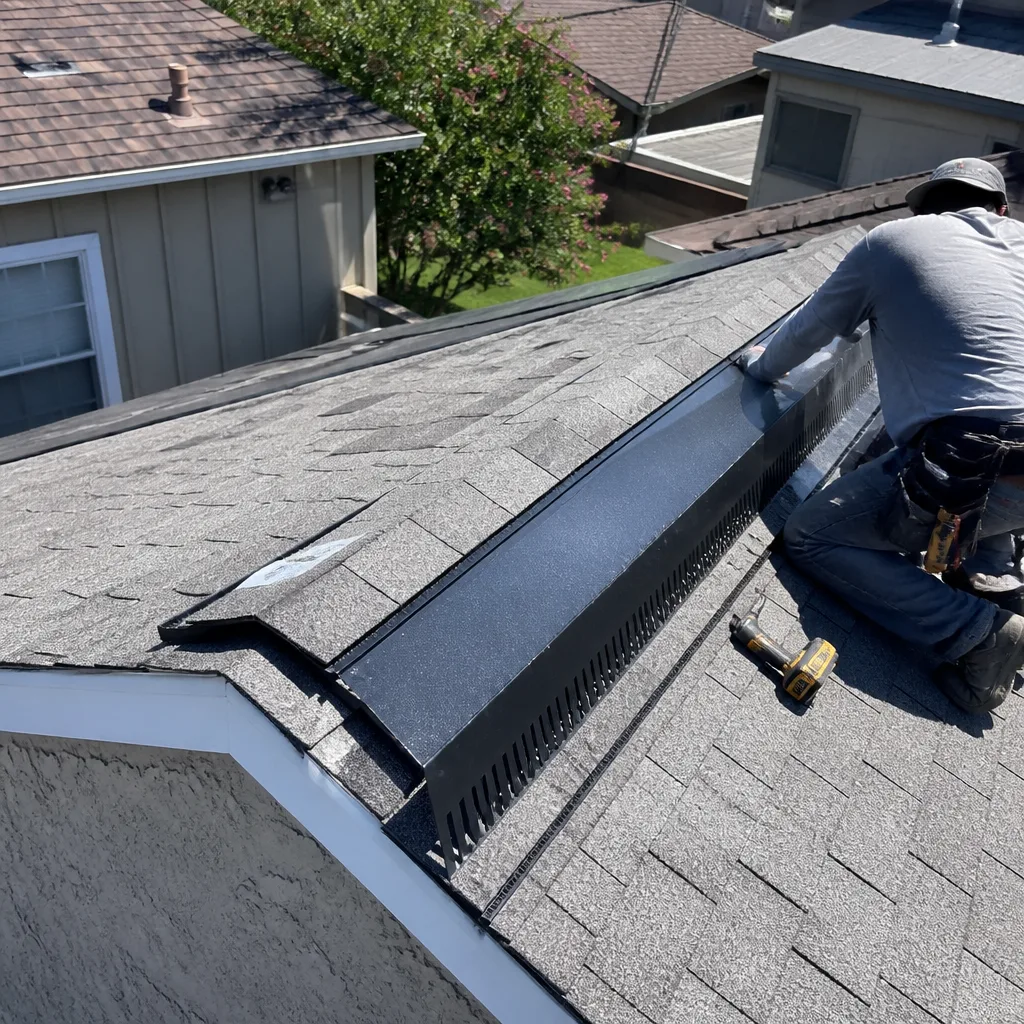 After
AfterOwens Corning Flashing Replacement: The Los Angeles Owner’s Guide
If your Owens Corning flashing has failed, we stock and install compatible replacement flashing throughout Los Angeles, with most jobs running between $380 and $1,200 installed depending on the roof penetration type and access. You’ll usually know it’s gone when you spot water staining on the ceiling near a chimney, skylight, or wall intersection after a good rain. We carry Owens Corning-spec flashing on our trucks along with quality aftermarket equivalents that match the gauge and profile, so most Los Angeles homes get this fixed in a single visit.
Flashing is the metal or membrane that bridges the gap between your Owens Corning shingles and anything that pokes through the roof: a vent pipe, a chimney, a skylight, a wall. When it fails, water gets underneath the shingles and follows the path of least resistance straight into your ceiling. In Los Angeles, the failure usually isn’t from snow or ice. It’s from UV breakdown of sealant, expansion and contraction from 40-degree temperature swings, and the occasional Santa Ana wind working a piece loose over time. Erik Lindgren has pulled flashing off homes in Sherman Oaks and Silver Lake that looked fine from the ground and had been quietly leaking for months behind the stucco.
Which Owens Corning Models This Applies To
Owens Corning flashing isn’t tied to one specific shingle line the way a car part is tied to a model year. Whether you have Duration, Oakridge, TruDefinition, or Berkshire shingles installed, the flashing components are selected based on the roof penetration type and the roof’s pitch, not the shingle color. That said, there is a compatibility gotcha worth knowing: Owens Corning’s DeckProtect and WeatherLock underlayment systems are designed to work with their recommended flashing details, so when we open up a roof in Los Angeles that used Owens Corning underlayment, we match the flashing material to that system rather than mixing in a thinner gauge that could tear during installation.
OEM Owens Corning flashing components are manufactured to specific gauges, typically 26-gauge galvanized steel for most residential profiles, with aluminum and copper options for coastal Los Angeles homes where salt air eats standard steel in a few years. Quality aftermarket flashing from suppliers we trust meets those same gauges and profiles, and often costs 15 to 20 percent less than the Owens Corning-branded box. The decision comes down to what’s already on the roof. If the original flashing lasted 15 years, we’ll often recommend matching that exact material. If it failed in seven because it was undersized or thin, we’ll step up the gauge and show you the difference in writing before we start.
Signs Your Owens Corning Flashing Replacement Is Failing
- Water stains on the ceiling near a chimney, skylight, or wall intersection. This is the classic symptom. Water that gets past failed flashing travels along rafters and shows up several feet away from the actual leak, which is why Los Angeles homeowners sometimes patch drywall twice before finding the real problem.
- Visible gaps or lifted metal around roof penetrations. Get a ladder and look at the base of your vent pipes or chimney. If you can see daylight under the flashing or the sealant has cracked away and left bare metal showing, water is already getting in.
- Rust streaks or corrosion on the flashing itself. In older Los Angeles homes, especially north of the 101 in Encino and Tarzana where sprinklers hit roofs, galvanized flashing rusts through at the bend points first. Streaks on the shingles below are a telltale sign.
- Granules collecting in gutters near roof edges. Failed flashing traps moisture against the shingle edges it overlaps, causing premature granule loss in that specific zone. If your gutters are full of granules in one spot but not another, check the flashing above that spot.
- Drafts or pests entering near roof-wall joints. Flashing that has lifted off the wall creates a gap wide enough for a roof rat. Los Angeles has plenty of them. If you hear scratching in the wall near the roofline, flashing failure is on the checklist.
Replacement Cost & What’s Included
In Los Angeles, flashing replacement runs between $380 and $1,200 installed for most residential jobs. A simple vent pipe flashing swap on a single-story home in the Valley runs $380 to $550. A chimney flashing rebuild in a hillside home with steep access can hit $1,000 to $1,200. Skylight and wall-intersection flashing falls in between, usually $550 to $850. The variables are roof pitch, how many stories up the penetration sits, whether the surrounding shingles need to be lifted or replaced, and the material you choose: aluminum and steel land on the lower end, copper on the higher end.
You’ll see your exact number in writing before any work starts. That price includes the flashing material, the sealant, lifting and re-setting the surrounding Owens Corning shingles, hauling away the old flashing, and our 365-Day Done Right Promise. If the flashing we install isn’t right, we make it right, no negotiation. We also photograph the completed clean-up before the crew leaves, so you know what the roof and the ground around your home looked like when we pulled away.
DIY or Call Us?
You can safely check from the ground or a ladder: look for lifted metal, cracked sealant, granule piles in a single gutter spot. What you shouldn’t do is try to reseal flashing from a ladder on a two-story Los Angeles home, because the angle of the roof, the reach, and the fall risk make it a genuinely dangerous job. The sealant itself also matters. We use a polyurethane-based sealant rated for UV exposure and movement; the silicone from the hardware store fails in two summers here. And if you reapply sealant over a rusted or separated flashing seam, you’re buying six months, not a fix.
If you’re standing there looking at a roof penetration and wondering whether it’s bad enough to call, call us. We’ll tell you honestly what you’re seeing. Erik’s signature phrase on these calls is the only pitch he makes: “Tell me what you’re seeing, and I’ll tell you exactly what it means for your roof.” The number is (424) 766-4937.
FAQs
Galvanized steel flashing in Los Angeles typically lasts 12 to 18 years before the sealant breaks down and the metal begins to separate. Aluminum lasts 20 to 30 years, and copper can last 50 or more, but costs two to three times as much. The Los Angeles sun and temperature swings shorten the life of sealant faster than coastal fog does, so homes in the inland Valley often need flashing attention sooner than homes in Santa Monica or Playa del Rey.
Small sealant cracks can sometimes be re-sealed as a temporary measure, but separated seams, rusted metal, or flashing that has lifted off the wall cannot be reliably repaired. The failure point is the material itself, and patching it buys months, not years. We’ll tell you if a repair is viable before we ever recommend replacement. Call (424) 766-4937 for an honest assessment.
Most single-penetration flashing replacements in Los Angeles take two to four hours from setup to clean-up. Chimney flashing is the exception: a full chimney rebuild can take a full day. We’ll give you the time window in writing before we start, and we respect quiet hours while we work.
We carry standard Owens Corning-spec flashing profiles, including vent pipe collars and step flashing, on our trucks for most Los Angeles service calls. Specialty pieces for chimneys, skylights, and wall intersections are usually ready the same week. If we don’t have it on the truck, we’ll tell you before we schedule the work, not after we’ve torn the roof open. Call (424) 766-4937 to confirm what we have for your specific roof.
Written by Erik Lindgren, Owner, Birchbark Roofing at Birchbark Roofing, serving Los Angeles and nearby areas.