
Free roof inspection with deck photos before we talk money - GAF and Owens Corning certified installation
 Before
 After
After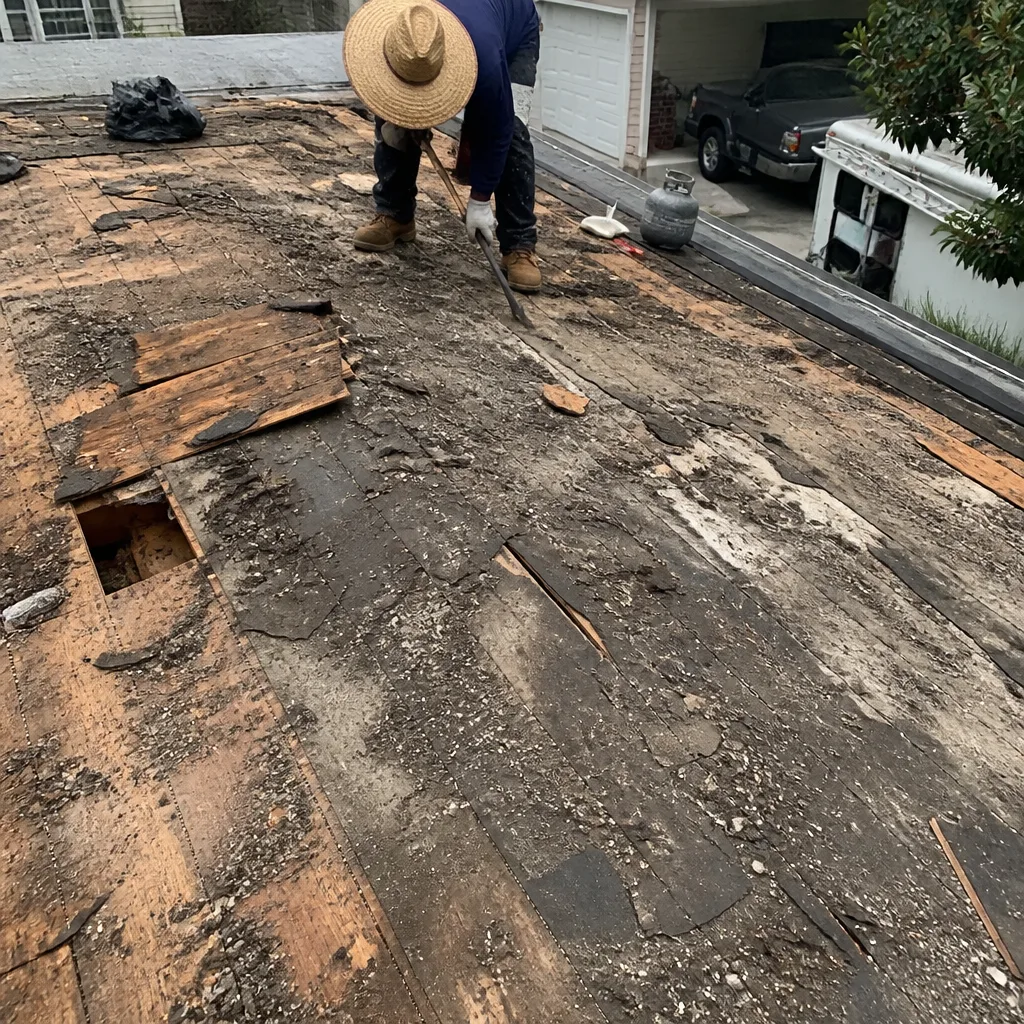 Before
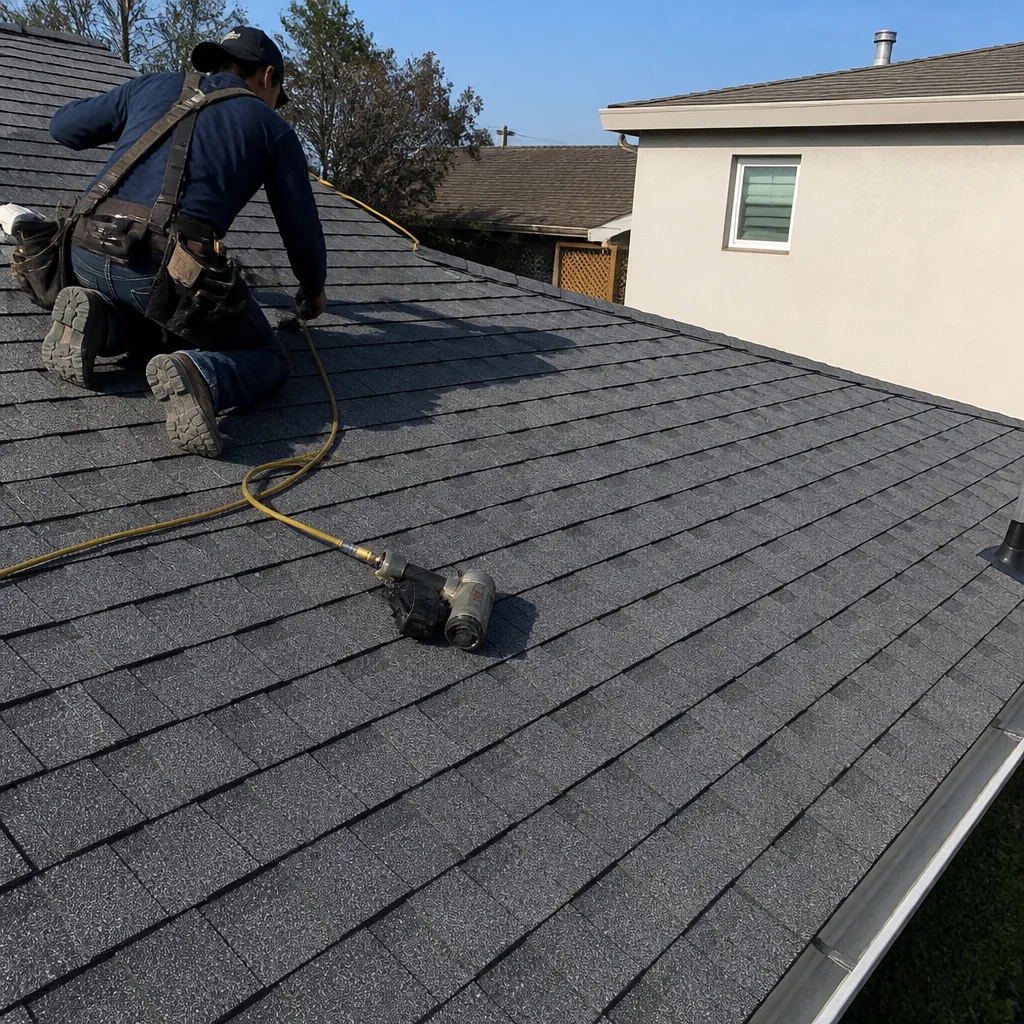 After
After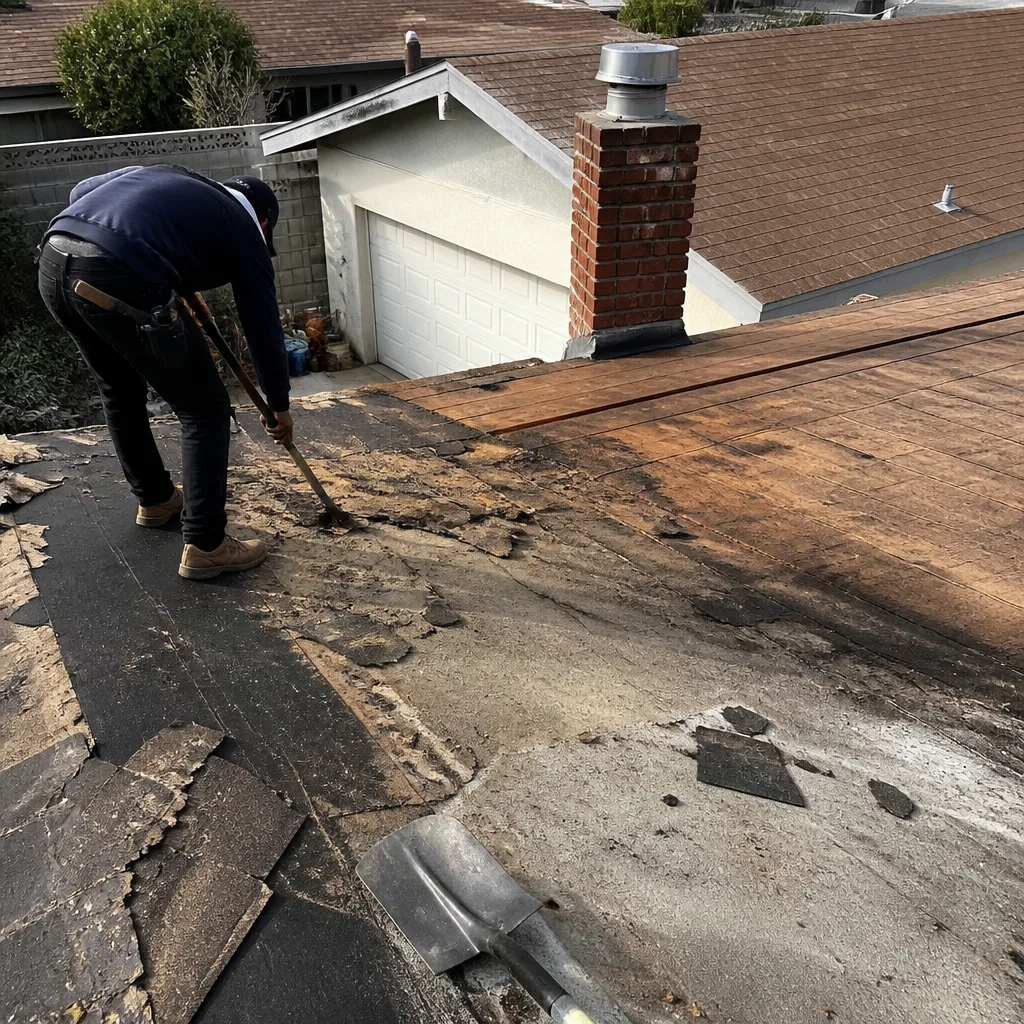 Before
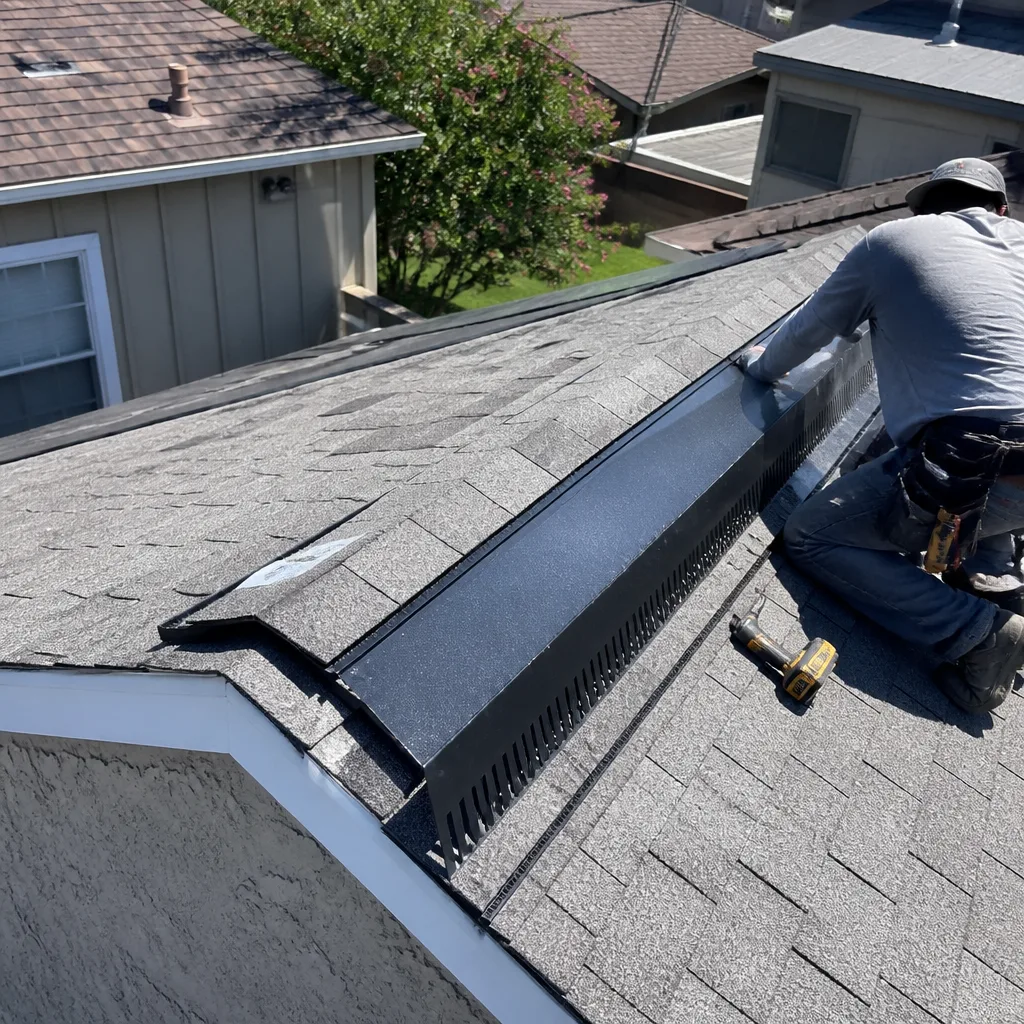 After
AfterIKO Ridge Vent Installation: The Los Angeles Owner’s Guide
We stock IKO-compatible ridge vent materials on our trucks and install them across Los Angeles, typically for between $650 and $1,400 depending on linear footage, roof pitch, and whether existing venting needs to be retrofitted. Most IKO ridge vent replacements we finish in a single visit once we’ve confirmed the profile match. You usually discover the problem one of two ways: you see daylight or feel a draft coming through the attic access panel, or moisture starts showing up on the underside of the roof decking during Santa Ana season when the air gets dry and every airflow problem becomes obvious.
If you’ve got an IKO roof and the ridge vent is cracked, sunken, or missing sections, this page tells you exactly what we do, what it costs, and why the IKO profile matters more than most homeowners expect. Erik Lindgren has walked a lot of Los Angeles homeowners through this same repair, and the conversation usually starts the same way: “Tell me what you’re seeing, and I’ll tell you exactly what it means for your roof.”
Birchbark Roofing is an independent roofing contractor. We are not affiliated with IKO, but we work with IKO materials regularly and know their vent profiles cold.
Which IKO Models This Applies To
IKO ridge vents come in a few distinct profiles, and matching them matters. The most common we see on Los Angeles homes are the IKO Ultra HP and the IKO Armourvent Multi. They’re not interchangeable. If you try to splice a different profile onto an existing run, you get gaps at the seams, which defeats the vent’s whole purpose and leaves the attic pulling air from the wrong places.
The fastest way to identify what you have is to look at the end cap or any exposed section from inside the attic. The Ultra HP has a noticeably higher profile, roughly 4 inches at the peak, and a mesh baffle system built into the underside. The Armourvent Multi sits lower and has a more rigid, shingle-over design with internal weather baffles. If you can’t see either one clearly, measure the width of the vent channel. Ultra HP runs about 11.5 inches wide. Armourvent Multi is closer to 10 inches. That half-inch difference is what separates a clean retrofit from a job where we’re pulling shingles back to make something fit.
On the OEM versus aftermarket question: IKO’s own vents are well made and we install them when the roof already has a matching run. But for full re-venting on older IKO roofs, we’ll sometimes recommend a quality universal-profile vent that exceeds the original’s airflow rating, especially if the attic has been running hot. The decision comes down to whether you’re patching a short section or re-venting the whole ridge line, and we’ll show you the difference side by side before you decide.
One compatibility gotcha that trips up Los Angeles homeowners: IKO shingles with a heavier granule profile, like the Cambridge line, need a vent with the right nail line and flange flexibility. A vent designed for a thinner shingle will telegraph through and look wrong within a year. We pull the current shingle sample before we order anything.
Signs Your IKO Ridge Vent Installation Is Failing
- Cracked or brittle vent sections along the ridge. Los Angeles sun does damage. The UV exposure on a ridge line is relentless, and plastic degrades faster here than in coastal climates with more overcast days. Once the plastic starts to chalk and split, the vent stops doing its job even if it looks okay from the ground.
- Attic temperature spikes in mid-afternoon. If your upstairs rooms run noticeably hotter than before, the ridge vent may have collapsed internally. The baffles inside an IKO vent can separate from the exterior shell after years of thermal cycling, and when that happens you lose the airflow that was keeping the attic within a manageable range.
- Moisture or condensation on the underside of the roof decking. This is the one we tell homeowners not to ignore. When a ridge vent fails, humid air from the living space rises into the attic and has nowhere to go. In Los Angeles we see this most after a week of morning marine layer followed by hot afternoons. The damp air condenses on the cooler sheathing and you get staining, or worse, mold on the framing.
- Wind-driven rain or fine dust getting in around the vent. During Santa Ana events, a failing IKO vent will let fine grit blow straight into the attic. You’ll see reddish or beige dust settled on insulation near the ridge line. That means the weather baffle inside the vent is no longer closing properly against driven air.
- Visible gaps or sections lifted at the ridge. After a strong wind event, take a look at the ridge line from the street. If any vent section sits proud of the roof or shows daylight beneath it, the fastening has failed. The vent could peel off entirely in the next big blow, taking shingles with it.
Replacement Cost & What’s Included
For a typical single-family home in Los Angeles with 30 to 40 linear feet of ridge line, an IKO-compatible ridge vent replacement runs between $650 and $1,400 installed. The range depends on three things: how much of the existing vent can be reused, whether the roof has one ridge line or multiple (hips and valleys add footage quickly), and whether the shingles around the ridge need to be lifted to access the old fastening.
Here’s how that breaks down:
- Vent material: $12 to $20 per linear foot, depending on the IKO profile and whether we’re matching existing sections or replacing the full run.
- Labor and fastening: $350 to $700 for a standard accessible ridge on a single-story home. Two-story homes in neighborhoods like Mount Washington or parts of the Hollywood Hills run higher because of access and fall-protection setup.
- Removal and disposal of the old vent: $100 to $200, including clearing all debris from the roof and gutters.
- Shingle profile matching: Variable. If we need to lift and re-seat shingles to match the vent, that’s typically $100 to $300 depending on the condition of the existing shingles.
Every job gets a written price before any work starts. You’ll see the vent profile, the linear footage, the exact materials, and the total in dollars, itemized. No change orders, no “while we’re up there” surprises. The work is covered by our 365-Day Done Right Promise: if it’s not right, we make it right.
Most Los Angeles roof replacements and repairs in this scope run between $650 and $1,400. You’ll see your exact number in writing before we start.
DIY or Call Us?
Here’s the honest split. You can safely check a few things from inside your attic without any special equipment. Look for daylight coming through at the ridge. Check for dust trails on the insulation below the vent. Feel for a draft when the wind picks up. Those observations help us diagnose the problem faster when you call.
What you should not do is get on the roof and start pulling vent sections. A ridge vent replacement means walking the highest point of your roof, often on a pitch that isn’t forgiving, while handling tools and materials. Fall risk is real, and the damage from a dropped section of vent or shingle goes beyond the roof. We also see DIY jobs where the homeowner used the wrong profile or spaced the fasteners incorrectly, which turns a $700 repair into a $1,800 one because the whole ridge has to be redone.
If the section is loose but intact, sometimes a handyman can re-secure it with roofing screws. But if the plastic is cracked, chalky, or lifting at the seams, the vent has reached the end of its service life and needs replacement. That’s where we come in. Call (424) 766-4937 and we’ll schedule a time to take a look, no pressure and no charge for the estimate.
FAQs
In Los Angeles, an IKO ridge vent typically lasts 15 to 20 years, with the intense UV exposure on the ridge line being the main factor. Coastal fog zones like Playa del Rey tend to see closer to 20 years, while inland neighborhoods like Reseda or Northridge with long direct sun exposure often see failures starting around year 12 to 15. We recommend homeowners look for early cracking during annual roof inspections after year 10. Call (424) 766-4937 if you want us to check yours.
If the vent section is cracked, chalky, or lifting at the seams, no. The plastic has degraded structurally and patching it won’t seal properly. Minor issues like a loose fastener or a small gap can sometimes be re-secured, but if the failure is in the vent material itself, a full section replacement is the only fix that holds. We’ll tell you straight which situation you have when we look at it.
Most IKO ridge vent replacements in Los Angeles take 4 to 6 hours from setup to clean-up. That includes removing the old vent, checking the roof decking underneath for moisture damage, installing the new vent, and re-securing the shingles around the ridge. If we find decking damage during removal, that adds time because we’ll need to replace the affected sections before installing the new vent, and we’ll show you exactly what we found before any additional work goes on the written estimate.
We stock IKO-compatible ridge vent profiles on our trucks, including the Ultra HP and Armourvent Multi. If your specific profile isn’t on the truck that day, we can have it from our local Los Angeles supplier within one to two business days. We’ll confirm availability before we schedule the install so you’re not waiting on us. Call (424) 766-4937 with your roof details and we’ll check stock for your profile.
Talk to Us About Your Ridge Vent
If your IKO ridge vent is cracking, letting in dust, or just isn’t moving air like it used to, call Birchbark Roofing at (424) 766-4937. We’ll schedule a free estimate, walk you through what we find, and give you a written price in dollars before any work starts. Shoe covers at the door, drop cloths through the hallway, all debris cleared and photographed before we leave. That’s how we’ve done it since 2000, and it’s how we’ll do it on your home.
Written by Erik Lindgren, Owner, Birchbark Roofing at Birchbark Roofing, serving Los Angeles and nearby areas.