
Free roof inspection with deck photos before we talk money - GAF and Owens Corning certified installation
 Before
 After
After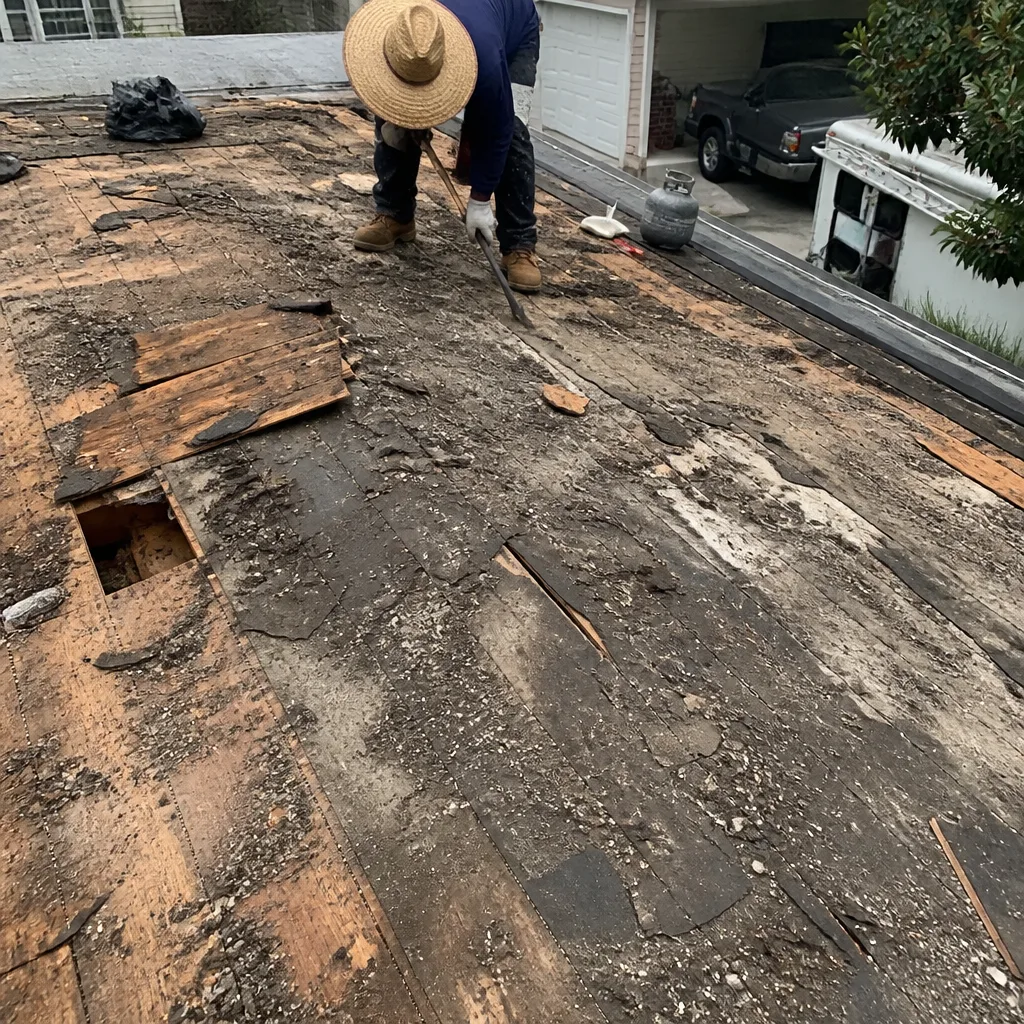 Before
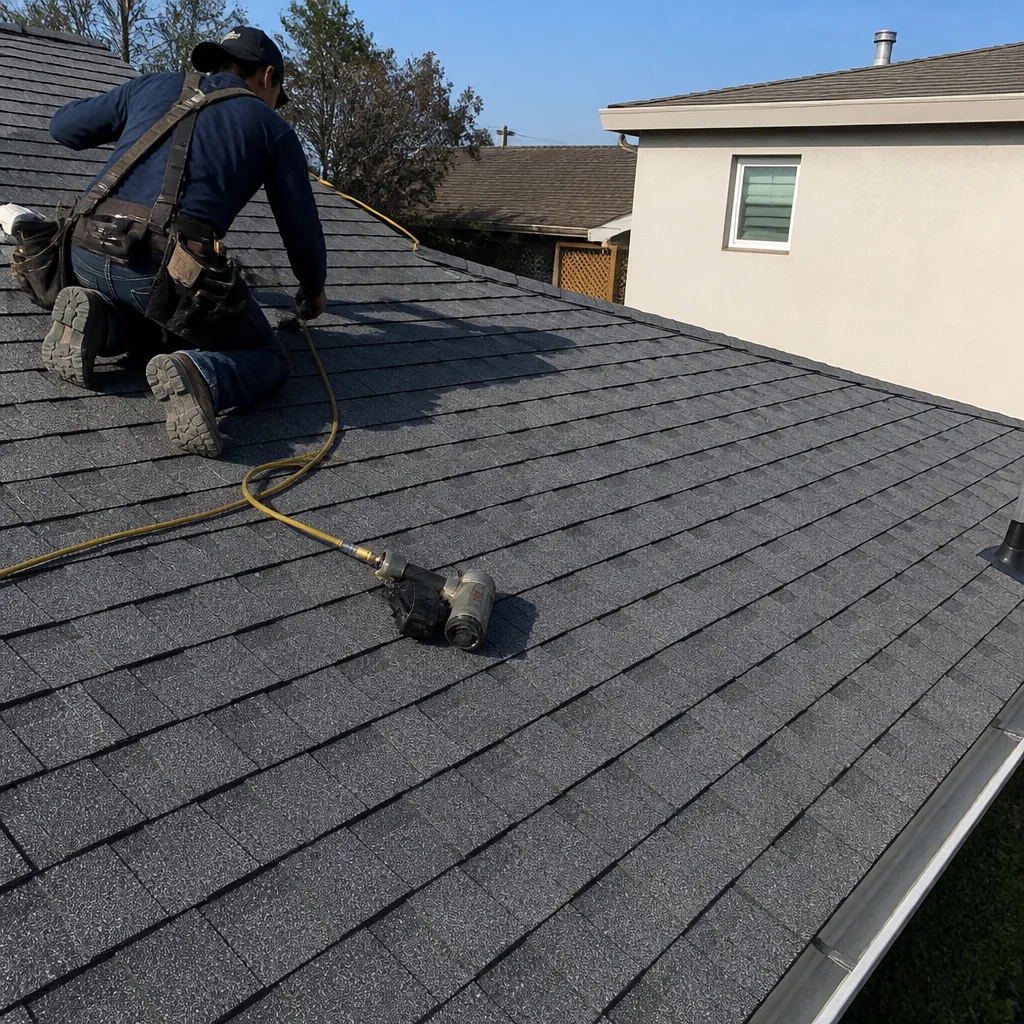 After
After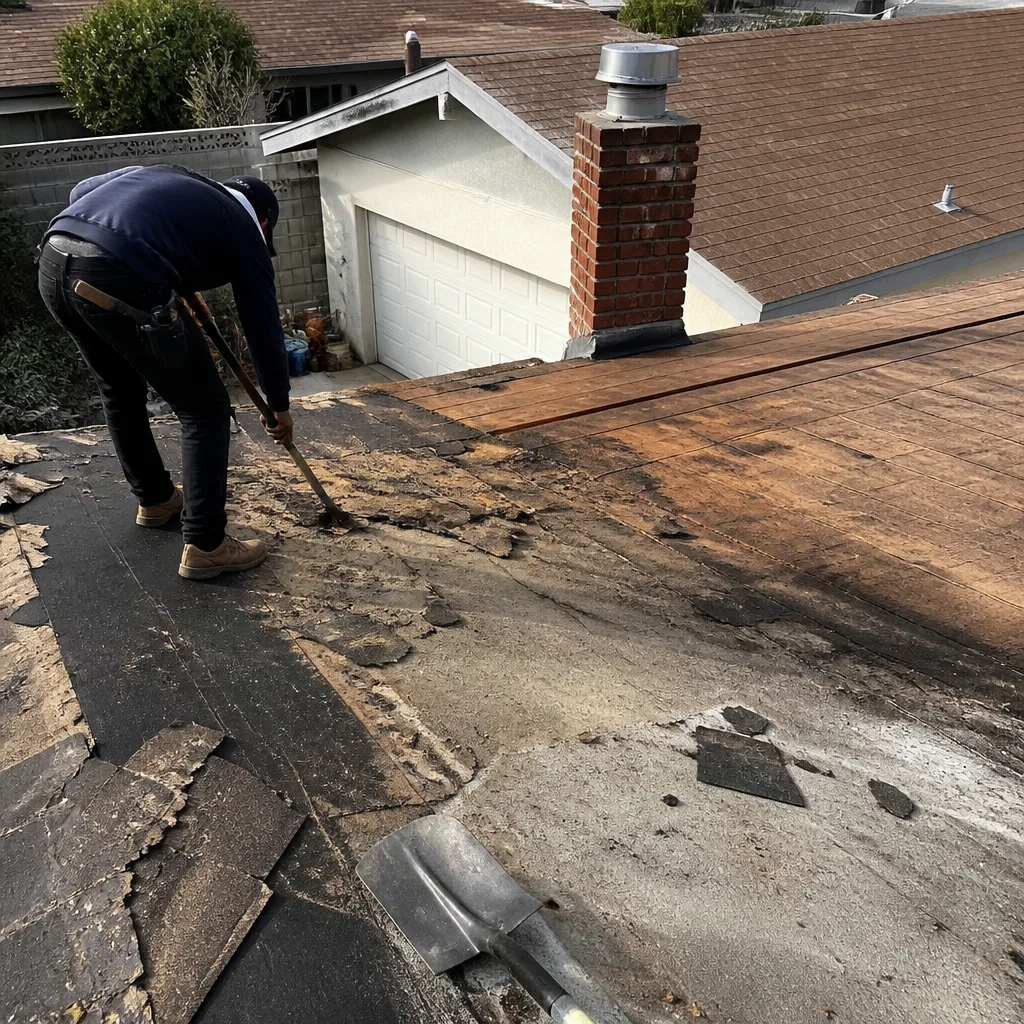 Before
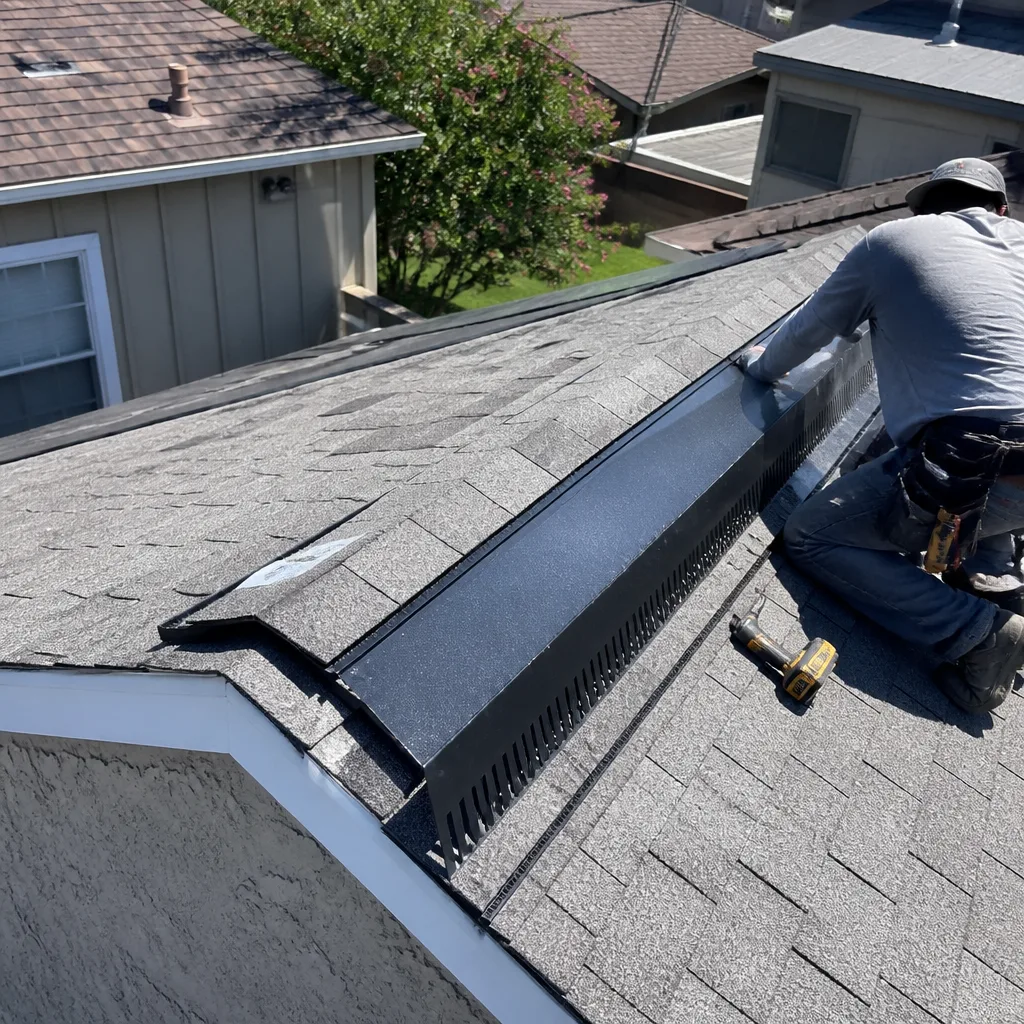 After
AfterAtlas Ridge Vent Installation: The Los Angeles Owner’s Guide
We stock and install Atlas-compatible ridge vent systems throughout Los Angeles, with most residential installations running between $450 and $1,100 depending on ridge length, roof pitch, and whether we’re removing an old vent or cutting new sheathing. Same-week scheduling is typical, and you’ll get a written price before any work starts. Most Los Angeles homeowners discover their ridge vent has failed the hard way: attic temperatures spike in August, the AC runs nonstop, or they spot shingle granules piling up at the gutter line and realize the vent’s weather membrane has started breaking down under years of sun and Santa Ana wind.
Which Atlas Models This Applies To
Atlas makes two ridge vent lines that show up on Los Angeles roofs: the Atlas Roll Vent and the Atlas EPDM Ridge Vent, both used across their Pinnacle, StormMaster, and GlassMaster shingle lines. The Roll Vent is a shingle-over system with a corrugated polypropylene core and an external weather membrane that sheds water while allowing air to escape. The EPDM version uses the same core profile with a rubberized membrane rated for higher heat exposure, which matters on south-facing ridges in neighborhoods like Sherman Oaks or Woodland Hills where the afternoon sun is relentless.
Here’s the compatibility gotcha most people miss: Atlas ridge vents are not interchangeable with GAF Cobra or Owens Corning VentSure systems, because the profile widths and nail flange positions differ by half an inch or more. A “universal” fix from a big-box shelf often leaves gaps that leak air or water. We carry both Atlas vent profiles in our Los Angeles inventory and match the replacement to the existing vent rather than asking you to modify your roof around the wrong part. For older Atlas roofs, we can also source OEM replacement sections through our Cedarwell supply network when the original vent is discontinued.
Signs Your Atlas Ridge Vent Installation Is Failing
- Attic heat that won’t quit, even at night. A working ridge vent lets hot air escape continuously. When the vent’s internal baffle collapses or the opening gets blocked with old insulation, heat sits in the attic and radiates down through the ceiling hours after sunset. We see this often in Los Angeles homes built before 2000, where the original vent was undersized for the roof’s square footage.
- Shingle granules collecting at gutter corners. This one is easy to misread as normal wear. When the ridge vent’s shingle-over cap loses adhesion, the shingles above the vent grind against the vent’s plastic edge during wind gusts, which is what you’re seeing. Over time, the granule loss exposes the mat underneath and you end up with a roof replacement instead of a vent swap.
- You can see daylight at the ridge from inside the attic. A properly installed Atlas vent has an internal wind baffle that blocks direct light while letting air move. If you’re seeing beams of sun through the ridge slot, the baffle has failed or was never installed to begin with, and you’re now open to wind-blown rain and ember intrusion during fire season.
- Musty smell in the attic after a “dry” winter. Condensation forms when humid Los Angeles coastal air can’t escape the attic. There is no way to explain a stale, damp smell in your attic if the vent is doing its job. Failed weather membrane on an Atlas vent will let mist through the vent opening while blocking proper airflow, which is the worst of both worlds.
- Wind-driven rain stains on the ceiling near exterior walls. This points to the vent’s end caps or the seam where two vent sections meet. Atlas vent sections are designed to overlap, but when the plastic gets brittle after 15-plus years of California UV exposure, the overlap cracks and the seam opens under pressure. On a north-south oriented Los Angeles roof, the north-facing ridge cap takes the brunt of winter rain and fails first.
Replacement Cost & What’s Included
For a standard single-story Los Angeles home with 30 to 50 linear feet of ridge, a full Atlas ridge vent replacement typically runs $450 to $800 installed. A two-story home or a roof with multiple ridge lines can push that to $900 to $1,100, mostly because of added ladder and safety setup time. If the old vent was nailed through the shingles instead of under them, which we see more often than we’d like, we add the cost of replacing the affected shingles to the written estimate.
Everything is line-itemed before we start: the Atlas vent material at our supplier cost, the labor hours, the fasteners and sealant, and disposal of the old vent sections. There are never change orders, because we don’t discover surprises after the fact. We inspect the ridge during the initial estimate, so the number you sign off on is the number you pay. The work is covered by our 365-Day Done Right Promise, and any manufacturer warranty on the vent passes through to you.
DIY or Call Us?
There are two things you can safely check from the ground or a ladder: whether the shingle cap over the vent is lifting, and whether the vent’s end caps are still flush with the roofline. Both are visible without touching anything. What you shouldn’t do is get on the ridge and start pulling vent sections, because you’ll be working at the highest point of the roof, and the plastic gets slick with morning dew in Los Angeles neighborhoods near the coast. A fall from a single-story ridge is still a serious fall.
The other reason this job goes wrong when DIY’d: matching the vent profile correctly. If you buy an off-the-shelf vent that doesn’t match your Atlas profile, you’ll spend a Saturday creating a new leak. If you want to send us photos of the vent and the ridge line, we can often identify the exact Atlas model before we even come out, or you can just call (424) 766-4937 and we’ll schedule the estimate.
FAQs
Atlas ridge vents in Los Angeles typically last 12 to 20 years depending on sun exposure, with south-facing and west-facing ridges wearing out faster because the plastic core and weather membrane take direct afternoon UV through the shingle cap. Coastal homes in areas like Playa del Rey often get a few extra years because the marine layer moderates the peak heat. If your vent is over 15 years old and you’re seeing any of the failure signs above, it’s time to plan the replacement rather than wait for water damage. Call (424) 766-4937 and we’ll assess what’s left in the vent before recommending anything.
A single cracked end cap or one separated seam can sometimes be repaired without replacing the entire vent run, but if the weather membrane is breaking down or the internal baffle has collapsed in multiple spots, patching just delays the inevitable and often costs more per year of service than replacing the whole vent at once. We’ll tell you straight which situation you’re in during the estimate. We don’t sell a full replacement when a repair does the job. Call (424) 766-4937 for an honest assessment.
Most Atlas ridge vent replacements on a standard Los Angeles home are done in one day, including removing the old vent, prepping the ridge slot, installing the new vent and shingle cap, and cleaning up. Larger roofs with multiple ridge lines can run to a day and a half. Either way, you’ll have a clear timeline in writing before we start, and we work around your family’s schedule for noise-sensitive hours.
We keep both Atlas Roll Vent and Atlas EPDM Ridge Vent profiles in our Los Angeles inventory, along with the matching end caps and sealant, so the most common replacements don’t wait on an order. If you have an older or discontinued Atlas vent, we can source OEM replacement sections through our Cedarwell supply network, generally within a few business days. We also stock vent systems from GAF, Owens Corning, and CertainTeed if the best fix for your roof turns out to be a different profile than what’s up there now.
If you’re seeing any of the signs above or you just want a second opinion on what’s happening at your ridge line, call (424) 766-4937 for a free estimate. Erik Lindgren will walk you through the line items until the numbers make sense, and you’ll get a written price before any work begins. Shoe covers at the door, drop cloths through the hallway, and a photo of the completed clean-up before our crew leaves.
Written by Erik Lindgren, Owner, Birchbark Roofing at Birchbark Roofing, serving Los Angeles and nearby areas.