
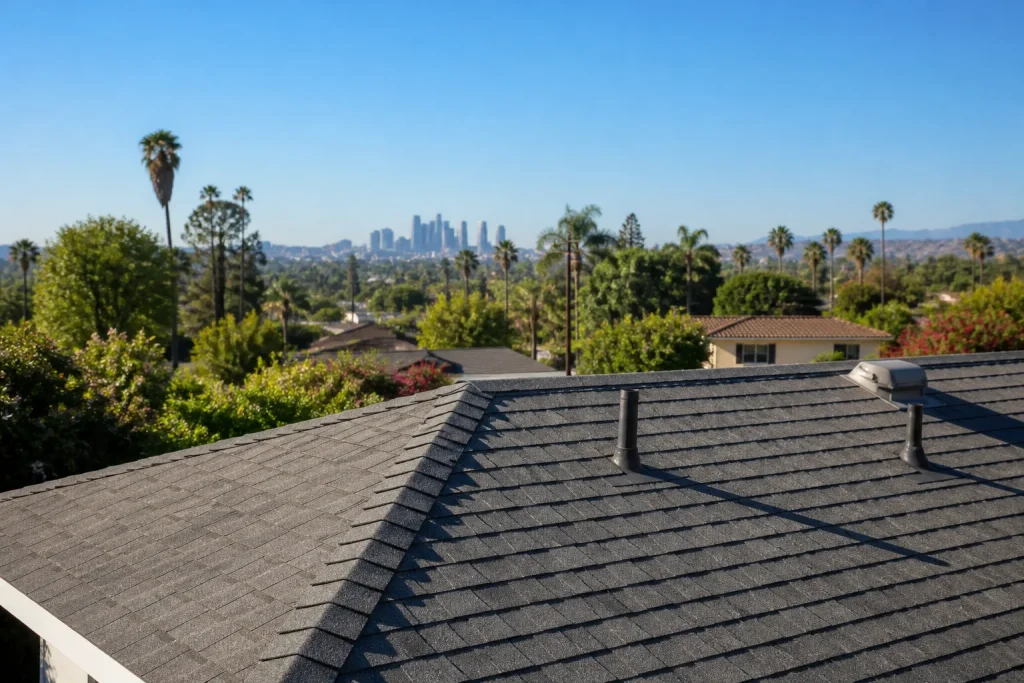
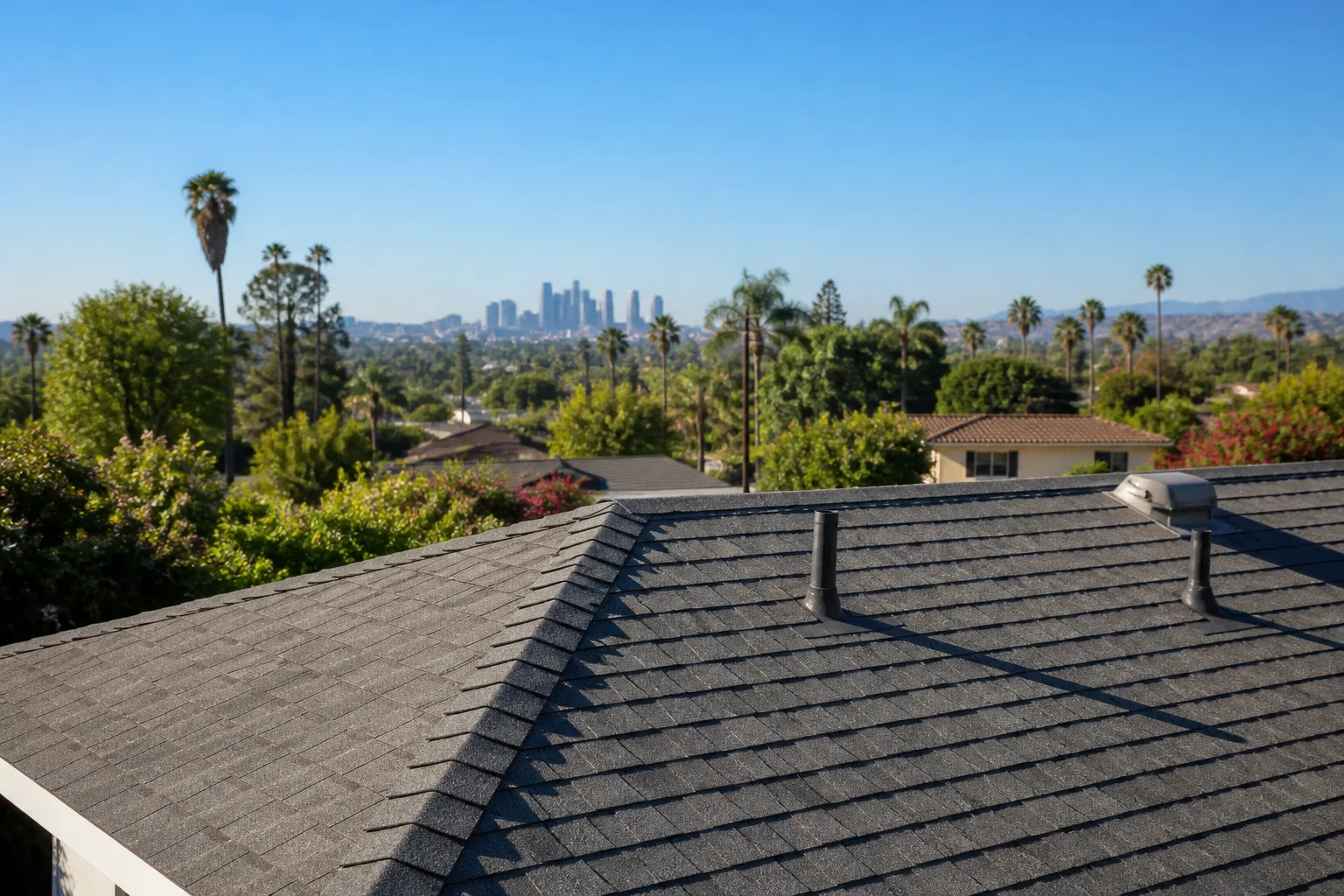
Spring Roofing Checklist for Los Angeles Homes
Spring roof maintenance in Los Angeles is less about snowmelt and more about cataloging what the winter rain exposed before seven dry months hide it again. A disciplined spring inspection catches the small cracks, lifted flashing, and clogged drainage that turn into ceiling stains and deck rot next December. If you’d rather not climb a ladder, call (424) 766-4937 and we’ll do the walk for you.
We pulled a tennis ball out of a corroded downspout in Silver Lake last March. The house had survived winter fine, but that ball had been damming water against the fascia for months, quietly feeding rot behind the gutter. Nobody notices a tennis ball in a downspout until the paint starts bubbling. That’s what a spring checklist is for: noticing things before they write themselves onto your ceiling.
Why Los Angeles Springs Are Different for Roofs
Most national spring roofing checklists assume you spent winter under snow and ice. Los Angeles homeowners face a different problem: winter rain hammers your roof for four months, then the dry season bakes it for eight. The freeze-thaw cycle that damages shingles in Minneapolis doesn’t apply here. What does apply is UV degradation, thermal expansion, and the slow wicking of moisture into wood that never quite dries before the heat arrives.
March is the month a slow winter leak makes itself visible as a ceiling stain, which means the damage already happened. The question now is whether the entry point gets fixed before dry weather hides it again. In Los Angeles, the window between “rain stops” and “heat bakes everything brittle” runs roughly March through May. Miss it and you’ll be chasing a leak that disappears for six months, only to resurface the night before you host Thanksgiving.
Key takeaways:
- Spring in LA means post-rain assessment, not snow-damage repair.
- The repair window is narrow: after the last storm, before summer heat sets new materials too fast.
- Every winter leak that didn’t get fixed is still there, just dormant.
Post-Rain Indicators Specific to Los Angeles Roofs
Forget the generic “look for missing shingles” advice. In Los Angeles, the materials and the climate create distinct failure signatures. Here are the ones we look for on every spring inspection, and they’re the same ones any homeowner should document with a phone camera.
1. Efflorescence on masonry chimneys
If you have a brick or masonry chimney, look for white, chalky residue staining the surface. That’s efflorescence: water has been moving through the masonry, dissolving salts, and depositing them on the surface as the water evaporates. In Los Angeles, winter rain saturates older chimney crowns and mortar joints, and spring’s first warm days pull that moisture outward, leaving the telltale bloom. Efflorescence alone isn’t structural failure, but it tells you the chimney is holding water, and water inside masonry expands when heated. Fix the crown cracks and repoint the joints now, before summer temperatures turn trapped moisture into spalling face brick.
2. Watermarks on attic rafters
Take a flashlight into the attic on a dry day. You’re not looking for water (there won’t be any). You’re looking for watermarks: dark, irregular stains on the underside of the roof decking, along rafters, or around vent penetrations. These stains tell you water has been getting in. Pair them with daylight visible through any roof penetration and you’ve located the entry point. Mark the spots with painter’s tape, photograph them, and compare against next winter. A stain that grows year over year is an active leak; a stain that stays stable is a past one.
3. Granule accumulation in gutters after storm runoff
Los Angeles rain comes in short, intense bursts, and those bursts scour granules off asphalt shingles and wash them into gutters. In spring, a thin layer of granules at the bottom of every gutter is normal for a roof over ten years old. A thick, sand-like deposit concentrated under a specific downspout is not. That tells you a section of shingles is shedding its protective mineral coating at an accelerated rate, which shortens the life of that slope. Compare the downspouts on the sun-exposed south and west slopes to the shaded north slope. If the sunny side is shedding noticeably more, that roof section is aging faster than the rest of the house and may warrant a replacement conversation sooner than the shadier side.
Documenting Your Spring Findings
Your checklist is only useful if it builds a baseline for next winter. A photo from your phone with no notes won’t tell you in December whether a crack got worse, but a photo paired with a measurement will.
For every issue you find, capture:
- A wide shot showing the entire roof slope for context.
- A close shot of the specific issue with your hand or a ruler in frame for scale.
- A note in your phone: location, date, and one sentence describing what you see.
- An estimated dimension: crack length, stain width, shingle count where granules are missing.
Store everything in a folder called “Roof [year] Spring Inspection” and keep it. Next spring, open it before you climb the ladder. You’ll know what was already there and what’s new, which transforms guesswork into a trend line. This is also the baseline a roofing company in Los Angeles will ask for if a repair ever becomes a claim. Written documentation of repeated, documented inspections carries weight with insurance adjusters in a way that a memory of a stain doesn’t.
When we do a spring inspection for a homeowner, the written report captures the same information with annotated photos. If you’d rather not piece together your own record, we’ll build the baseline for you.
The April to June Window for Flashing and Sealant Repairs
There is a specific reason April through early June is the best time of year to fix flashing and reseal penetrations in Los Angeles, and it has nothing to do with scheduling convenience. It has to do with how sealants cure.
Most roofing sealants, including the ones we use on flashings, pipe boots, and vent stacks, cure through a chemical reaction with moisture in the air. In Los Angeles, spring air still carries enough humidity for a sealant to cure slowly and evenly. By July, the relative humidity drops into the teens and daytime surface temperatures on a dark roof exceed 150 degrees. Fresh sealant that cures too fast skins over on the outside while staying wet and unstable underneath, which compromises adhesion and shortens the lifespan of the repair.
Beyond that, summer’s UV radiation is the primary force that degrades roof sealants in Southern California. If you re-caulk a flashing in September, that fresh bead spends its entire first year absorbing peak fall sun, then peak summer sun before its first true winter seasoning. If you re-caulk the same flashing in April, the sealant has the gentle end of the spring season to fully cure before it ever faces serious UV stress. The repair lasts longer because it was installed at the right time of year.
Put “flashing and sealant check” on your April calendar, not your October one.
Translating Findings into Repair Priorities
A checklist is only as good as what you do with it. When we walk a Los Angeles roof in spring and find issues, we bucket them into three tiers.
Tier 1: Fix before summer
Anything involving active water entry, loose flashing, missing tiles, or torn shingles is a Tier 1 item. The dry season won’t fix these; it will just make them invisible for seven months while water already trapped in the system does its slow work. In the San Fernando Valley or the hills above Studio City, late spring can still deliver an anomalous storm, and anything loose enough to rattle now will leak then.
Tier 2: Can wait until fall
Cosmetic issues, minor granule loss without exposed substrate, and sealant that’s cracking but still intact can generally wait until September or October, when temperatures drop enough for comfortable working conditions and before the rainy season begins in earnest. The exception is south and west slope shingles that are cupping or curling: summer heat will accelerate that damage, so if you’re going to put something off, document it thoroughly now and revisit it in September.
Tier 3: Replacement conversation now
If your roof is 18 to 22 years old, has multiple active leaks, visibly deteriorating underlayment visible from the attic, or widespread granule loss across multiple slopes, spring is the season to have the replacement conversation. Los Angeles replacement work is easiest to schedule in the dry months, and the spring inspection gives you the full picture before committing. At Birchbark Roofing, we write a fixed price before any replacement starts, so you’ll know the exact number before you decide. If you’re weighing repair against replacement, our guide to roof replacement in Los Angeles covers the tradeoffs.
What a Family-Ready Spring Inspection Looks Like
If you have kids and pets, you already know the drill: any contractor visit means managing the dog, timing nap schedules, and hoping the house looks the same when the crew leaves. A spring roof inspection doesn’t have to disrupt any of that.
Here’s what a considerate crew does differently, and what you can ask any contractor to commit to before they arrive:
- Scheduling around your house, not theirs. If the dog needs to stay inside, the crew coordinates the door schedule so the yard stays closed and the front door stays controlled. If the baby naps from noon to two, that’s a quiet window for interior attic work, not a coincidence to work around.
- Shoe covers at the door and drop cloths through the hallway. Roof work often requires attic access from inside the home. A crew that walks through your living room without protecting the floor hasn’t earned the right to walk on your roof.
- Pet-safe product choices where available. The adhesives, primers, and cleaners used on a roof can find their way to the ground around the perimeter. If you have a dog who licks the drip line, ask about pet-safe alternatives. We use them where a choice exists, and we’ll tell you which products go where if you want to know.
- A clean-up photo before the crew leaves. The last item on any responsible contractor’s checklist should be a photograph of the finished clean-up, taken from the street and from the roof edge, showing that no nails, shingle fragments, or lunch wrappers remain. If a contractor can’t show you the clean-up, assume it didn’t happen.
This is the standard we hold at Birchbark Roofing, and it’s part of the Cedarwell Care Promise: Clean up like it’s our own home; Ask before we move or touch anything; Respect the family’s time and quiet hours; Explain the price before the work. Birchbark has been part of the Cedarwell family of independently owned roofing businesses, working with materials from GAF, CertainTeed, and Tamko, among others. The name tells the story: birch bark was one of the first roofing materials, light, tough, and made to shed water.
If your spring checklist turns up a Tier 1 issue, or if you’d rather have a professional baseline to work from, our roof repair in Los Angeles service includes the same walk-through, the same documentation, and the same clean-up standard we apply to every job.
The Bottom Line
Spring in Los Angeles is the only season when your roof tells you the truth: winter’s rain has stamped its evidence on every flashing, chimney, and gutter, and summer hasn’t yet baked the moisture out of the picture. Do the walk now, document what you find, and make the Tier 1 fixes during the April to June window when materials cure properly.
The questions to answer by May: Is there efflorescence on the chimney? Are there watermarks in the attic? Which downspouts are holding granules? What did you document last spring, and what’s changed? And is the roof old enough that this year’s checklist is really a replacement conversation?
If you’re in Los Angeles and need help with any of it, Birchbark Roofing offers free estimates. We’ll walk the roof with you, show you the photos, explain what’s urgent and what isn’t, and write the price in dollars before any work starts. Call (424) 766-4937.
Frequently Asked Questions
Twice a year is the minimum: once in March or April after the rain season ends, and once in October before it begins. Spring inspections focus on cataloging what winter exposed; fall inspections focus on preparing the roof for storms. Homes over 15 years old or with known leak history benefit from a third check in January, during the rain season, by a professional who is trained to spot active water entry.
The most common spring issue is lifted or cracked flashing around chimneys, vents, and skylights. The winter rain cycle swells the materials around flashings, then spring’s dry air shrinks them, and the repeated movement breaks the sealant bond. The result is a gap that lets water through during the next storm. April and May, when sealants cure properly in the moderate conditions, are the best months to repair this before summer heat causes further degradation.
You can do a thorough visual inspection from the ground and from inside the attic, and you should document what you find. But a professional inspection from the roof itself catches things you can’t see from the ground: hairline cracks in chimney crowns, loose tiles that are still seated, and sealant failures that look intact until touched. A professional walk also includes a written report with annotated photos, which becomes your baseline for next year. If you do go up yourself, use a spotter and never walk a wet roof.
Many roofing companies, including Birchbark Roofing, provide spring roof inspections at no charge for homeowners considering repair or replacement work. Paid inspections typically run $150 to $300 depending on the size of the roof and whether attic access is required. A written report with photos should always be included, whether the inspection is free or paid. Call (424) 766-4937 and we’ll tell you exactly what our free estimate includes before we schedule anything.
Written by the team at Birchbark Roofing.
Need Roofing Help?
Call Birchbark Roofing - licensed & insured, here with fast after-hours help in Los Angeles.
(424) 766-4937