
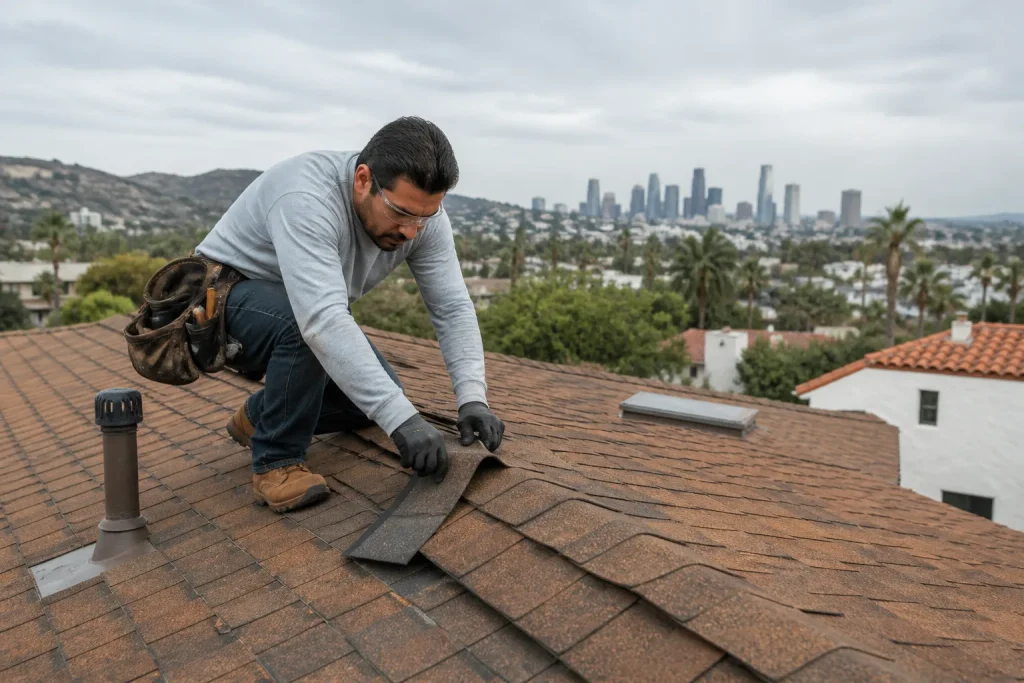
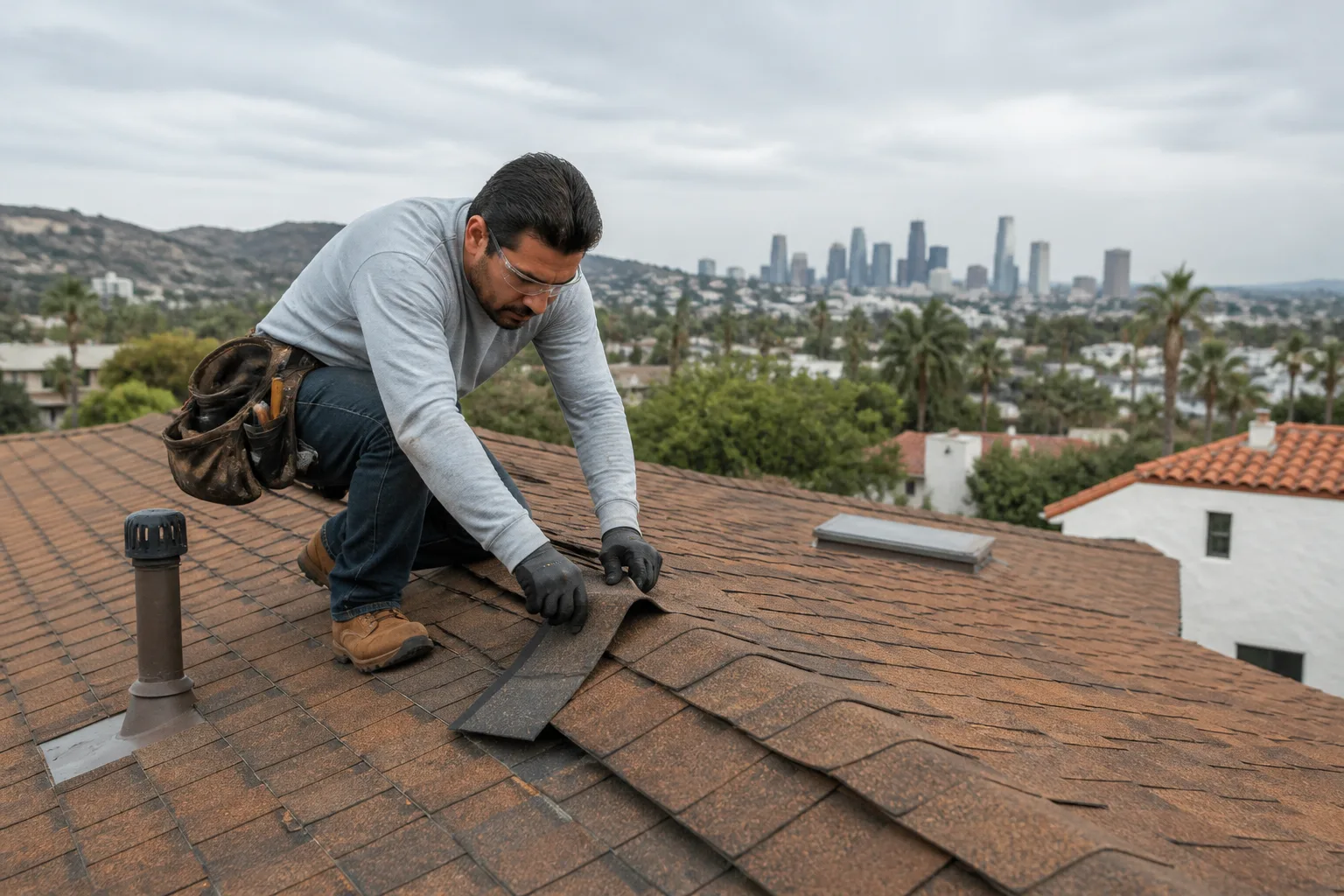
Preparing Your Home’s Roofing for Winter in Los Angeles
Winter roof preparation in Los Angeles comes down to one thing: finding the failures that eight dry months have hidden before the first real rain exposes them. Most LA roofs don’t fail from age alone. They fail because rubber collars, sealant beads, and caulk lines dried out and cracked during summer heat, and nobody looked at them until water was already inside the house. If you’d rather not spend a Saturday on a ladder, call Birchbark Roofing for roof repair in Los Angeles at (424) 766-4937 and we’ll handle the inspection.
The Three Components That Fail in LA Summers (And Only Get Discovered in Winter Rain)
Southern California doesn’t get ice dams. It doesn’t get snow load. What it gets is eight months of UV exposure and 90-degree heat cooking the flexible materials on your roof until they’re brittle. When the first December storm arrives, those brittle materials crack under the first cold rain and let water in before you even know it’s raining hard.
In our experience across Los Angeles roofs, three specific components account for most winter leak calls. We’ve seen each one dozens of times, and they almost never show up on a summer inspection unless someone specifically looks for them.
- Pipe boot collars. The rubber collar that seals the pipe where your plumbing vents through the roof. Summer heat bakes the rubber until it shrinks and splits. The crack sits there invisible for months. January rain finds it in an afternoon.
- Valley flashing sealant. Where two roof planes meet, sealant beads bridge the metal flashing and shingles. That sealant expands and contracts with LA’s 40-degree overnight-to-noon temperature swings. By winter, it’s pulled away from the metal and water tracks right underneath.
- Skylight perimeter caulk. The caulk line around a skylight curb takes direct sun from June through October. It chalks, then cracks, then separates. Most homeowners don’t notice until a ring of water stains appears on the ceiling below.
None of these are catastrophic failures. They’re maintenance failures. But a $12 pipe boot collar left unchecked in Los Angeles becomes a $900 ceiling repair in February, and that’s not a ratio anyone wants.
Why LA Gutters Need Clearing Even If You Have Almost No Trees
Homeowners in Los Angeles often skip gutter cleaning because they look up and see mostly sky. No oak canopy, no maple leaves, no pine needles. What they don’t account for is what the wind carries in.
Pepper tree berries are a constant in LA neighborhoods from the Valley to the Westside. They’re small, dense, and they don’t break down. They collect in gutters and form a paste that hardens into a dam. Eucalyptus debris does the same thing, and eucalyptus bark is tough enough to outlast an entire dry season. When winter rain hits, the water backs up behind that dam and flows under the eave, not through the downspout.
We pulled a clogged downspout out of a garage conversion over in Reseda last December where the gutter looked clean from the ground. The blockage was fifteen feet down inside the vertical pipe, packed with pepper berries and a long-dead rat. The homeowner had a brand new roof. The leak was from the gutter backing up under the fascia board.
Before winter, check your gutters at the downspout openings, not just from the ground at the gutter line. If water pools against the house during the first rain, you’ve got a blockage, and in Los Angeles it’s probably not leaves.
Santa Ana Winds: The Pre-Winter Inspection Window Most Homeowners Miss
October and November are Santa Ana season in Los Angeles, and those winds do something specific to roofs: they lift ridge caps. Ridge caps are the shingles that sit along the peak of your roof, and they take the brunt of every wind event because they’re at the highest point with the most exposure.
A properly seated ridge cap is nailed down and sealed. An aged ridge cap, or one installed with short nails, starts to lift at the leading edge. The wind catches it, works it back and forth through repeated gusts, and eventually folds it over. Once it’s folded, the nail holes are exposed and water has a direct route into your attic.
This is why a fall inspection in Los Angeles matters more than most people think. You want a roofer on the roof after the first significant Santa Ana event of the season, not just before the first rain. If your ridge caps lifted in October, you want them re-sealed in October, not discovered in December when the water is already dripping through the ceiling.
If you’re in Los Angeles and want a professional eye on this, our roofing company in Los Angeles covers ridge cap inspections as part of every pre-winter visit.
What a Written Pre-Winter Inspection Report Should Include (And Why Verbal Doesn’t Count)
A roofer who climbs on your roof, looks around for twenty minutes, and tells you “everything looks fine” hasn’t given you anything. A roofer who hands you a written report with photos and line-item findings has given you a document that protects you.
Here’s the difference, and it matters in Los Angeles specifically because our winters are short and damage claims get filed fast. If you have a written report from November that says “pipe boot collar at main stack: rubber brittle but intact, monitor through winter,” and the collar fails in February, you have a record. You know what was checked, what was flagged, and what was fine. If you have a verbal “looks good,” you have nothing when the insurance adjuster asks what the roofer actually saw.
A written pre-winter inspection report should include, at minimum:
- Photographs of every penetration: pipe boots, vents, skylights, and any other opening cut into the roof surface
- The condition of sealant at valleys, sidewall flashings, and counter-flashings, with specific notes on what was checked
- Gutter and downspout condition notes, including whether water was observed flowing correctly
- Ridge cap and hip cap condition, including any areas where wind lift was observed
- Any areas flagged for follow-up, with a specific reason for the flag and a recommended timeline
At Birchbark Roofing, we include this written report with our pre-winter inspections. It’s the only way we’d want it done on our own homes. You get the photos, the notes, and the exact list of what we saw, because a handshake doesn’t hold up in February.
Pet-Safe and Family-Safe Roof Sealants: What to Look For on a Scope of Work
Pre-winter sealing work happens when your household is fully occupied. School is in session, pets are indoors, and the last thing you want is a roofer using solvent-heavy products that off-gas into your attic air or rinse off the roof and into your landscaping.
When a roofer proposes pre-winter sealing in Los Angeles, ask what sealant they’re using and whether it’s low-VOC or pet-safe. The answer matters more than most homeowners realize. Standard solvent-based sealants off-gas during application and curing. If your kids’ bedroom is directly below the roof work, that’s indoor air quality you don’t want compromised. Most major manufacturers now offer water-based or low-VOC alternatives that perform just as well for this application. The local pros use pet-safe products whenever there’s a choice, because a dog in the backyard shouldn’t have to wait through a product data sheet.
Look for these specifics on any pre-winter sealing scope of work:
- The product name and manufacturer for the sealant being used
- Whether the product is water-based, low-VOC, or rated for residential occupied application
- Ventilation plan if solvent-based products are unavoidable in a specific spot
- Clean-up protocol for overspray or drips that land on walkways, planters, or outdoor furniture
The same care applies to the crew walking through your house. Shoe covers at the door, drop cloths through the hallway, and a walkthrough before anyone climbs the ladder. We photograph the clean-up before we leave, because the house should look like we were never there, except for a roof that’s ready for rain.
The LA Winter Roof Prep Sequence: What to Do and When
Timing matters because Los Angeles winter prep slots between two seasonal hazards: Santa Ana wind season in October and November, and the first heavy rains that can arrive as early as mid-December. Here’s the sequence we recommend to homeowners every fall.
- October, after the first Santa Ana. Walk the property and look for shingles on the ground, lifted ridge caps visible from the street, or any new gap at the roofline. If anything moved, get it checked before rain arrives.
- November, before Thanksgiving. Clear gutters and downspouts. Check for pepper berry build-up, eucalyptus bark, and any signs of water staining on fascia boards. If you can’t safely reach, have it done.
- Late November to early December. Schedule a full roof inspection with written report. This catches the dried seals, cracked pipe boots, and failed caulk lines before the first storm.
- First rain. Watch your ceilings, especially around skylights, chimneys, and any room directly under a roof penetration. If a stain appears, call immediately. Water in the house means the failure is already active.
If you’d rather not climb a ladder or spend a weekend on gutter duty, call us at (424) 766-4937. The pre-winter inspection is free, and you’ll get the written report either way.
When to Call a Pro
Some pre-winter roofing tasks are fine for a confident homeowner. Clearing gutters from the ground with a proper wand is doable. Visually scanning for lifted ridge caps from the street is smart. But once you’re on the roof itself, the risk profile changes. Falls from roofs are the leading cause of home ladder injuries, and a two-story Los Angeles roofline is not the place to test your balance in November wind.
Call a roofer if you see any of these: water staining on any ceiling, visible gaps at flashing or skylights, lifted ridge caps you can see from the ground, or gutter overflows during rain. These all point to failures that need a professional eye and often a repair that requires the right materials and the right installation method. Related services in Los Angeles: roof repair in Los Angeles and roof replacement in Los Angeles for roofs that have reached the end of their service life. Both start with the same written inspection report and the same written price before any work begins.
The Bottom Line
Los Angeles winter roof prep is mostly about catching the failures that summer created. The pipe boot collars, sealant beads, and caulk lines that dried out and cracked in the heat. The gutters packed with pepper berries. The ridge caps lifted by Santa Ana winds. None of these are hard to fix in November. All of them are expensive to ignore until February.
If you’re in Los Angeles and want your roof checked before the rain arrives, Birchbark Roofing offers free pre-winter inspections with a written report. Call (424) 766-4937 and we’ll schedule a time that works for your family. Shoe covers at the door, drop cloths through the hallway, and a written price before any work starts. That’s how we’d want it done at our own place.
Frequently Asked Questions
At Birchbark Roofing, the pre-winter inspection is free, and it includes a written report with photographs and line-item findings. Most residential roof repairs identified during a pre-winter inspection in Los Angeles run between $180 and $900 depending on what is found, and you’ll see your exact number in writing before any work starts. Call (424) 766-4937 to schedule your inspection.
Yes, and the reason most people miss is wind-blown debris. Pepper tree berries, eucalyptus bark, and airborne dust collect in LA gutters even when the yard is mostly clear. Debris dams form slowly through the dry season and become dangerous when winter rain arrives, because water backs up under the eaves instead of flowing through the downspouts. If you can’t safely reach your gutters, call (424) 766-4937 and we’ll clear them as part of your pre-winter visit.
No. Birchbark Roofing provides a written price in dollars before any work starts, and that price does not change once we’re on the roof. If we find something during the repair that wasn’t visible during the inspection, we stop, show you what we found, and get your approval in writing before continuing. No change orders, no surprises. Call (424) 766-4937 for an exact quote on your pre-winter roofing work.
A typical pre-winter roof inspection in Los Angeles takes 45 to 90 minutes on site, depending on roof size and accessibility. You’ll receive the written report with photographs the same day, along with any recommendations and your written price for any work that needs to be done. For most homes, the actual repair work identified in pre-winter inspections is completed in under half a day. Call (424) 766-4937 to schedule.
Written by the team at Birchbark Roofing.
Need Roofing Help?
Call Birchbark Roofing - licensed & insured, here with fast after-hours help in Los Angeles.
(424) 766-4937