
Boral Roofing Company in Los Angeles: A Homeowner’s Guide
Boral roofing tiles are a premium concrete and clay tile option that holds up well to Los Angeles sun, Santa Ana winds, and the occasional winter downpour. Expect to pay $14 to $22 per square foot installed for concrete, and $20 to $35 per square foot for clay, with underlayment and structural work often adding another $3 to $7 per square foot. If you’d rather not sort through the engineering details yourself, call Birchbark Roofing at (424) 766-4937 and we’ll walk you through it.
A Boral concrete tile roof can weigh three to four times more than asphalt shingles, and if your home’s structural framing wasn’t built to carry that load, you’ll need an engineer’s sign-off before installation can legally proceed in LA County. That fact belongs in your contractor’s written scope from day one, not after the old roof is torn off. Here’s what LA homeowners should know before signing a contract for Boral tile.
Key Takeaways for Boral Tile Roofs in Los Angeles
- Boral concrete tiles run roughly 600 to 1,100 pounds per square (100 square feet); clay comes in lighter but still far heavier than asphalt.
- LA County requires a structural load assessment before tile installation on most homes, especially pre-1990 builds.
- Underlayment is not optional and is often left out of initial quotes. A two-layer system costs more upfront but protects far longer.
- HOA approvals in Los Angeles frequently dictate tile color, profile, and even sheen. Get written approval before ordering materials.
- Final verification of ridge cap alignment, mortar consistency, and clean-up is a homeowner’s responsibility, not a courtesy.
What Makes Boral Different from Other Tile Brands in Los Angeles
Boral manufactures a full line of concrete and clay roof tiles at plants that distribute throughout Southern California. In Los Angeles, where builders and HOAs lean heavily toward Spanish colonial, Mediterranean, and Mission revival aesthetics, Boral’s color options and profiles match those styles predictably. We work with Boral alongside GAF, CertainTeed, and Owens Corning, and what separates Boral is consistency: tile dimensions are uniform, color batches are tightly controlled, and the company documents every product line’s weight and wind resistance clearly.
That documentation matters more in Los Angeles than many homeowners realize. A building inspector wants to see stamped engineering data. A skeptical HOA board wants manufacturer spec sheets. Boral provides both without a fight. But the product is only half the conversation. The other half is what sits under the tile.
Structural Load Assessment: The Step Most LA Homeowners Skip
Tile roofs are heavy. A square of Boral concrete tile can weigh between 600 and 1,100 pounds, depending on the profile. Asphalt shingles, for comparison, typically run 225 to 275 pounds per square. That’s a real difference, and it’s why Los Angeles County building code requires a structural evaluation before tile goes on most existing homes.
A compliant proposal in Los Angeles should state, in writing, that a licensed structural engineer will assess the roof framing and that any required reinforcement is included in the price or listed as a clearly defined line item. If the proposal doesn’t mention load, an engineer, or LA County code, walk away. An honest roofer won’t know whether your framing can carry Boral tile until someone looks at the rafters, the spacing, and the condition of the existing decking.
We’ve seen this play out in neighborhoods like Studio City and Silver Lake, where 1920s and 1930s framing was never designed for tile. In some cases the roof needs additional joists or plywood sheathing before the first tile goes down. That work is legitimate and sometimes unavoidable, but you deserve to know about it before demolition starts, not after. A written price before any work begins is a line we won’t cross, and if structural reinforcement is needed, it will be in the number we hand you before you sign anything.
Boral Concrete vs. Clay: What the Comparison Actually Looks Like in Los Angeles
Boral makes both concrete and clay tiles, and the difference isn’t just aesthetic. Here’s how the two lines compare for a typical Los Angeles home:
| Factor | Concrete Tile | Clay Tile |
|---|---|---|
| Weight per square | 600 – 1,100 lbs | 500 – 950 lbs |
| Installed cost (LA market) | $14 – $22 per sq ft | $20 – $35 per sq ft |
| Lifespan in LA climate | 40 – 60 years | 50 – 75 years |
| Color retention | Very good; matte finishes | Excellent; natural clay pigments |
| Typical HOA compatibility | High; matches Spanish and Mediterranean profiles | Highest; preferred for historic districts |
Concrete tile is the mainstream premium choice in Los Angeles because it costs less, weighs only slightly more, and comes in profiles that satisfy most HOAs. Clay tile is the top-shelf option, often required in designated historic preservation zones or for high-end Mediterranean builds. Both outperform asphalt shingles in longevity by decades. Both also require an underlayment decision that changes the total price significantly.
The Underlayment Question That Changes Your Total Cost
Underlayment is the waterproof membrane between your roof deck and the Boral tiles. It’s never optional, and it’s the line item most often left vague in a first quote. In Los Angeles, where the roof bakes for eight months and then gets hit with concentrated winter rain, underlayment quality determines whether a cracked or displaced tile becomes a leak.
The standard is a single layer of synthetic underlayment rated at least 30-lb felt equivalent. The better approach for a tile roof that you expect to last 50 years is a two-layer system: a peel-and-stick base layer and a high-grade synthetic top layer. The two-layer approach adds $3 to $7 per square foot, but it protects the deck during the entire life of the tile, and it’s what we recommend for anyone spending Boral money in Los Angeles.
Before you compare quotes, ask this question: “Is the underlayment a single layer or a double layer, and what brand is specified?” The answer should be in writing. If a quote seems $8,000 cheaper than another, the underlayment spec is often where the difference is hiding.
HOA Guidelines: Boral Tile and the Los Angeles Aesthetic Approval Process
Most Los Angeles HOAs with architectural review committees have rules about roof color, material, and profile. Spanish colonial and Mediterranean styles dominate the city’s most common HOA-governed communities, and Boral offers profiles that match those styles: low-profile flats, barrel or “S” tiles, and high-profile Mission tiles.
Here’s what to submit to your HOA before ordering Boral tile:
- 1
A manufacturer spec sheet showing the exact profile name and color code.
- 2
A physical tile sample or high-resolution photo against your existing exterior paint.
- 3
The proposed underlayment specification.
- 4
A written description of ridge cap style and color matching.
- 5
Any structural engineer documentation if the roof requires modification.
HOAs in Los Angeles can take 30 to 60 days to review a roofing application. Start the process before you sign a contract, because a rejected tile color means material delays and rescheduling. Ask your roofer whether the written price includes one HOA resubmission if the committee requests a different color or profile. Ours does, and it should be standard language in any Los Angeles roofing proposal.
Ridge Caps, Mortar, and the Final Walk-Through
A Boral tile roof is only as good as its ridge caps and mortar work. The ridge cap is the finishing tile along the peak of the roof, and if it’s misaligned, the eye catches it immediately. Mortar is used to secure ridge caps and hip tiles, and in Los Angeles, the heat can cure mortar too fast, causing hairline cracks if the crew isn’t managing the mix.
Before you sign off on a finished Boral roof in Los Angeles, check these five things:
- Ridge cap alignment: Stand across the street and sight down the ridge line. Caps should follow a clean, straight line with no visible dips or bulges.
- Mortar consistency: Run your finger lightly along a mortar joint with the roofer present. It should be hard, uniform, and free of large cracks or crumbles.
- Valley transitions: Where two roof planes meet, the tile cuts should be tight against the valley metal, with no exposed underlayment gaps.
- Gutter and yard debris: Tile work creates chips and dust. The crew should have swept, magnet-swept for nails, and left the yard better than they found it.
- Under-eave inspection: The roofer should show you photos from under the eaves where visible, confirming the underlayment terminates correctly at the drip edge.
This is also where the Roof Replacement in Los Angeles process differs from a repair. A full replacement gives you the chance to inspect every layer before tiles go down. A Roof Repair in Los Angeles on an existing Boral roof means matching the existing tile profile and color, which takes patience and a good supplier relationship. We pulled a tile repair in Los Feliz last month where the original tile had been discontinued. We matched it with a Boral profile within a quarter-inch of the original, and the HOA signed off without a second look.
When to Call a Professional
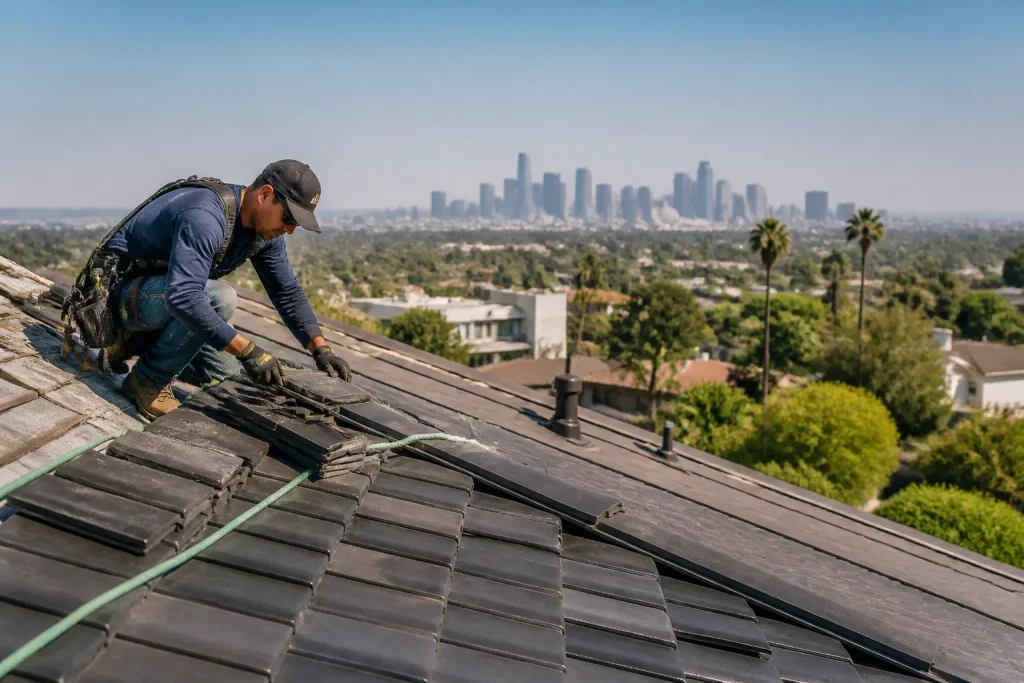
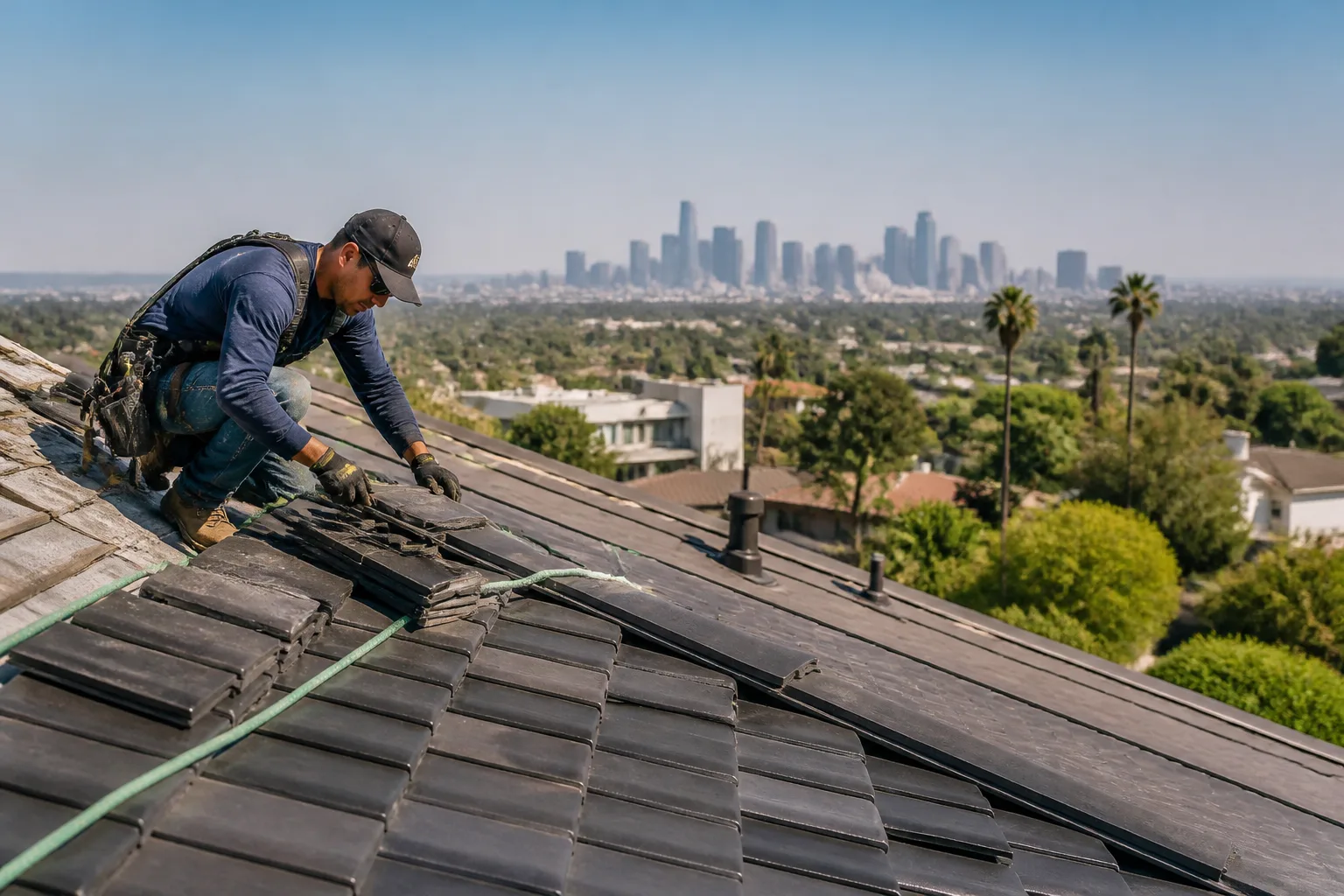
Boral tile installation is not a weekend project. The weight of the material, the structural evaluation, the underlayment layering, and the finish work all require training and the right equipment. Walking on a tile roof incorrectly cracks tiles. Mixing mortar wrong in Los Angeles summer heat leads to failed ridge caps. And the structural load question is one that only a licensed engineer should answer.
We’ve also been called out to fix tile roofs where a previous crew skipped the underlayment replacement entirely to win on price. The tiles looked fine from the street. The deck underneath was spongy. By the time the homeowner noticed the interior water stain in a bedroom near Beverly Grove, the repair scope had doubled.
If you’re in Los Angeles and comparing Boral tile quotes from multiple roofers, we’d rather you call us early than call us to fix someone else’s work later. You can reach a live person at (424) 766-4937 any time, and we’ll give you a written price before any work starts.
The Bottom Line
Boral tile is a legitimate 50-to-75-year roof for Los Angeles homes, but the real decision isn’t the tile color. It’s whether your framing can carry the load, what underlayment system goes underneath, and how your HOA will respond to the profile you choose. Those three questions get answered before you spend a dollar, and any roofer worth hiring will put the answers in writing. Birchbark Roofing works with Boral, GAF, CertainTeed, and Owens Corning materials, and we follow the Cedarwell Care Promise on every job: clean up like it’s our own home, ask before we touch anything, respect your family’s time, and explain the price before the work begins. If you’re in Los Angeles and need help with a Boral roof, call (424) 766-4937 for a free estimate.
Related services in Los Angeles: Roofing Company in Los Angeles
Frequently Asked Questions
Installed Boral concrete tile in Los Angeles typically runs $14 to $22 per square foot, while Boral clay tile runs $20 to $35 per square foot. Underlayment, structural reinforcement, and HOA-driven changes can add to the total. Call (424) 766-4937 for an exact written quote on your roof.
Yes, in most cases. LA County building code requires a structural load assessment before tile installation on existing homes, especially those built before 1990. Your contractor’s proposal should state in writing that a licensed engineer will assess the framing and that any reinforcement work is included or clearly itemized.
It should be, but many initial quotes specify only a single layer or leave the spec vague. A two-layer system of peel-and-stick base plus synthetic top layer costs more upfront but protects the roof deck for the full life of the tile. Always ask which underlayment brand and layer count is specified in writing.
Most HOAs will approve Boral tiles if you submit the right documentation: manufacturer spec sheet, color sample, underlayment spec, and ridge cap details. Approval typically takes 30 to 60 days. Ask your roofer whether the written price includes one resubmission if the committee requests a change.
Written by the team at Birchbark Roofing.
Need Roofing Help?
Call Birchbark Roofing - licensed & insured, here with fast after-hours help in Los Angeles.
(424) 766-4937