

Free roof inspection with deck photos before we talk money - GAF and Owens Corning certified installation






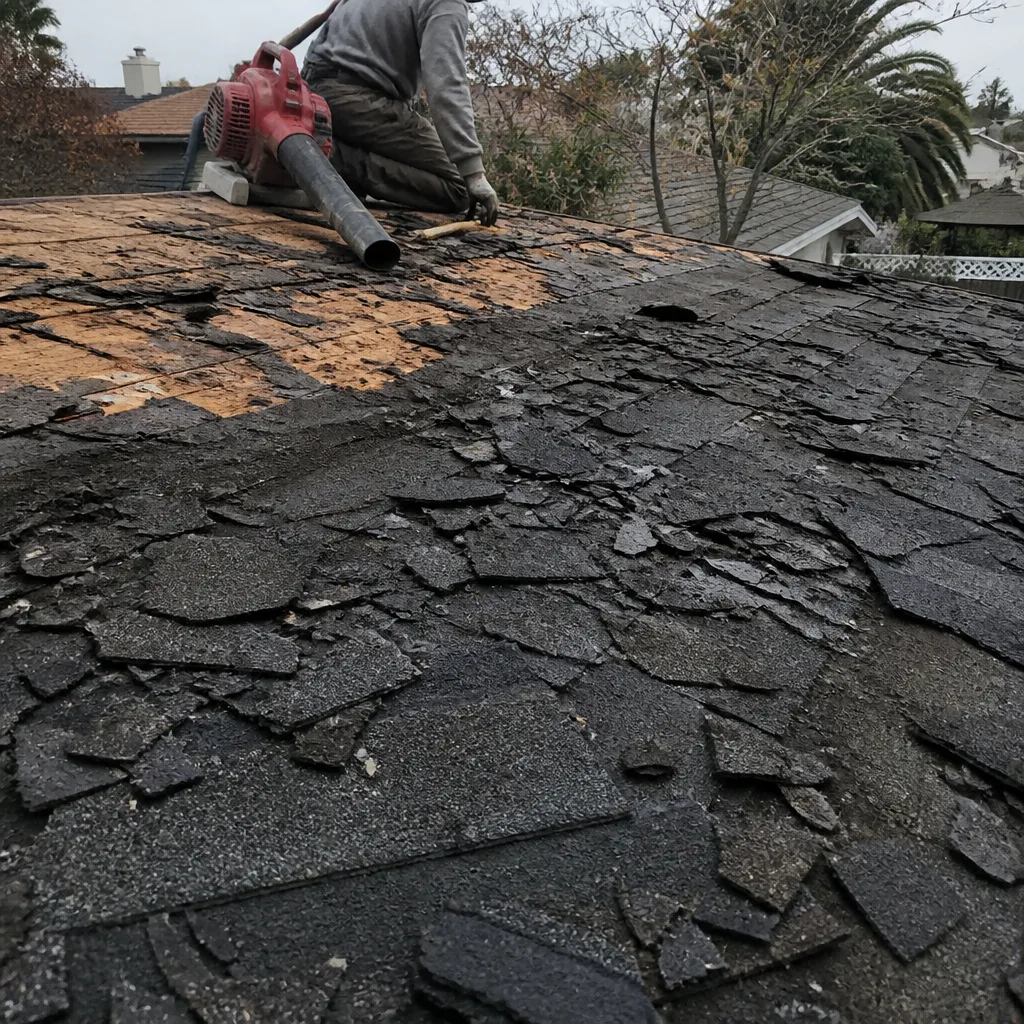 Before
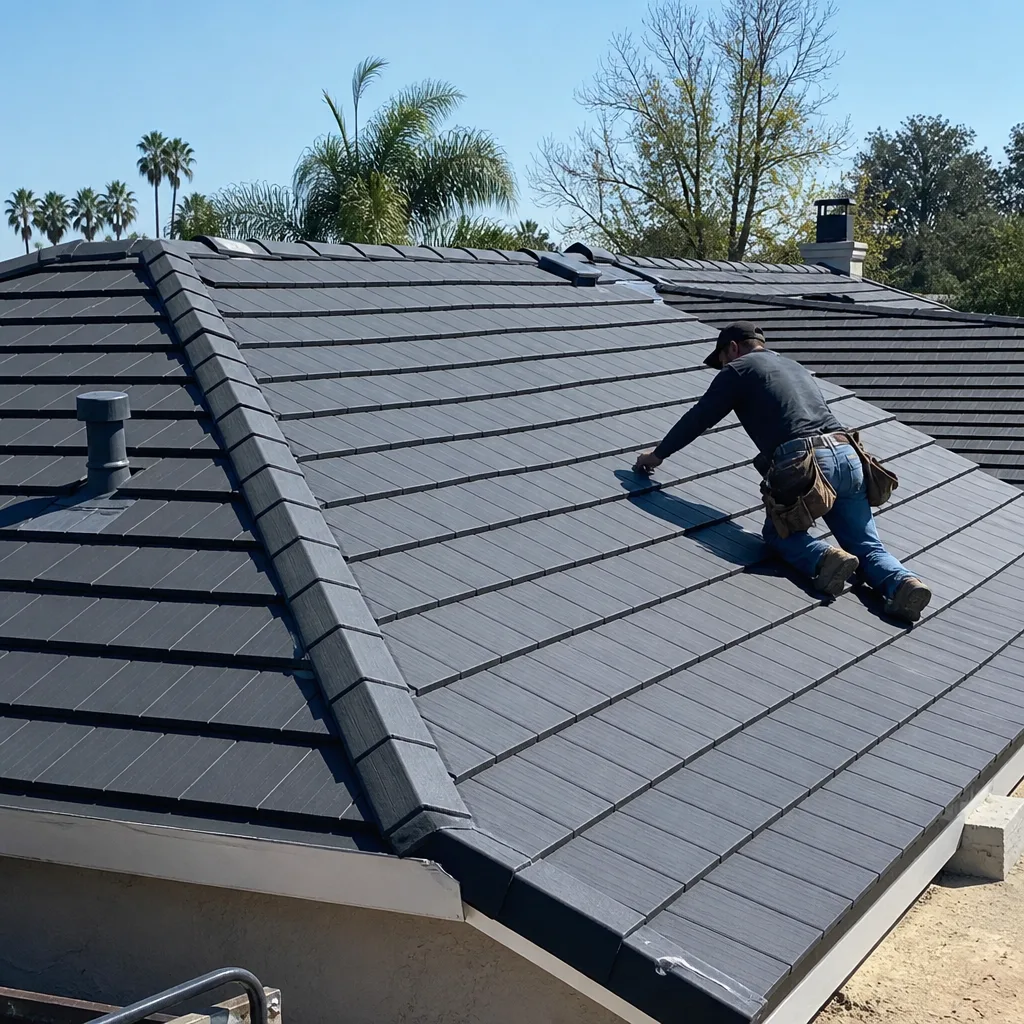 After
After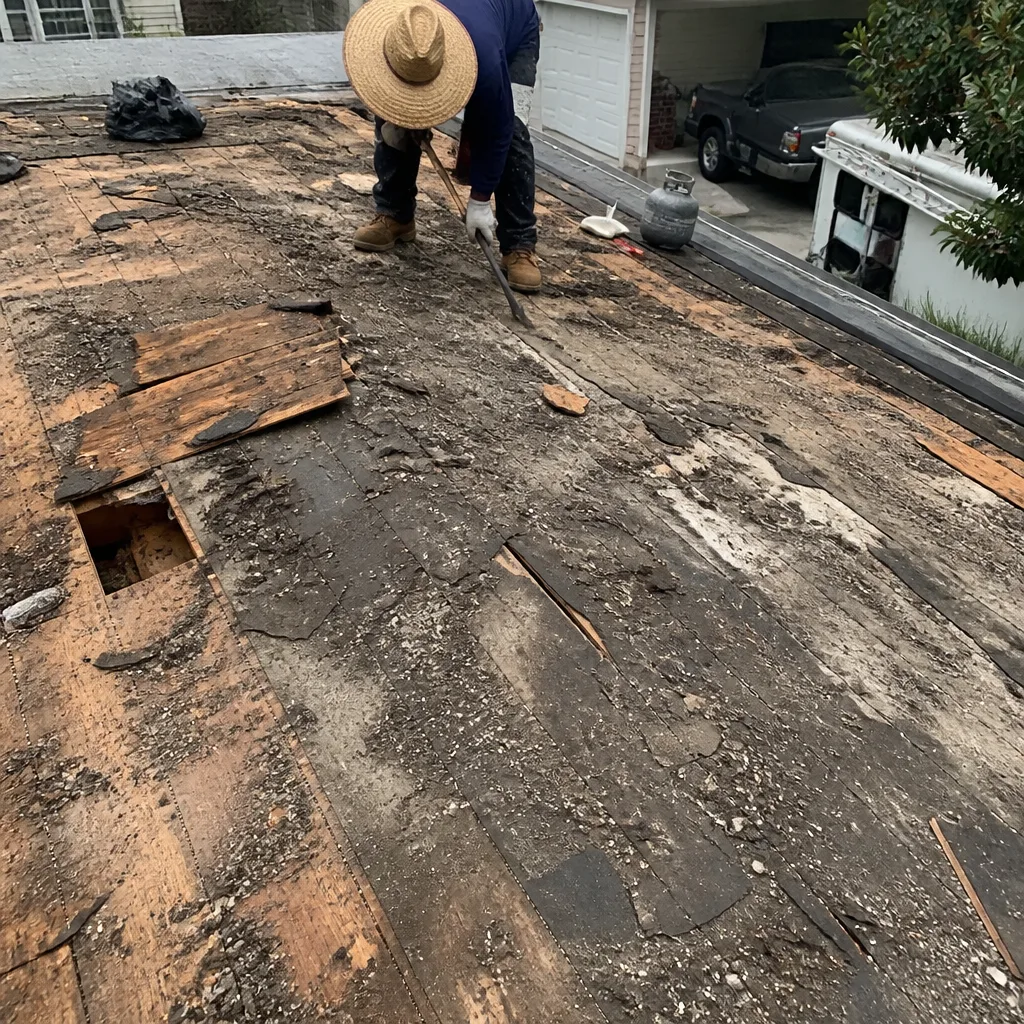 Before
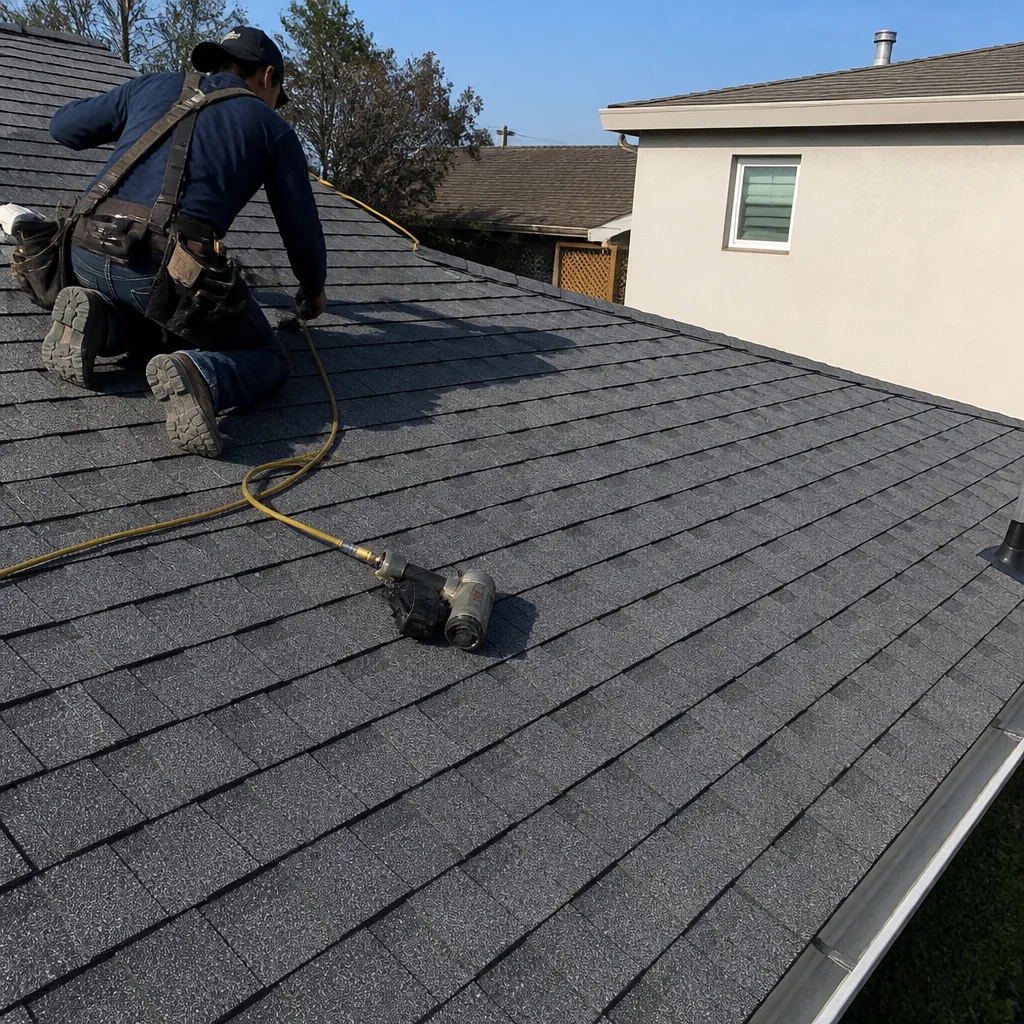 After
After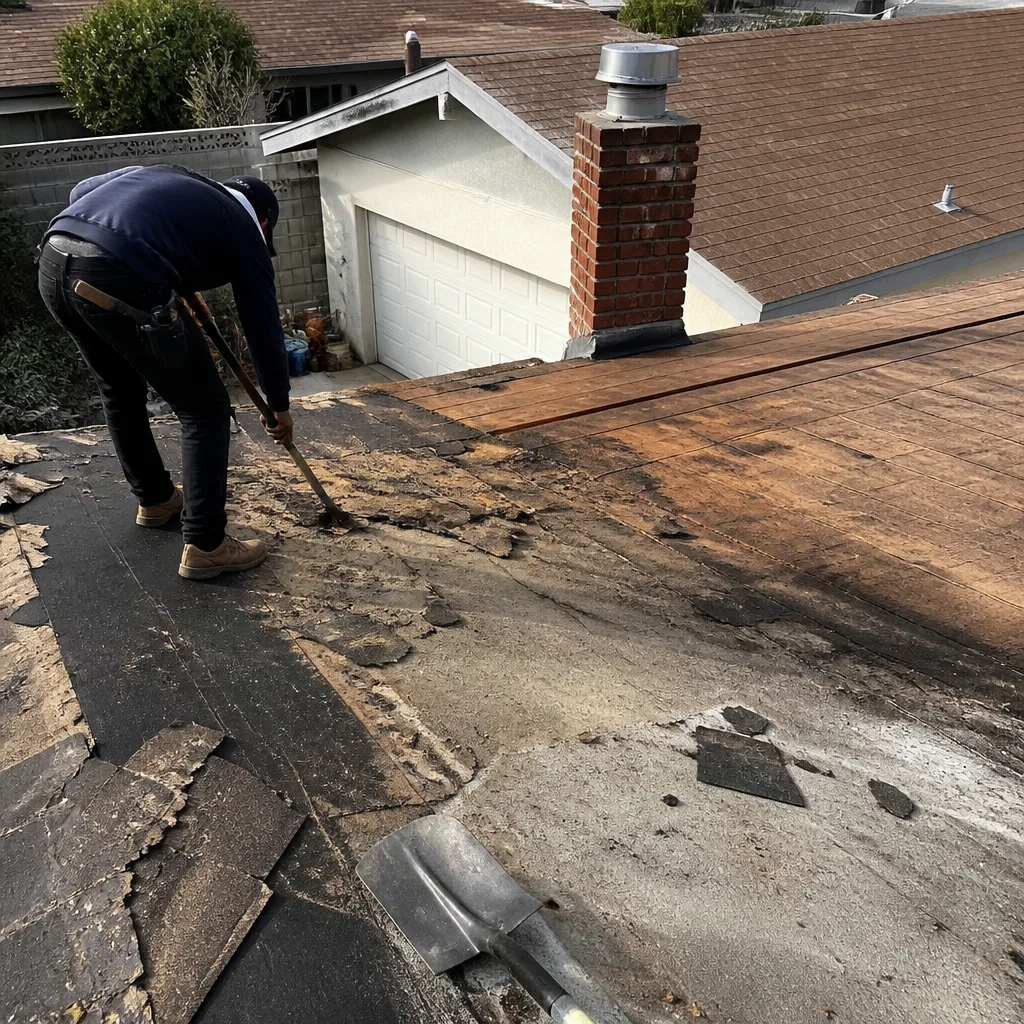 Before
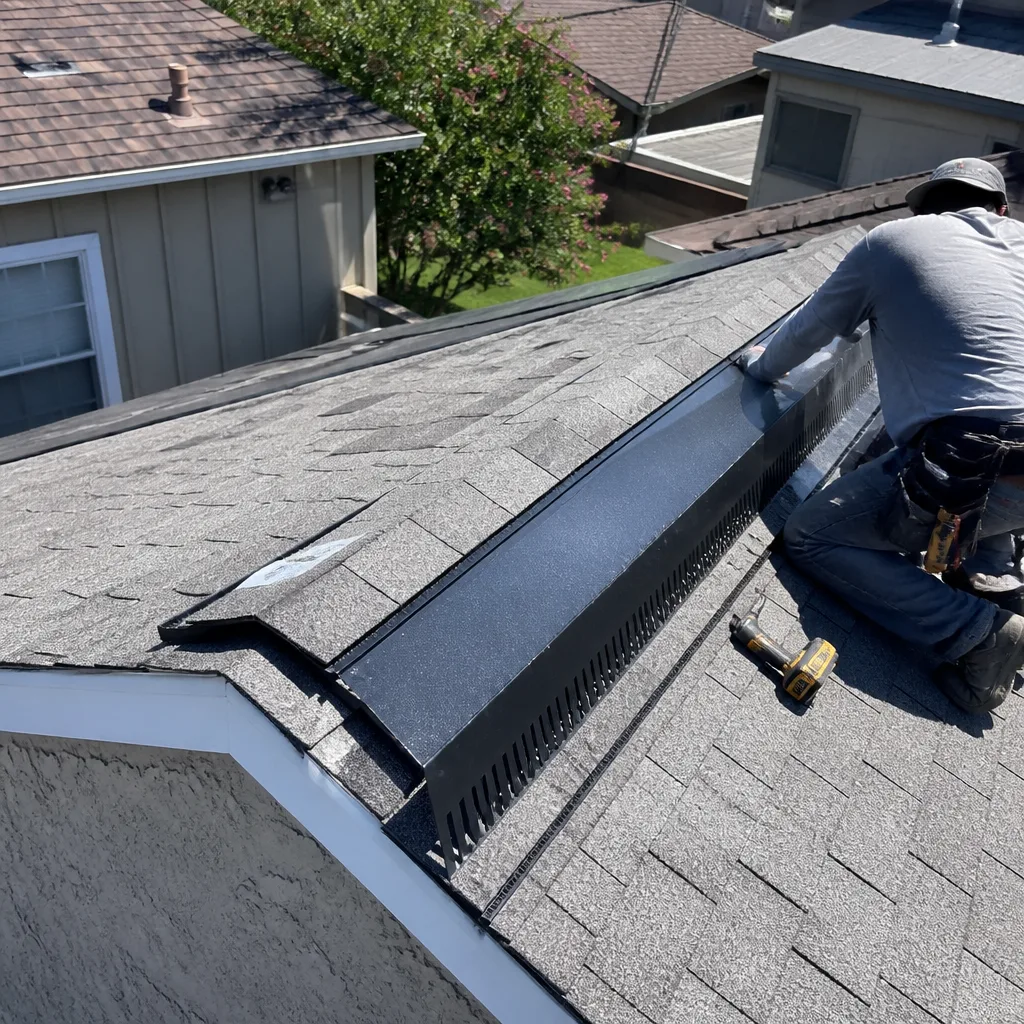 After
AfterWater stains spreading across the ceiling
What’s Happening
A water stain spreading across your ceiling almost always means water is moving through your roof system and pooling somewhere before it drips through – most commonly a failed flashing, a cracked shingle, or a compromised valley. The stain you’re looking at right now is the end of a trail that started above your attic, not directly above the brown ring on the drywall.
That last part is the thing most homeowners miss: the wet spot on the ceiling is rarely sitting below the entry point. Water finds the path of least resistance and travels along rafters, roof sheathing, and insulation before it finally stops and soaks through. So the stain might be 4 feet – sometimes more – from the actual breach. That’s why roof leaks are frustrating to chase on your own, and why a technician who can inspect from both the attic side and the roof surface gets to the answer faster.
Why It Happens
Failed or lifted flashing
Flashing is the thin metal that seals the joints where your roof meets a chimney, a skylight, a vent pipe, or a wall. It gets sealed with roofing cement or caulk at the edges, and that sealant dries out, cracks, and eventually separates. When it does, every rainstorm pushes a little water behind the metal and into the structure. If your stain appears near a chimney or any roof penetration, flashing failure is the most likely culprit – and you’ll often see rust streaks or lifted edges if you look from the ground with binoculars.
Cracked or missing shingles
Shingles take a beating from wind, hail, UV, and temperature swings. Over time they curl at the edges, crack across the surface, or lose enough granules that the underlying mat gets exposed. A missing shingle is obvious from the ground. Cracking and granule loss are harder to spot, but if you find a pile of dark, sand-like granules in your gutters or at the base of your downspout, your shingles are telling you something. Water gets under damaged shingles fast, especially when wind drives it sideways.
Clogged or damaged valleys
A valley is where two roof planes meet and form a channel – it carries a high volume of water every time it rains, which makes it one of the hardest-working spots on the roof. When valley flashing corrodes, or debris dams the channel and forces water to back up under the shingles, you get leaks that tend to produce long, streak-shaped stains on the ceiling rather than tight rings. If the stain traces a line rather than a circle, think valley.
Ice dam damage (in colder climates)
If you’re seeing a new stain after a freeze-thaw cycle, an ice dam may have forced water back under the shingles before the weather warmed. Ice dams form when heat escaping from the living space melts snow at the ridge, and that meltwater refreezes at the cold eaves. The ice acts like a wedge, pushing liquid water uphill under the shingles where no shingle is designed to stop it. The stain often appears near an exterior wall on the upper floor, and you may have noticed icicles along the eave right before it showed up.
What to Do Right Now
- Put a bucket under any active drip and protect the floor. Lay down towels, a tarp, or cardboard – whatever you have. If water is sitting on the drywall, it’s going to come through eventually and you want it captured rather than spreading.
- Take photos now, before you clean anything up. Date-stamped photos of the stain, any visible drips, and water-damaged insulation or drywall are useful for insurance purposes and help the technician understand how long the water has been moving.
- Don’t go on the roof yourself. A wet roof surface is slippery, roof edges carry no guardrails, and if the sheathing underneath has been softened by water, it may not hold weight where you’d expect it to. Please call a professional and let them bring the right equipment and fall protection.
- Turn off any recessed lights or ceiling fans directly below the stain. Water and electrical fixtures are a serious hazard. If you see moisture near a junction box, switch, or fixture, turn off that circuit at the breaker until a technician has assessed it.
- Check your attic if you can do so safely from a fixed ladder. Look for wet insulation, dark staining on the wood, or visible daylight coming through the sheathing. Don’t touch any wiring you see up there, and don’t walk across insulation without confirmed solid footing on a joist. What you observe can help narrow down where the water entered.
How We Fix It
When your local Birchbark Roofing team arrives, a technician inspects the roof surface and the attic together – looking at both sides of the problem at once. They trace the water path back from the stain to where it entered, which is usually a flashing joint, a shingle failure, or a valley issue. Before any work starts, you get a written price in dollars. That’s how every Birchbark job works: the number is on paper and agreed to before a single nail comes out.
Most ceiling stains route to a roof repair – targeted work on the specific failure point. Larger stain patterns, particularly on older roofs or after a major weather event, may point toward a roof replacement if the underlying sheathing or multiple shingle sections are compromised. The technician will tell you honestly which one applies and why. The repair is covered by the 365-Day Done Right Promise: if the work isn’t right, Birchbark makes it right. Shoe covers and drop cloths come in with the crew, and a photo of the completed clean-up goes out before they leave.
Frequently Asked Questions
It cannot wait, and here’s the short version of why: water that has already reached your ceiling has been moving through insulation, sheathing, and framing for longer than the stain suggests. The longer it keeps moving, the more wood is at risk of rot, and the more likely you are to see mold establish in the insulation or drywall. A small flashing repair done now is significantly less involved than replacing rotted decking and framing later. Call (424) 766-4937 and let us get eyes on it before the next rain.
The stain itself is not an immediate health risk, but two things connected to it are worth taking seriously right now. First, any ceiling light fixture, recessed can, or ceiling fan below the wet area should be switched off at the breaker until a technician confirms no water has reached the wiring. Second, if the stain is large, dark, and has been there for more than a few days, there’s a real chance mold has started in the cavity above – which matters especially if you have kids or pets with respiratory sensitivities. Call (424) 766-4937 so we can assess the full picture.
A live person answers at (424) 766-4937 around the clock, every day of the week, including nights and weekends. When you call, they’ll connect you with your local Birchbark Roofing team and work out the earliest available time for a technician to come out, assess the damage, and put a written price in front of you. We don’t leave you on hold or promise a next-business-day callback.
No. Every Birchbark Roofing job starts with a written price, and that price is what you agreed to – not a starting point for additions after the work is underway. The only time a price discussion reopens is if the technician uncovers hidden damage that genuinely wasn’t visible during the estimate, in which case they’ll stop, show you what they found, and get your sign-off on any change before continuing. That’s the Birchbark approach: explain the price before the work, every time.
Get It Fixed
A spreading ceiling stain doesn’t slow down on its own. Call (424) 766-4937 – a live person answers around the clock – or book online, and your local Birchbark Roofing team will come out, trace the source, and give you a written price before any work begins.
Written by Erik Lindgren, Owner at Birchbark Roofing, part of the Cedarwell family of roofing companies since 2000.
What Our Customers Say
"They repaired some lifted shingles and were so neat about it. Covered the deck, cleaned the gutters of debris when they were done, and checked the yard twice for nails. Kids play out there so that mattered."
- Lena Hargrove"Roof repair and they were meticulous about the cleanup, tarps over the garden beds and a magnet sweep for nails. We have a dog and a toddler so that mattered a lot."
- Thaddeus Bloom"New roof after hail. They covered everything below, kept the site neat each day, and did a full nail sweep of the whole yard twice. Thoughtful people."
- Caroline Prejean