
Last updated October 8, 2026
Free roof inspection with deck photos before we talk money - GAF and Owens Corning certified installation
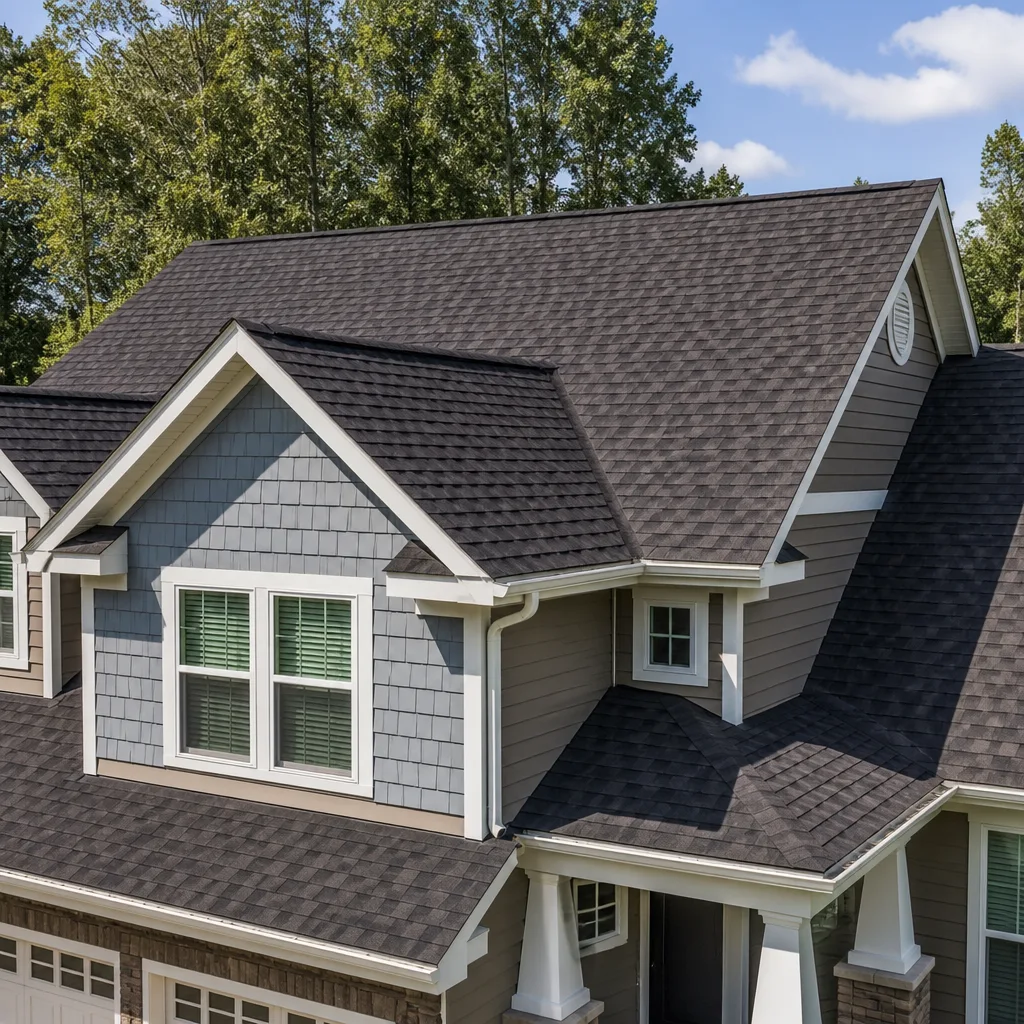
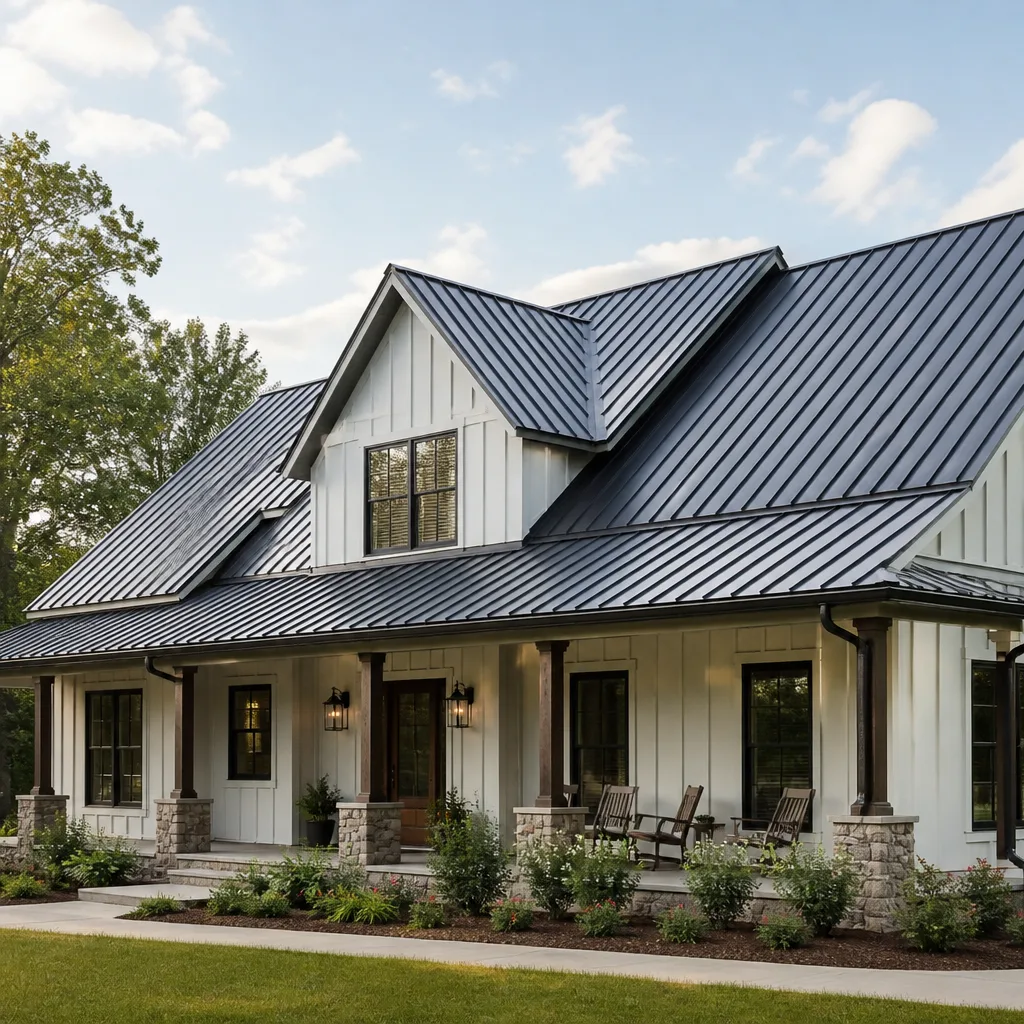
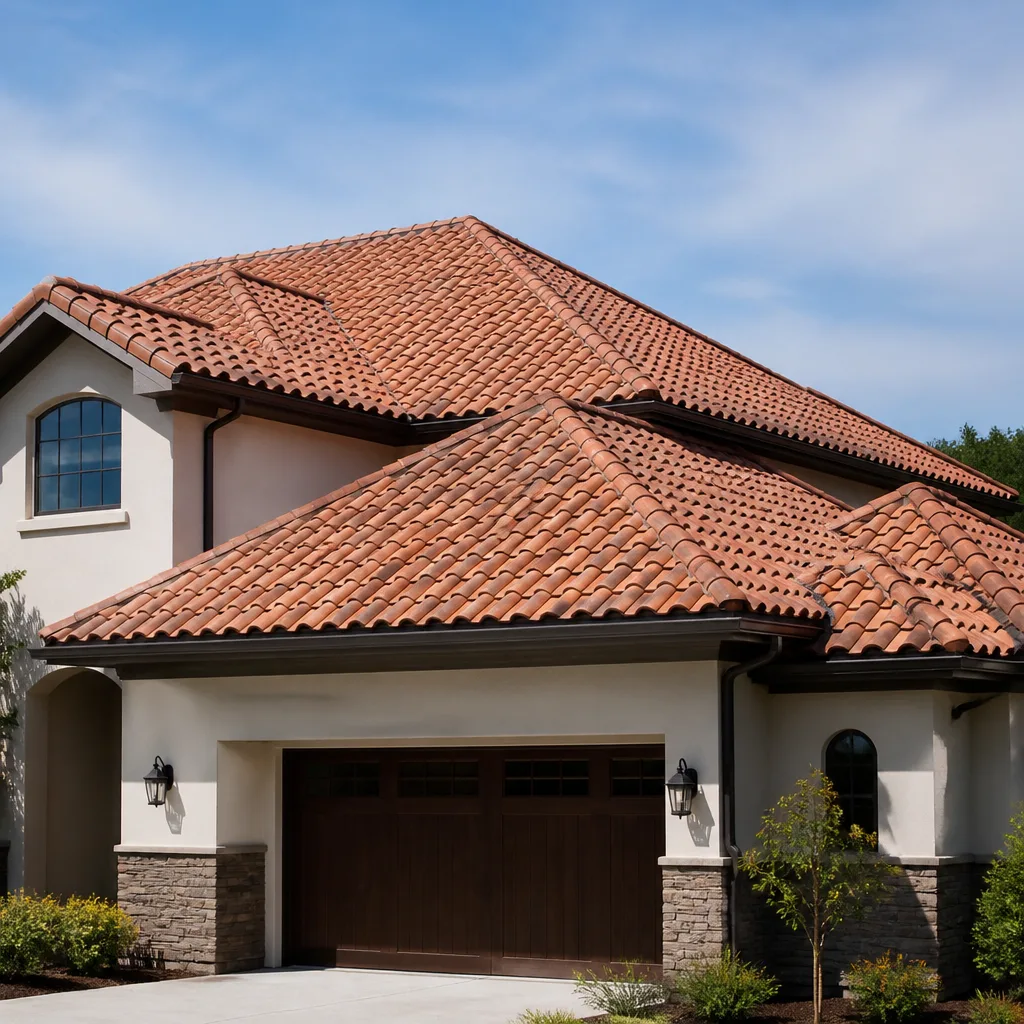
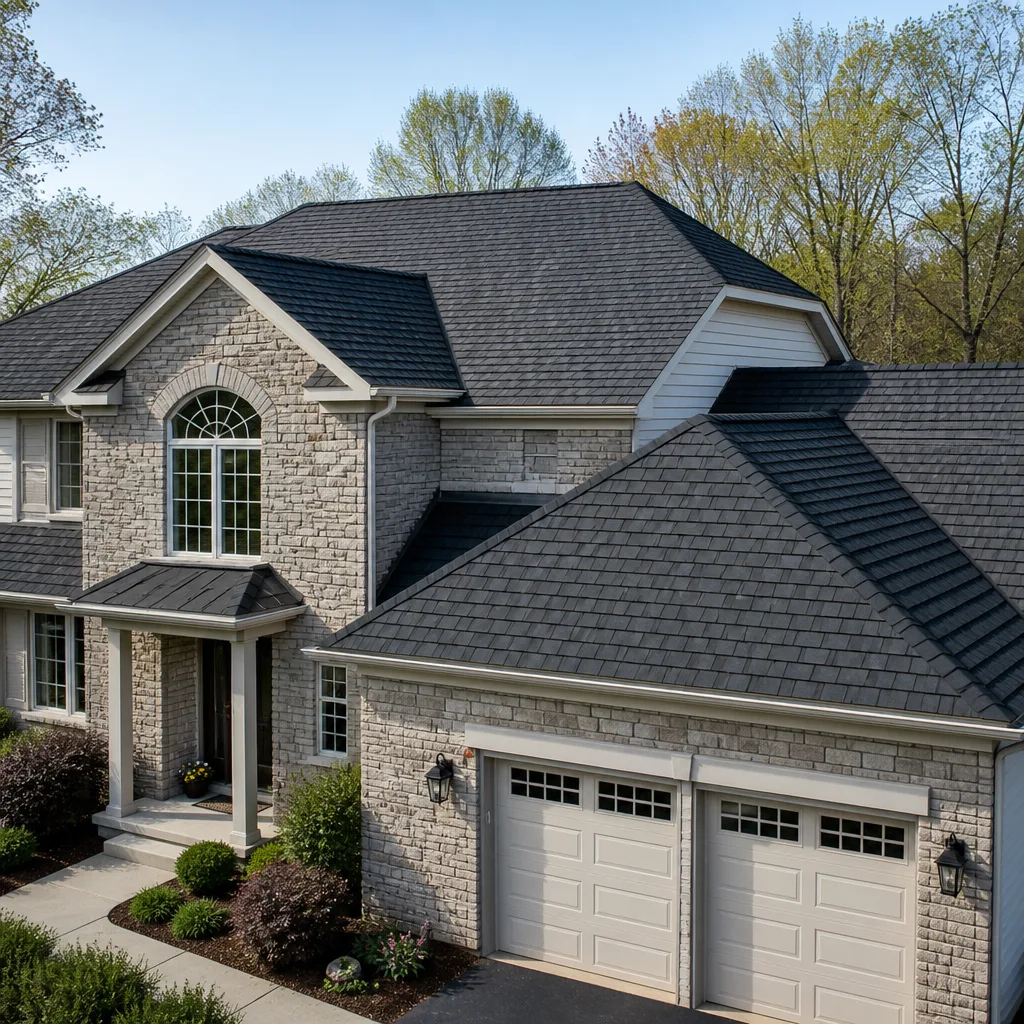
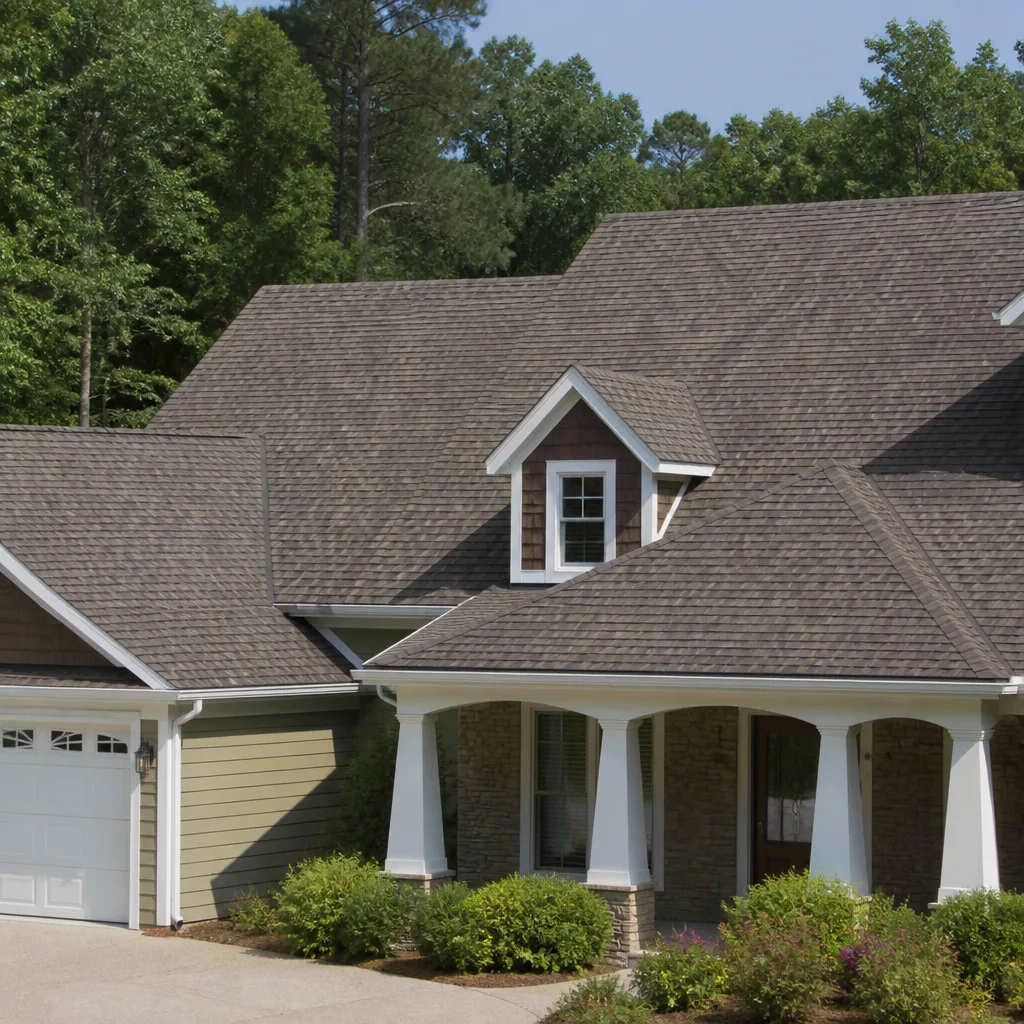
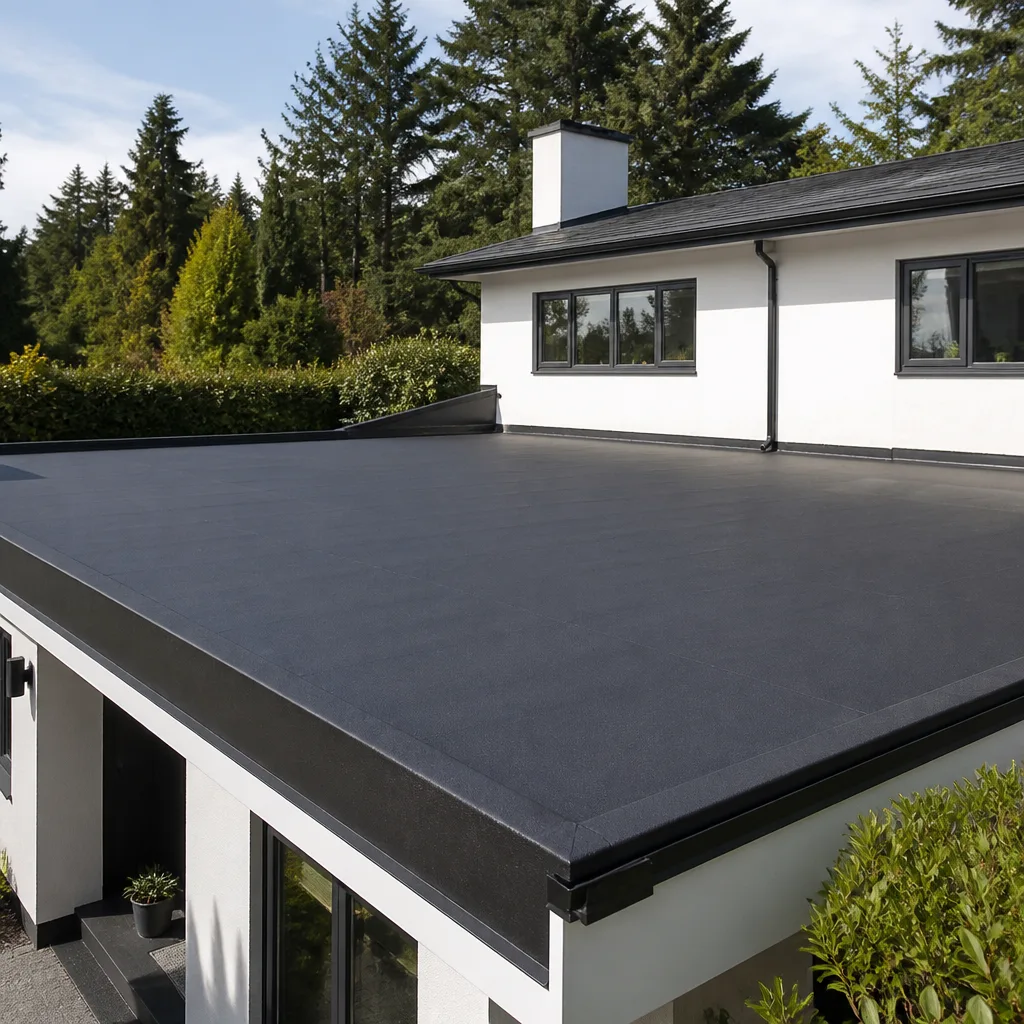
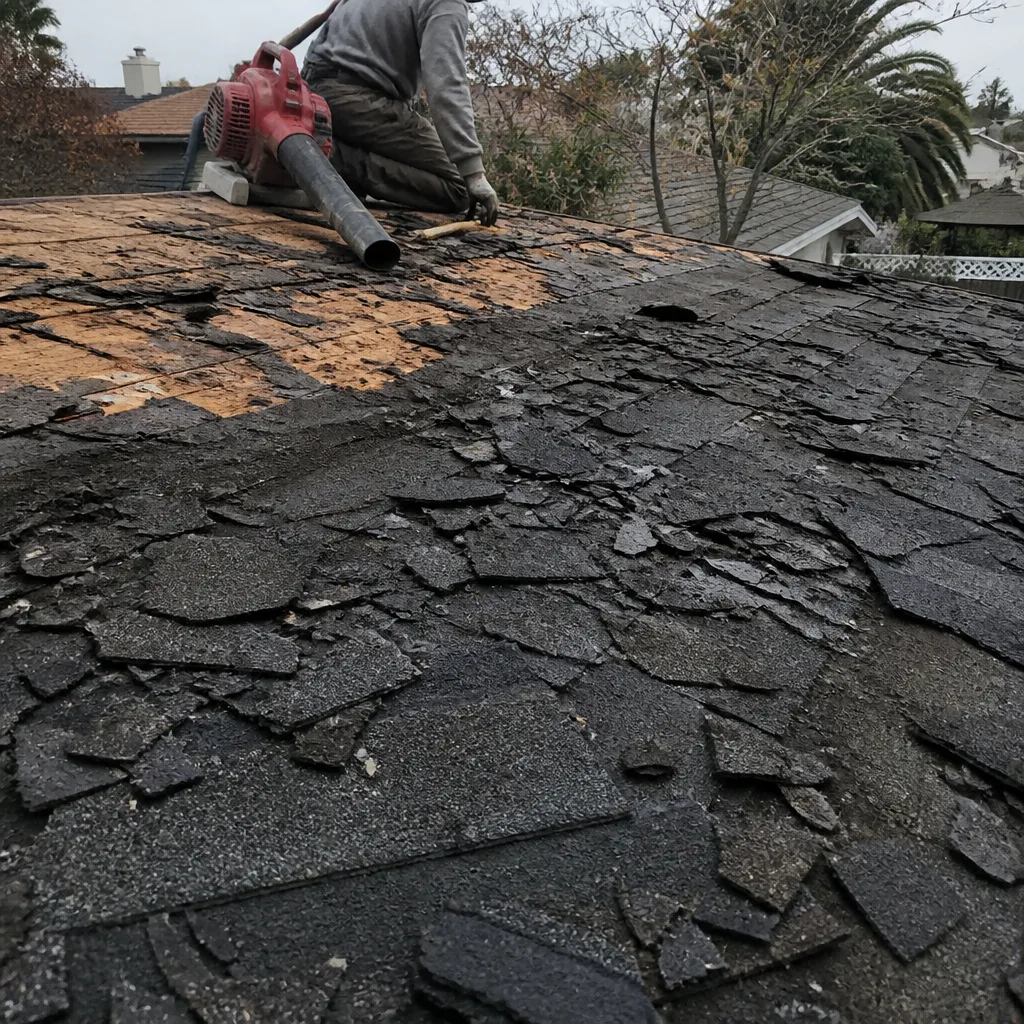 Before
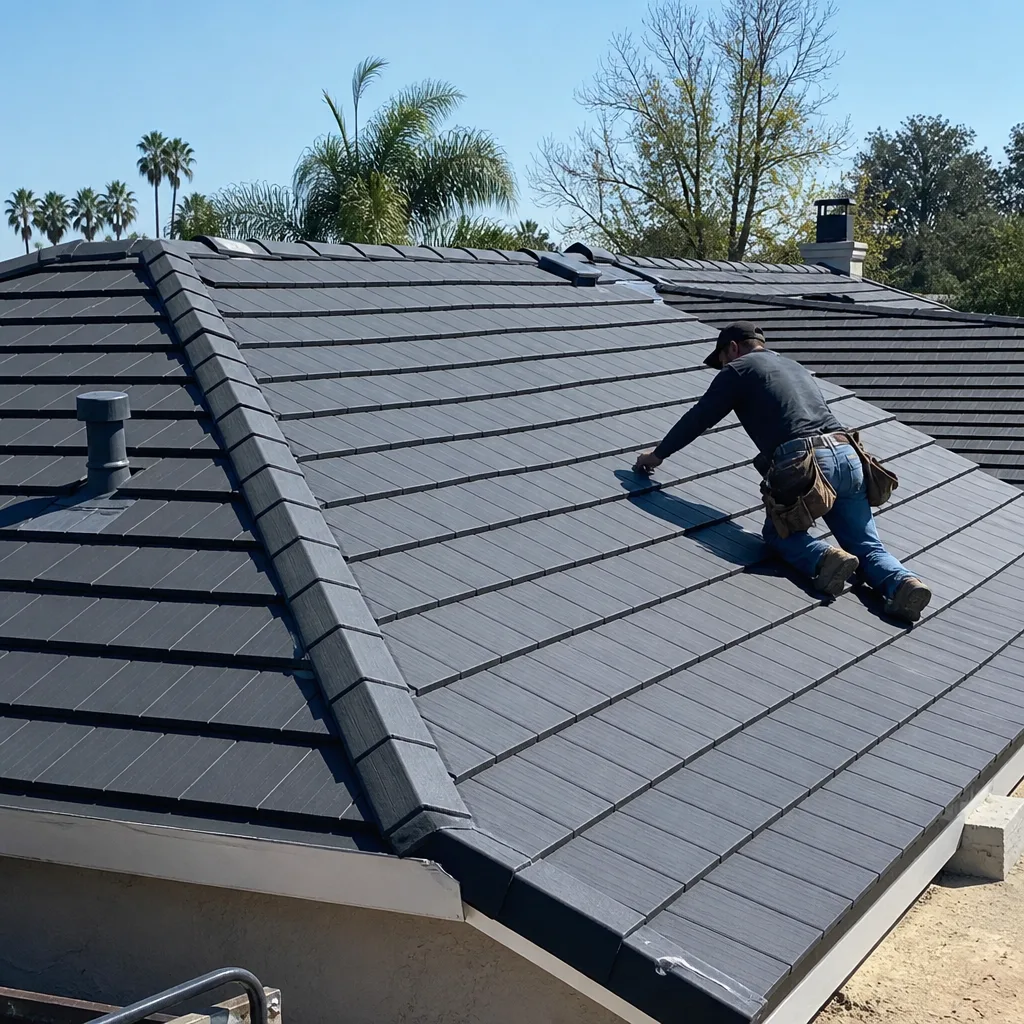 After
After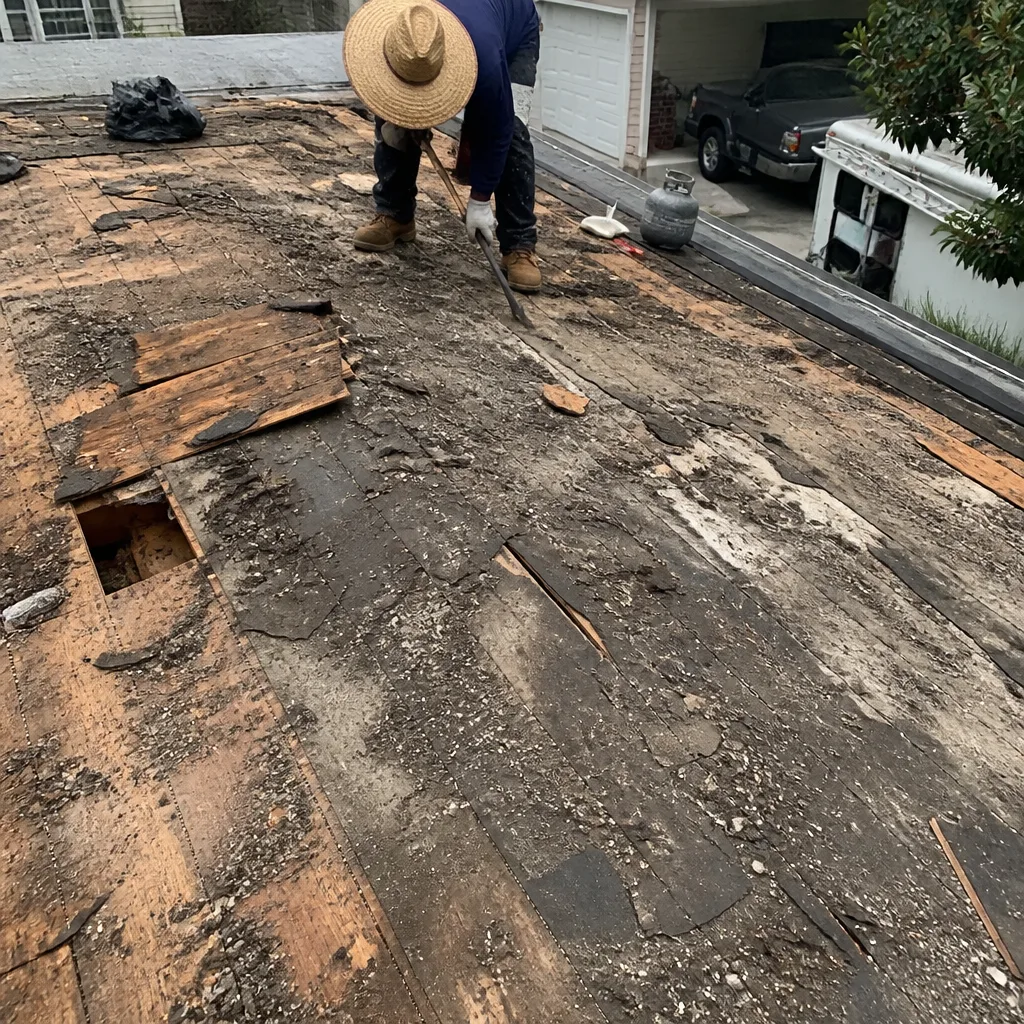 Before
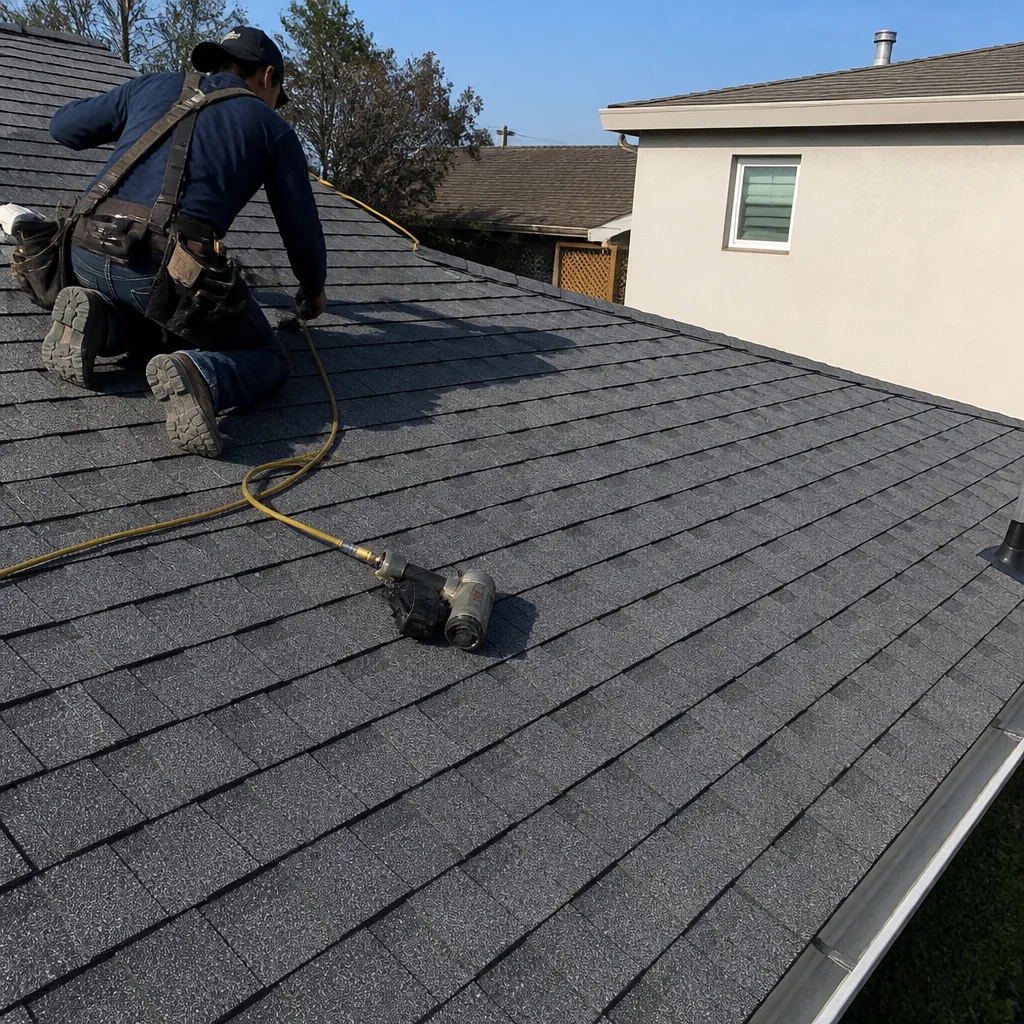 After
After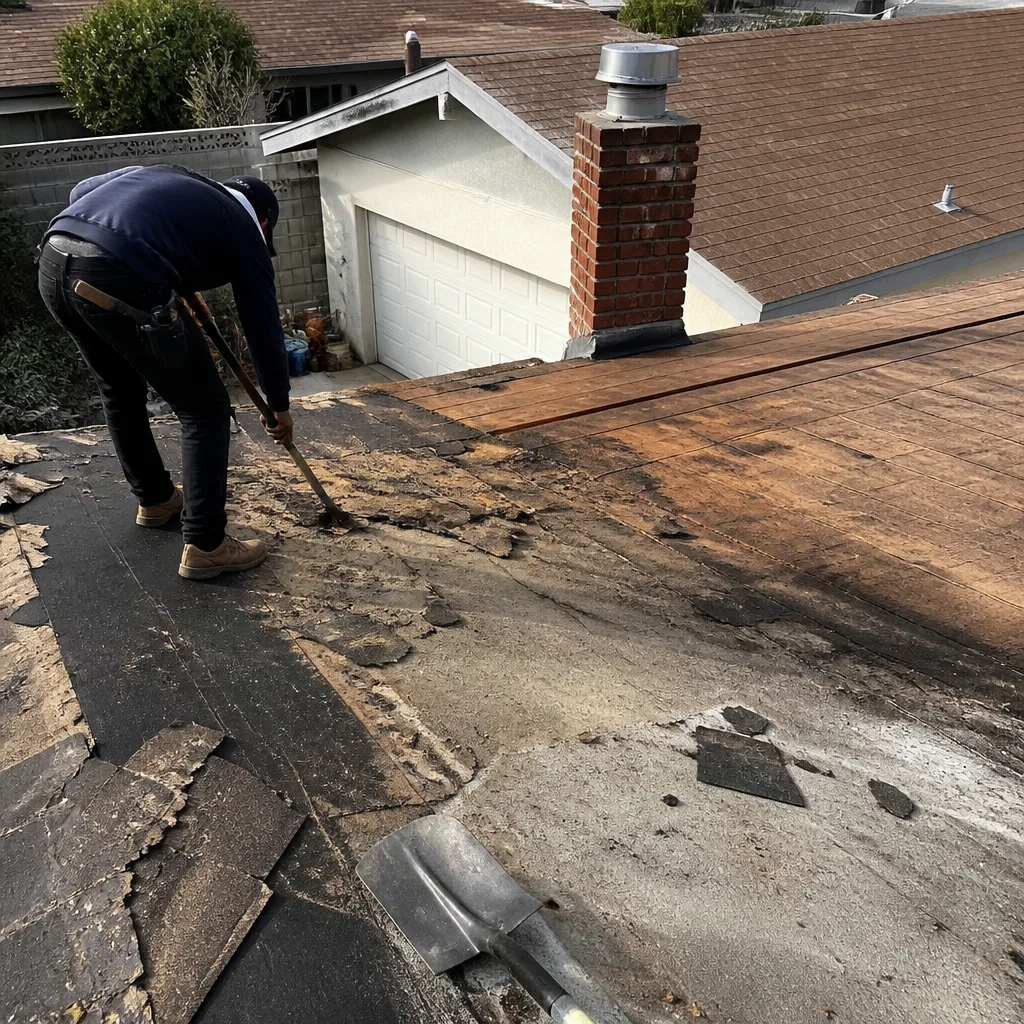 Before
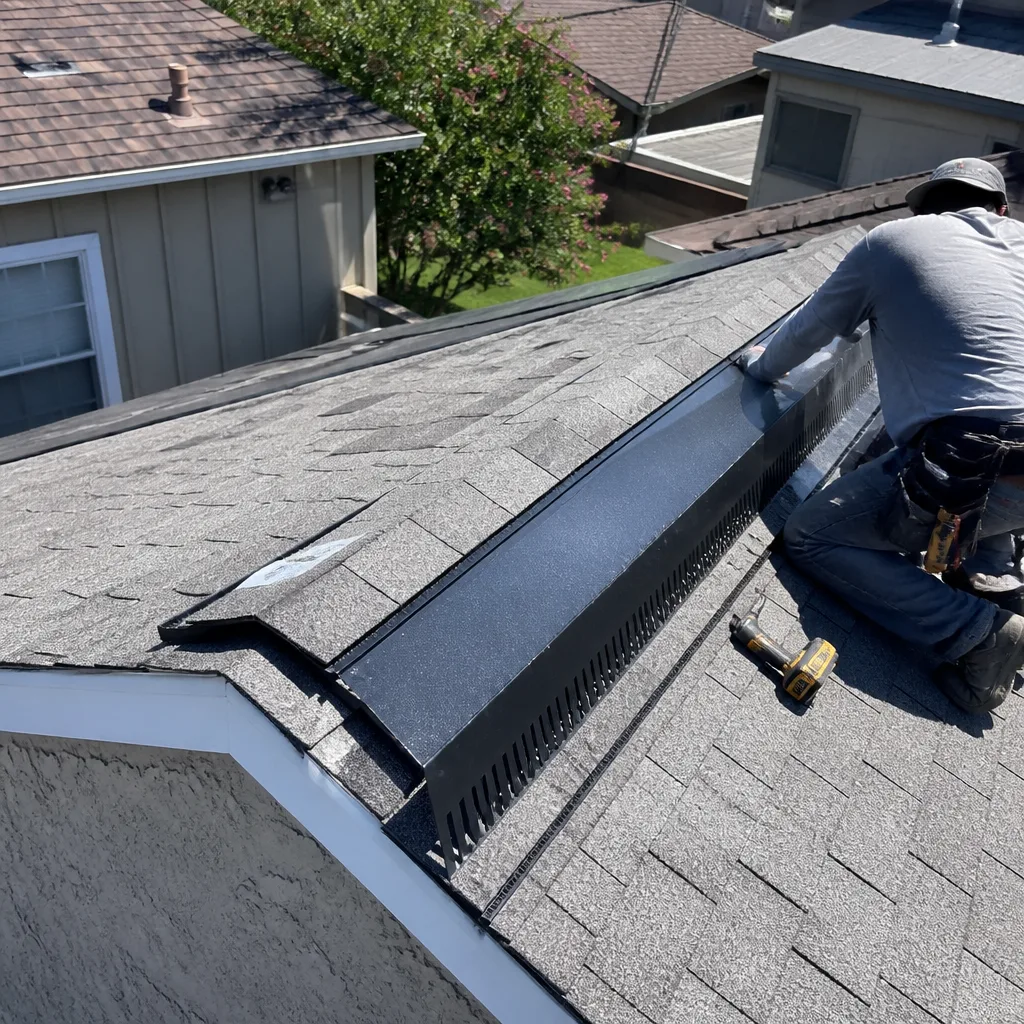 After
AfterRoof Repair Warning Signs Every Homeowner Should Know
The granules collecting in your gutters aren’t just debris. They’re the protective layer your shingles are shedding, and once they’re gone, UV damage accelerates faster in the Los Angeles sun than almost anywhere else in the country. A roof that looks fine from the street can be failing quietly from above, and most of the expensive Roof Repair work we handle at Birchbark Roofing started as warnings that sat ignored for months. This guide names the specific visual cues you can spot from the ground or inside your attic without ever putting a foot on a ladder, and it tells you which ones mean “schedule soon” versus “call today.”
Quick Answer
The most common roof repair warning signs in Los Angeles are granules building up in gutters, daylight visible through attic boards, shingles that cup or curl at the edges, water stains on ceilings or rafters, and flashing that has lifted away from chimneys or vents. If you see any of these, get a written inspection report before the problem spreads into decking and insulation. Granule loss and minor surface aging can wait a few weeks; anything involving water entry or structural sag is a call-today situation.
Table of Contents
- The Attic Test: Your Roof’s Early Warning System
- Granule Loss: What Your Gutters Are Telling You
- Shingle Distress: Cupping, Curling, Cracking, and Lifting
- Flashing Failures: The Most Overlooked Leak Source
- Los Angeles-Specific Stressors: Sun, Santa Anas, and Eucalyptus
- Interior Warning Signs: What Happens Before You See Water
- Post-Storm Checks: What to Look For After Santa Anas and Heavy Rain
- Why a Written Inspection Report Matters More Than a Verbal “Looks Fine”
- Common Mistakes to Avoid
- When to Call a Professional
- Frequently Asked Questions
- The Bottom Line
The Attic Test: Your Roof’s Early Warning System
Before you ever look at the roof itself, go into your attic on a bright Los Angeles afternoon and turn off the light. Let your eyes adjust for two minutes, then look up. The attic test catches roof problems earlier than any exterior inspection because moisture and light enter from above long before they show up on your living room ceiling.
Here is what we tell homeowners to check, in this order:
- Daylight pinpoints. Scan the underside of the roof deck for any pinprick of light coming through. Even one indicates a hole, a lifted shingle, or a failed nail seal. In LA, where the sun is intense nearly year-round, these are easy to spot.
- Soft decking underfoot. Walk only on the joists, never between them. Press the plywood between rafters with a broom handle. If it gives or feels spongy, moisture has been soaking that section, likely for months.
- Water-stained rafters. Dark streaks, white mineral deposits, or mold on the wood framing mean water has tracked down from a leak. The stain often shows up several feet away from the actual entry point, so trace the path from the peak down.
- Rust on exposed nail points. Nails that poke through the decking should look clean. Rust means condensation or active moisture in the attic.
- Insulation that looks compressed or matted. Wet insulation sinks and clumps. If sections look flatter than others, water has been dripping onto them.
We have walked into Los Angeles attics where the roof looked pristine from the curb but the decking had been quietly rotting for two or three years. The attic test works because it removes sunlight, landscaping, and pitch from the equation. You are looking at the roof from its own underside.
Granule Loss: What Your Gutters Are Telling You
Granule loss is the most common warning sign Los Angeles homeowners notice first, and it is also the one most often dismissed. Some granule loss is normal, especially on a roof past its tenth year. The question is volume and timing.
Asphalt shingles are made with a fiberglass mat, asphalt, and a top layer of ceramic granules. Those granules block UV light from degrading the asphalt beneath. In Los Angeles, where roofs get more direct sun exposure per year than roofs in Seattle or Portland, the granule layer is doing more protective work. When it thins, the asphalt heats up, becomes brittle, and starts to crack. That process accelerates quickly once it begins.
Check the following:
- Gutters and downspout elbows. If you see piles of granules that look like coarse black sand, especially after a rain, the roof is shedding its protective layer faster than normal.
- Bare patches on shingles. From the ground, look for shingles that appear lighter in color or have a smooth, glassy texture. Those have lost most or all of their granules.
- Acres of granules at the end of a downspout. A small amount is normal. A visible pile the size of a dinner plate after one storm is not.
Here is the thing to understand about granule loss: it is not itself the failure. It is the countdown to a failure. A shingle without granules still sheds water for a while. The problem is that bare asphalt degrades fast under LA sun, and what would have been a simple repair in year one becomes a decking replacement in year three. If we inspect a roof with moderate granule loss, we can often extend its life with targeted repairs to the worst slopes. If the granule loss has gone unnoticed for too long, the roof often needs a full Roof Replacement in Los Angeles.
Shingle Distress: Cupping, Curling, Cracking, and Lifting
Shingle shape tells you more than shingle color. A healthy asphalt shingle lies flat against the one below it. Once it starts moving, it is telling you something specific about the roof’s condition.
Cupping is when the edges of a shingle curl upward, making the shingle look like a shallow bowl. This usually means the shingle is drying out and losing flexibility. In Los Angeles, thermal cycling, the daily expansion and contraction from hot days and cool nights, speeds up this drying process. Cupped shingles are more likely to crack and more vulnerable to wind lift during a Santa Ana event.
Curling is more extreme than cupping. The shingle edges turn upward dramatically, sometimes exposing the nail line beneath. Curled shingles are a sign the roof is in its final years. Wind can tear them off, and the exposed nail heads become leak points. If you see curling on more than a quarter of your roof, budget for replacement rather than repair.
Cracking appears as straight lines, often running vertically down the exposed portion of the shingle. Cracks let water reach the shingle’s fiberglass mat, and from there it can wick into the decking. A few cracked shingles on one slope is a repair situation. Cracks spread across multiple slopes usually mean the roof has aged past the point of piecemeal fixes.
Lifting is when the bottom edge of a shingle rises off the shingle below it without curling. This often indicates a failed seal strip. The adhesive that bonds one shingle course to the next breaks down over time, and once the seal fails, the shingle becomes a wind catch. Lifted shingles are the first to go during a Santa Ana wind event, and they also allow driven rain to blow underneath. We use materials from CertainTeed and Owens Corning on many of our repairs because their seal strips hold up well in high-UV climates like Los Angeles.
Flashing Failures: The Most Overlooked Leak Source
Flashing is the metal material installed where the roof meets something else: a chimney, a vent pipe, a wall, a skylight, or a valley where two slopes meet. It is often the first thing to fail on a roof and the last thing homeowners check. In our experience at Birchbark Roofing home, a large share of the leak calls we receive in Los Angeles trace back to flashing that lifted, cracked, or was never installed correctly in the first place.
Here are the flashing warning signs to look for from the ground or a window:
- Chimney flashing that has separated from the brick. Look for a visible gap between the metal and the masonry. If you can see caulk peeling away, water has a path in.
- Pipe boot cracks. The rubber boot around plumbing vent pipes degrades under UV exposure. After seven to ten years in Los Angeles sun, the rubber often develops splits. From the ground, you may see a boot that looks dry, cracked, or misshapen.
- Step flashing popping out along walls. Where the roof meets a stucco wall, step flashing should be tucked under the wall’s moisture barrier. If you see metal edges sticking out or bent upward, the flashing has moved and water can track behind it.
- Valley flashing rust or warping. Valleys carry a lot of water during rain. Metal that is rusted through or warped from heat is a direct leak risk.
Stucco exteriors, which cover a majority of Los Angeles homes, add a complication. Water that gets behind stucco can migrate sideways before it shows up on an interior ceiling. By the time you see a stain, the moisture may have traveled ten feet from the actual flashing failure. That is one reason we recommend addressing flashing issues as soon as they are spotted rather than waiting for visible interior damage.
Los Angeles-Specific Stressors: Sun, Santa Anas, and Eucalyptus
Los Angeles roofs age differently than roofs in most of the country. Understanding the local stressors will help you separate normal aging from warnings that require action.
Thermal cycling. LA’s large daily temperature swings, particularly in the valleys and foothills, cause roofing materials to expand and contract every single day. Over years, that movement weakens seals, loosens fasteners, and opens cracks at flashing joints. A roof in a city with stable temperatures does not experience the same daily flex. This is a primary reason Los Angeles roofs often show age-related failure earlier than their material warranties suggest.
Eucalyptus and palm debris. Eucalyptus leaves are oily, and when they collect in valleys, behind chimneys, or around drains, they hold moisture against the roof. Decomposing eucalyptus creates acidic runoff that can corrode flashing and deteriorate shingle surfaces. Palm fronds are heavy and abrasive. A frond resting against a slope for weeks can wear a visible groove into the shingles. Keeping the roof surface clear is more than cosmetic in Los Angeles; it is protective.
Santa Ana winds. Wind is the test that reveals every weak seal and loose flashing. After a Santa Ana event, we routinely see the same pattern: shingles that were lifted but not leaking before the wind now flap against the decking, and nails that had backed out slightly have now punctured the shingle above. The wind itself rarely causes the failure. It exposes a failure that was already developing.
UV intensity. Los Angeles receives more annual solar radiation than nearly any major city in the United States. That constant UV load breaks down the asphalt in shingles faster than it would in, say, Minneapolis or Boston. It is why we recommend materials rated for high-UV exposure, including certain lines from Atlas and IKO, for Los Angeles roofs.
Interior Warning Signs: What Happens Before You See Water
By the time water appears on your ceiling, the roof has been leaking for a while. Interior warning signs appear in stages, and knowing the early ones can save you thousands in drywall repair, insulation replacement, and mold remediation.
Stage one signs are subtle:
- A musty smell in one room or hallway. This often precedes any visible staining. It means moisture is trapped in insulation or drywall.
- Paint that looks slightly yellowed or bubbled near the ceiling line. Moisture migrating through drywall changes how the paint holds.
- Doors that suddenly stick or interior trim that separates. In Los Angeles’s low-humidity climate, a sudden humidity source inside a wall can swell wood enough to notice.
- Staining on the underside of the roof deck in the attic. This is interior, but it appears before any living-space sign. Check it during your attic test.
Stage two signs are obvious: brown or copper-colored circles on ceilings, water dripping during or after rain, and peeling paint in rings. If you see these, the leak has saturated the drywall and likely the insulation above it. Stucco homes present the additional challenge of water traveling horizontally behind the stucco layer before it breaches the interior, so the visible stain may be far from the actual roof penetration.
One note for pet owners: if your dog or cat suddenly shows interest in a particular ceiling corner or wall, do not dismiss it. Animals smell moisture and mold long before humans do. We have heard from more than one Los Angeles homeowner that the family pet found the leak first.
Post-Storm Checks: What to Look For After Santa Anas and Heavy Rain
Los Angeles does not get many heavy rain events, which means the ones we do get act as a full-system test. After a Santa Ana wind event or a rare heavy downpour, take ten minutes and check the following from the ground and from inside your windows. You do not need to climb onto the roof.
- Walk the perimeter of your house and look for shingle tabs on the ground. A single shingle in the yard is a repair call. Several shingles across multiple slopes is a sign the seal strips have broadly failed.
- Check the gutters for granule accumulation. Heavy rain flushes granules into gutters. If the gutter holds a thick layer of granules after one storm, your shingles are losing protection faster than normal.
- Look at the roof surface from across the street. From a distance, check for shingles that look darker than surrounding ones, a sign they may be flipped up or missing. Also look for new ripples or waves along the slope.
- Inspect flashing around chimneys and vents from a window or with binoculars. High wind exposes loose flashing. If metal edges are lifted or bent, water will find its way behind them during the next rain.
- Look up at the ceiling inside every room on the top floor. Water can enter during a storm and take days to show up as a stain. Mark any new discoloration, even faint, and check it again in a few days.
- Check window sills and door frames on upper floors. Water that enters at the roofline can track down the inside of an exterior wall and exit around window frames before it stains a ceiling.
If you find any of these signs after a storm, document them with photos. A photo from the ground is useful when you call a roofer. And if you call Birchbark Roofing, a live person answers, day or night, at (424) 766-4937.
Why a Written Inspection Report Matters More Than a Verbal “Looks Fine”
A verbal “your roof looks fine” is not documentation. A written inspection report is. The difference matters because roof problems develop slowly, and the date you first noticed something will be important if a warranty claim or insurance matter comes up later.
A proper written inspection report from a roofing contractor should include:
- The date of the inspection and who performed it.
- Specific conditions observed, with measurements and locations, not vague terms like “some wear.”
- Photographs of problem areas, taken from the roof and from the attic if accessible.
- An opinion on the remaining useful life of each major roof component: shingles, underlayment, flashing, and decking.
- A prioritized list of recommended repairs, with each item priced separately.
- The inspector’s findings on drainage, ventilation, and any observed code compliance issues.
In Los Angeles, where many homes change hands with roofs that are ten to fifteen years old, a written report is also a strong negotiating tool when you buy or sell. It creates a baseline. Without it, you are relying on memory and someone else’s word. At Birchbark Roofing, we provide a written price before any work starts, and our inspection reports use the same standard: specific, documented, and yours to keep. You can learn more about our approach on our Roof Repair in Los Angeles page.
Common Mistakes to Avoid
- Assuming a new-looking roof is a healthy roof. We have inspected Los Angeles roofs that were five years old and already failing at the flashing because the original install was rushed. Age is not the only variable.
- Painting over water stains without finding the leak. The stain will return, and the moisture will have been doing damage behind the paint the entire time. Find the source first.
- Ignoring granules because the roof “still looks fine from the street.” Granule loss is a leading indicator. Waiting until shingles visibly fail means the repair usually costs more.
- Caulking over flashing problems instead of fixing the flashing. Caulk is a temporary patch that fails under Los Angeles UV within a season or two. The flashing gap remains underneath.
- Climbing onto the roof to inspect it personally. Roof surfaces in Los Angeles are often steep, and asphalt shingles get slick with morning dew or dust. Every year we hear from homeowners who fell during a self-inspection. Use the attic test and ground-level checks instead, and leave on-roof work to professionals.
- Putting off a roof repair because it is not raining. In Los Angeles, we go months without rain, so leaks are easy to ignore. But sun damage and wind damage continue in dry weather. A roof problem does not pause between storms; it compounds.
When to Call a Professional
Call a roofer when you see any of the following: daylight in the attic, water stains on ceilings or rafters, flashing that has lifted or separated, multiple shingles missing after a wind event, or granule loss that is clearly increasing. If your roof is past its fifteenth year and showing any of these signs, schedule an inspection rather than waiting for a leak to confirm your suspicions. For ongoing care, see our Roof Replacement Maintenance Schedule: What to Do and When. Birchbark Roofing offers free estimates throughout Los Angeles. Call (424) 766-4937 and you will speak with a live person who can schedule an inspection and give you a written report of what we find.
Frequently Asked Questions
Most residential roof repairs in Los Angeles run between $350 and $1,800 depending on the scope. A small flashing repair or pipe boot replacement is usually at the lower end of that range, while repairing multiple slopes with decking replacement runs higher. You will see your exact number in writing before Birchbark Roofing starts any work. Call (424) 766-4937 for a free estimate.
Twice a year is a good baseline, once in early fall before the rainy season and once in spring after the Santa Ana season winds down. If you have eucalyptus or palm trees overhanging the roof, check quarterly. You can do a ground-level visual check and an attic test yourself in about twenty minutes, and schedule a professional inspection annually to document the roof’s condition. For more guides & resources, visit our blog.
No. Isolated damage, such as a handful of cracked or lifted shingles on one slope, can often be repaired without replacing the rest of the roof, provided the shingles are still available and the surrounding roof is in serviceable condition. The decision depends on the age of the roof and the condition of the decking beneath the damaged shingles.
It means your shingles are losing their protective UV layer faster than normal. Some granule loss is expected, but consistent accumulation after every rain, especially if the piles are large, signals that the shingles are degrading and may need repair or replacement soon. In Los Angeles sun, once granules are gone, the asphalt beneath fails quickly.
Lifted flashing creates an opening where water can enter during rain or even wind-driven moisture can accumulate. It may not leak immediately, but it will leak eventually, and in Los Angeles’s dry climate the damage can go unnoticed for months. Lifted flashing should be repaired as soon as it is spotted.
Yes. Birchbark Roofing offers free estimates, and we provide a written inspection report so you have a documented, specific account of your roof’s condition. Call (424) 766-4937 and a live person will help you schedule a visit.
The Bottom Line
Roof repair warning signs fall into two groups: the ones you can see from the ground and the ones you can see from your attic, and both are worth your attention before water ever touches your ceiling. Granule loss, shingle distortion, and lifted flashing are early warnings; daylight in the attic, soft decking, and interior stains mean the problem has advanced. Los Angeles weather puts distinct pressure on roofs, but the right materials and a written inspection report give you a clear path forward. When you are ready for a professional look, our roofing company in Los Angeles answers the phone around the clock.
Written by Erik Lindgren, Owner at Birchbark Roofing, serving Los Angeles since 2000.